


Pinning down the exact cost of LED screen panels can be tricky. Aside from the manufacturer, other factors like the size, display quality, and customization contribute to the overall cost of an LED panel. If you’re in the market for an LED screen panel and are looking for a guide, this blog will discuss pricing, so read on!
What are LED screen panels?
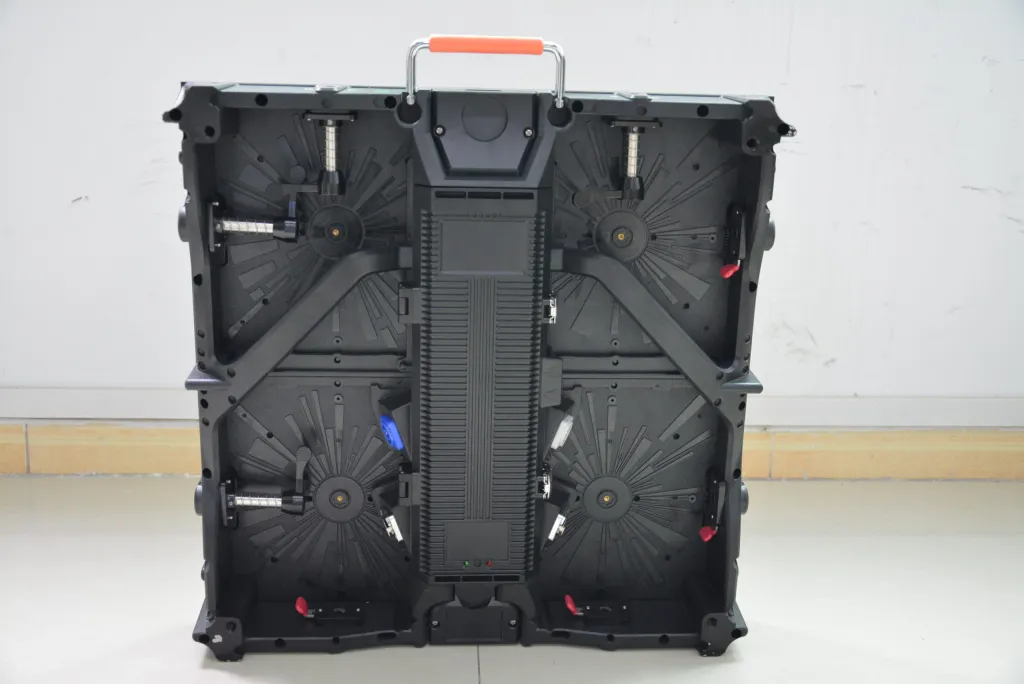
LED screen panels, also called LED cabinets, contain the LED modules, power supplies, receivers, and wires. In an LED display, there are multiple panels. Think of them as small LED displays. When connected, LED screen panels make one large display.
The basic unit of LED screens is the module. Like cells in living organisms, modules make up a bigger component, the panel, which is like an organ of the human body. When functioning together, these “organs” give life to the LED display.
As LED displays are large, they are subdivided into panels. This makes transporting, assembly, and disassembly easy for any kind of installation. However, these panels can’t function on their own and need one another to display images.
What Comprises an LED screen panel
Module
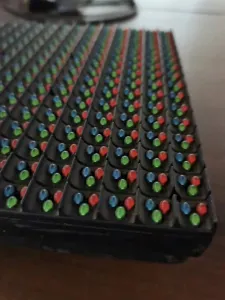
The module is the basic unit of an LED panel. It contains the individual LEDs, circuit boards, connectors, and drivers. They typically have a pixel pitch of 0.9mm to 25mm. As the pixel pitch value decreases, the display’s resolution and image quality increase.
Power Supply
The power supply converts other forms of energy into electrical energy that powers the module. Ideally, an LED power supply would have an input voltage of 220V±10%/110V±10%.
Display Cabinet
The display cabinet is the frame that encloses the whole LED screen panel, including its internal components. Cabinets come in various finishes, including metal, aluminum, die-casted aluminum, and magnesium.
Metal cabinets are typically used in permanent indoor and outdoor installations because of their weight. Meanwhile, lighter materials such as die-cast aluminum and magnesium are popular in rental LEDs as they make transporting, assembling, and disassembling easier.
Most recently, manufacturers have started using newer cabinet materials like plastic and resin. However, little is known about the durability and the risks that come with using new materials in LED cabinets.
Receiving Card
The receiving card serves as the central control hub of an LED screen. As the name suggests, it receives the data from the control PC and converts it into signals that the LED screen displays.
Connector
The connector is the collective term for all the connection points of an LED display, including the power plug, data plug, and the internal wiring of the cabinet.
Cooling Fans
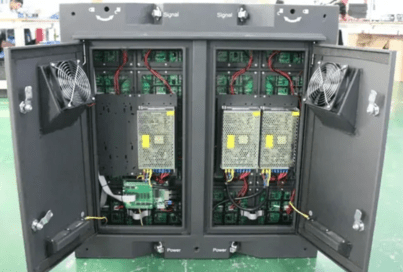
Like other electronic devices, LED panels have cooling fans to maintain ideal operating temperatures. LED panels typically use three types of fans: ball fans, oil-retaining bearing fans, and silent fans.
Cables
Cables refer to the wires that run through the LED screen panel, including power cords, network cables, and the receiving card power supply cables.
Types of LED Screen Cabinet
Fixed LED Screen Cabinet
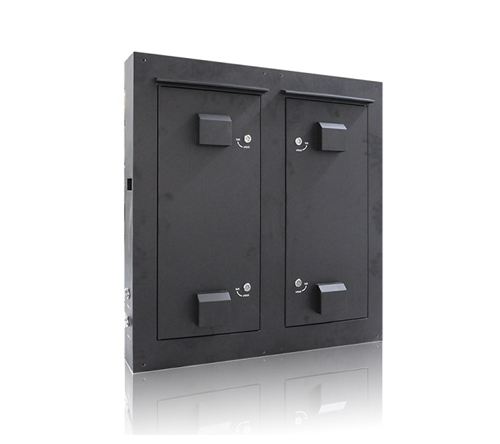
Fixed LED screen panels are intended for permanent installations both indoors and outdoors. They can be customized according to installation requirements and can be availed in different sizes.
Outdoor cabinets are often made with weather-resistant materials that make them durable in any weather conditions. They are commonly designed with two weather-resistant metal back doors. Because of the materials used, outdoor fixed LED screen panels are often bulky and could weigh up to 50 kg per square meter.
Indoor fixed LED panels are made with thinner and lighter materials and have more doors since they don’t need to be weather-resistant. This makes them a lot cheaper than outdoor panels.
Rental LED Screen Cabinet
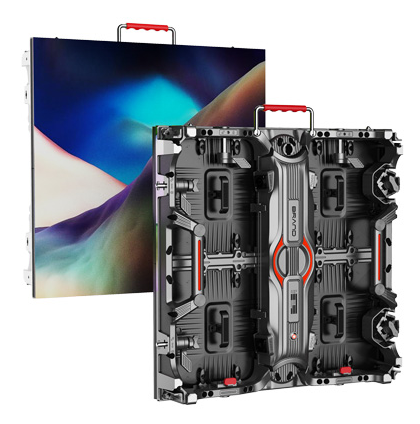
Rental LED screen panels are designed for temporary installations such as in one-time events, concerts, and festivals. They are made with lightweight materials that make transporting, assembling, and disassembling easy. Unlike fixed panels that are customizable, rental panels come in fixed sizes of 500×500mm and 500×1000mm. However, they can be interconnected to make a larger display
Factors Influencing LED Screen Panel Prices
The price of a whole LED display actually depends on the price of a module, and in turn, affects the price of a single panel. So, what factors affect these prices?
Pixel Pitch
Pixel pitch refers to the distance between two neighboring pixels. The smaller the pixel the pitch, the more tightly-packed the pixels and the higher the image quality. This also means the display can be viewed from a greater distance. Here’s a reference of common pixel pitches and their corresponding viewing distance range:
| Pixel Pitch | Viewing Distance Range |
| P1.25 | 8.2ft – 12.3 ft |
| P1.5 | 9.8ft – 14.8ft |
| P1.8 | 12.1ft – 18.4 ft |
| P2 | 13.1ft – 19.7 ft |
| P2.5 | 16.4ft – 24.6 ft |
| P3 | 19.7ft – 29.5 ft |
| P4 | 26.2ft – 39.4 ft |
| P5 | 32.8ft – 49.2 ft |
| P6 | 39.4ft – 59.1 ft |
| P8 | 52.5ft – 78.7 ft |
| P10 | 65.6ft – 98.4 ft |
| P16 | 105ft -157.5 ft |
| P20 | 131ft – 197 ft |
Having more pixels per square meter means higher manufacturing costs. So, if you’d like your LED screen to have great image quality, you’d have to shell out more money.
Screen size and resolution
Screen size and resolution directly affect pixel pitch. Resolution refers to the total number of pixels across the display. So, a larger screen size would need a higher resolution, and in turn, a higher pixel pitch. Without these three aligned, the image quality will suffer and could affect how viewers consume your content.
Cabinet Materials
As mentioned above, LED cabinets come in various finishes. Metal cabinets are typically used for outdoor installations because of their durability. It is also relatively cheaper than weather-resistant finishes. However, it adds to the bulkiness and heaviness of the display, making transportation and installation more complicated and expensive.
Die-cast aluminum is a worthy alternative to iron with its durability and lighter weight. It also doesn’t add any bulk to the display, making it suitable for temporary installations. However, manufacturers prefer magnesium alloy cabinets to die-cast aluminum despite the higher cost because of its durability and heat dissipation feature.
If you want your display to be lightweight, go for carbon fiber or nanopolymer cabinets. Both materials are ultra-thin, lightweight, and durable, but could be more expensive than other finishes. However, their portability makes them easier and cheaper to transport.
Customization
Unlike rental LED panels that come in fixed sizes 500×500mm and 500×1000mm, fixed LED panels can be customized in size, shape, and installation location. However, this doesn’t come without a price. If you have a large display with an irregular shape (i.e. bent) and a complicated mounting situation, the overall price of the display will be higher than that of a regular display.
Installation and Maintenance
Additional costs related to installation and maintenance will depend on the type of cabinet material used. There are two types of maintenance involved in LED cabinets: front and rear.
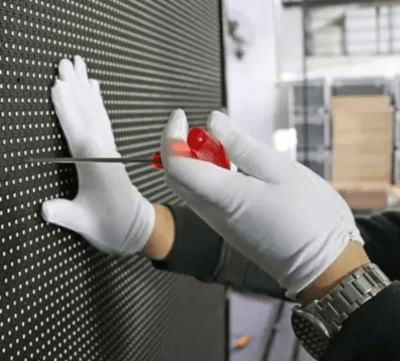
Front maintenance is typically used in LED screens installed on a wall or facade. LED cabinets that have front access will have screws or a lock mechanism in front since you won’t be able to access the internal parts of the display once installed. A newer method using a suction cup tool has made front maintenance easier, especially in indoor applications where there is limited maintenance access.
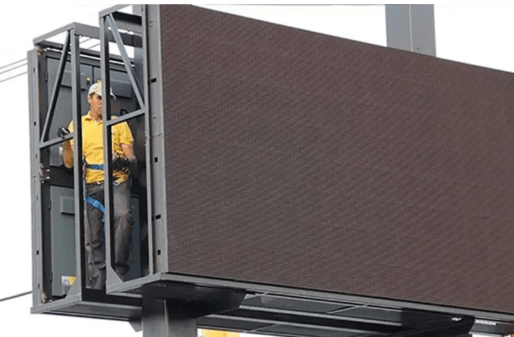
Rear maintenance is typically used for LED cabinets with doors at the back, more specifically, metal cabinets with a double door feature. This is done for displays installed on building roofs, posts, and locations with provisions that could fit maintenance personnel. This type of maintenance is cheaper than front maintenance as the display’s internal components are easily accessible.
LED Display Panels Price
Indoor LED Display Panel Price
Indoor LED panels are the least expensive type of display per square meter. This is because indoor installations are typically in controlled environments with ideal lighting and temperature, barring the need for any weather-resistant materials or special features. Additionally, indoor displays are intended for close-distance viewing, so the pixel pitch could be larger than what’s used in outdoor displays.
Here’s a per-square-meter price estimate reference for indoor panels:
| Pixel pitch | Price per square meter (in USD) |
| P2 | 1,000 – 1,600 |
| P2.5 | 800 – 1300 |
| P3 | 700 – 950 |
| P4 | 600 – 750 |
| P5 | 500 – 600 |
Outdoor LED Panel Screen Price
Outdoor LED screens are slightly more expensive than indoor displays. This is because they require weatherproofing and specialized materials that can withstand environmental factors. Additionally, they require higher pixel pitch for greater viewing distances. However, they are easier to maintain as most outdoor LED cabinets have back door access.
Here’s a per-square-meter price estimate reference for outdoor panels:
| Pixel pitch | Price per square meter (in USD) |
| P2.5 | 900 – 1,700 |
| P3 | 800 – 1,600 |
| P4 | 700 – 1,500 |
| P5 | 600 – 1,000 |
| P6 | 650 – 1,100 |
| P8 | 550 – 1,000 |
| P10 | 500 – 850 |
Rental LED Panel Screen Price
The price of rental LED panels can vary depending on whether it would be installed indoors or outdoors. However, they could be more expensive than the other two as the cost could include transportation expenses.
Here’s a per-square-meter price estimate reference for rental panels:
| Pixel pitch | Price per square meter (in USD) |
| P2.6 outdoor | 1,650 – 2,700 |
| P2.9 outdoor | 1,200 – 2,400 |
| P3.9 outdoor | 840 – 1,600 |
| P4.8 outdoor | 750 – 1,400 |
| P2.6 indoor | 850 – 1,900 |
| P2.9 indoor | 760 – 1,700 |
| P3.9 indoor | 650 – 1,350 |

