


If you’re considering display options, you’ve probably come across P3 LED screens and similar devices with Ps in them. Do you know what they are all about and what makes each unique?
It would take some time for us to discuss all of the “P” LED screens, so for now, we can start with the P3 LED modules and everything you need to know before getting your own device.
What Are P3 LED Screens
A P3 LED screen is an advanced display that sports 3mm of pixel pitch in its module. This means that between each diode in the LED module panel, there’s a distance of 3 mm. The short distance between each diode denotes the possible image quality of the device.
P3 LED displays belong to the low pixel pitch group, which is dominated by screens that showcase vibrant and high-quality images. This is because of their high brightness levels and contrast ratio, ensuring that you only get high-quality visuals.
P3 LED Screen Features
Considering P3 LED screens means examining the display’s characteristics. Meticulously research the P3 LED wall specifications and check out the features you can make the most of, including the following:
Light and Slim Structure
This type of LED display is designed with a light and slender structure, making it easier for installers and users to manage. The structure also makes it possible to place the device in places that are often restricted and limited. Its slim look also adds to its modern, stylish aesthetics.
Great Durability and Reliability
This low-pixel-pitch display is structured with great durability, ensuring that the device becomes highly reliable. It operates through a great collaboration with several components, including the following:
- Rigid frame and board
- IC drivers
- LED lamp beads
Because of its durability and reliability, users can benefit from this device for approximately 10 years, with minimal maintenance and repair needs.
Excellent Flexibility
Like most LED displays, P3 LED screens showcase awesome flexibility in terms of audience visibility. Using back brackets, the LED modules can be positioned at the angle you need them to be in. This makes sure that users can navigate their displays in a way that can be seen by as many people as possible.
Highly Interactive
These high-quality LED screens are highly interactive because of their realistic and vibrant visuals. The colors can easily capture people’s attention, guaranteeing a good and long-lasting impression on the audience and the market.
How To Use P3 LED Screens

An LED screen with a 3 mm pixel pitch can be used in various ways. Some of the most common applications for this type of display include the following:
Advertising
The field of advertising has benefited so much from the introduction of LED displays, especially because of the catchy and colorful screens. The screen can showcase diverse content and media formats, making it an incredible investment for marketing and promotional purposes. Some of which include the following:
- Flash
- AVI
- FLV
From basic text to moving images, the screen supports these content types.
Information Dissemination
P3 LED screens can also be used to pass information to the target audience. They can be clearly seen, wherever they are installed. Since the screens are vibrant and bright, the audience can see the display even in sunlight.
Product Launching
One of the most crucial moments in business operations is the launch of a new product. You need to create an eye-catching event that can draw as many people as possible to bear witness to the new line of products you have in store.
Unlike traditional promotion methods like posters and leaflets, smart marketing props like P3 LED screens take out the need to print them out when a new promotion comes out. For these displays, a simple click of a button can change the content entirely, significantly cutting down on the marketing costs. The devices can be managed and controlled remotely and in real time, adding to the convenience of the entire process.
Types of Installation for P3 LED Screens
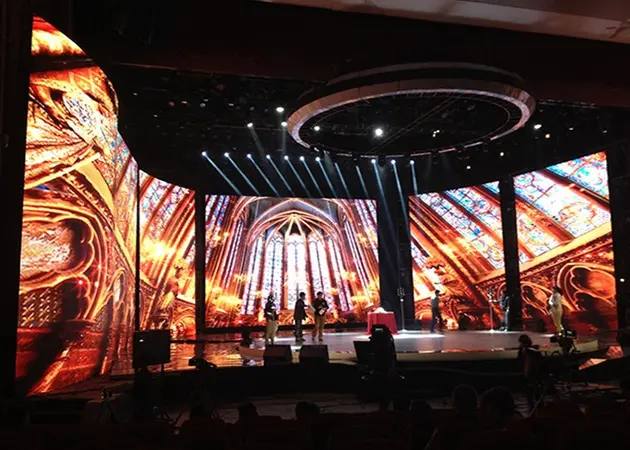
These LED displays can be installed in various ways, depending on your screen needs and the venue where they will be installed. However, while the device may be flexible in installation, it is important to take note of the requirements and necessities that come with your choice. You might need to pay extra for accessories and even installation fees if you can’t do it on your own.
Some types of displays won’t be compatible with other installation types. Here are the most common ones compatible with P3 LED screens.
Hanging
Whether you’re dealing with a P3 outdoor LED screen or a P3 indoor LED display, consider hanging the device when installing it. Doing so can guarantee maximum visibility to your audience, wherever they are located in the venue.
Hanging the device from the ceiling makes the screen easy to locate. This is the ideal option if your venue is a bit cramped and you’re expecting a massive crowd for your event.
Stand-alone Installation
Another option for your installation is a good stand-alone on the ground. This refers to the device that can operate as it, without the need for a complex installation process. It’s only possible if you use a sturdy and durable stand fixed firmly at the bottom of your display.
An LED display with its own stand makes the installation convenient and practical. Of course, there are also limitations on where you can place the device.
Wall-mount Installation
When you see a P3 LED wall outdoors, it can only be two things. It’s either that the device is the actual wall itself or you’re dealing with a wall-mount installation. In the case of the second option, the LED display is installed on the wall with the help of accessories, such as brackets and wall mounts.
Troubleshooting P3 LED Screen Common Issues
 Image Credit: Bing AI.
What should you do when your P3 LED screen suddenly acts abnormally? There are several things you can do based on the actual problem. Here are some of the ways to resolve the following issues:
Short Circuit
A short circuit refers to an abnormal connection within a device’s circuit, which interrupts the electricity passing through it. In areas with low resistance, a sudden huge surge of current can cause other issues in the electrical connection, such as overheating and burn damage to the device. A short circuit can be the cause of one of the following:
- Damaged wires
- Faulty connection
- Improper wiring
- Damaged insulation
In resolving this issue, the first thing to get is a multimeter, which can be used to check each component’s circuit. Make sure to turn the whole circuit off when conducting this test and pay close attention to the IC pins and pin headers.
Voltage Drop
Voltage drop refers to the reduction of electric capability along the circuit wires. Caused by a specific component resistance (most commonly conductors), it can lead to the following issues in your P3 LED screen:
- Dimmed lighting
- Overheating
- The display is not properly operating
To fix this problem, start by looking for a multimeter and setting the voltage range. Start by measuring the ground voltage at a specific point on the display circuit of your device. Compare the value to the normal ground to the first value you’ve checked before. The result will dictate whether it is normal or not.
No Display Showing
When there’s nothing displayed on the screen, even when the power is turned on, it may mean that there’s a problem in your device’s power supply. Confirm it with a multimeter just to know which issue to resolve.
P3 LED Screen Aging Test
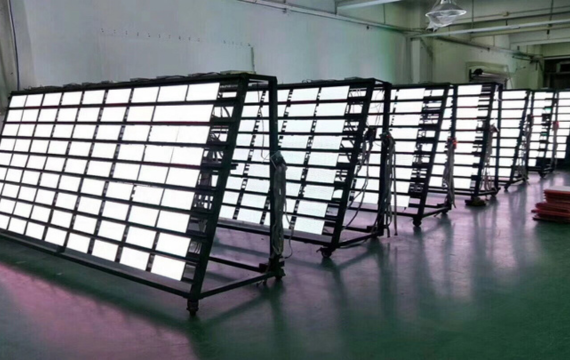
Does your P3 LED screen need an aging test? This test refers to the evaluation process that makes sure the device passes the recommended quality requirements. It takes into account the stability, reliability, and conformity of the device. The rigorous test assesses if the display meets industry standards and won’t have welding issues due to mediocre manufacturing.
P2 Vs P3 LED Screens
 Image Credit: Gemini AI.
When learning all about the P3 LED screen, it is essential to compare it to other displays similar to it. The closest you can get to this device is the P2 LED display.
Both the P2 and P3 LED screens are frontrunners in stunning visuals and realistic images. They guarantee bright, colorful, and vibrant visuals that can easily capture people’s attention. To differentiate each, it’s necessary to examine each component one by one, showcasing their uniqueness as an effective LED screen.
Structure
One of the most obvious differences between P2 and P3 LED screens is their respective structure. The former type of LED display features 2mm of distance between each LED pixel. This means that the LED module of the screen contains 250,000 LEDs per square meter.
For P3 LEDs, the distance between each pixel measures 3 mm. This means that the standard LED module for this type of display has around 110,000 pixels per square meter.
While it may seem like a 1 mm difference is minute and won’t be a big change, it actually is when you look at the big picture. In terms of numbers, P2 has P3 beaten by 140,000 LEDs. However, is this actually a significant difference? Definitely! More pixels on the LED module mean that the visuals produced by the display are much more detailed. If you want more detailed images, P2 LED displays are better.
Pixel Pitch & Resolution
Is the P3 LED screen resolution better than the P2 LED displays? When you consider the pixel pitch of both screens, they belong to the low-pixel-pitch group. This, in itself, guarantees that they showcase stunning visuals. But when you compare the two, the P2 LED display is expected to deliver a higher quality of images with more lamp beads in the module.
Pixel pitch and screen resolution are indirectly proportional to each other. The lower the number for the pixel pitch, the higher the resolution. This means that the screens belonging to the low pixel pitch group always deliver high resolution.
Product Type
While both the P2 and P3 LED screens use similar technology, they are actually different product types. The former is a small-pitch full-color display and has very specific applications. This screen is used for places requiring high-end visuals, such as conference venues and lecture halls.
P3 LED display may be used as a single-colored screen or a full-colored display. As a monochrome screen, it can be used to show important messages in text. Some of the most popular colors used in monochrome displays are green and red.
Quality
When it comes to screen quality, which is better between P2 and P3 screens? There are so many factors that can influence the quality of an LED display. Some of which are the following:
- Pixel size – More pixels embedded into the LED module means higher resolution, which is exactly the case with P2 LED screens compared to P3 displays
- Sharpness – Fine-pitch LED screens are packed with LEDs compared to large pixel pitch displays, which guarantee clearer and sharper images.
- Overall viewing experience – Considering that both P2 and P3 LED screens are fine-pitch displays, they both guarantee stunning visuals. However, if you compare the two devices’ overall viewing experience, the P2 LED displays are a bit ahead in this aspect.
Viewing Distance
One of the major considerations when pitting P3 LED screens with P2 LED displays is the viewing distance. A smaller pixel pitch translates to a closer ideal viewing distance. This means that the minimum viewing distance of the P2 LED screen is closer than that of the P3 LED displays. The former’s minimum viewing distance is 2 meters, while the latter is 3 meters. Choose according to your needs.
Prices and Costs
Which one is more expensive between P2 and P3 LED screens? The price difference between the two LED displays is prominent. The P3 LED screen price is significantly more affordable than the P2 LED display. Several factors contribute to this price gap, including the following:
Upfront Cost
P2 LED displays are more expensive because they use more LEDs in their modules. The panels are more packed with lamp beads and ICs, which means they use more materials than those of P3 LED displays. Granted, the former may have high upfront prices, but you can also guarantee high visual quality compared to the latter choice.
Operational Costs
P3 LED screens have more affordable operational costs. The concept is simple- when you’re powering more LEDs, you’re using more energy, which results in higher electric bills. This is why P2 LED displays have higher electric bills since they use more LEDs in their operation.
Installation and Maintenance Cost
You’ll spend more on installing and maintaining the P2 LED screens than the P3 LED displays, because of the following factors:
- Lower installation costs of the P3 LED screen than its P2 LED counterpart
- The P2 LED screen has smaller components, leading to more complex maintenance and fixes compared to the P3 screens
- P3 LED screens have bigger and more durable components that make them easier to maintain, resulting in lower maintenance costs
In total, P2 LED displays require higher maintenance costs and possible repairs. In this case, you get to save more in the long run by choosing P3 LED displays.
How To Choose Between P2 and P3 LED Screens
 Image Credit: Gemini AI.
Now that you know the major differences between P3 and P3 LED screens, can you effectively choose between the two? Yes, you can do so provided that you’ve set clear requirements based on your display needs.
Before going and buying the screen you think is best, it’s important to cover all your bases to select the best one matching your needs. Here are some tips you’d never regret following:
Match Your Budget With Your Display Needs
The cost you need to pay is affected by various factors that can either increase or decrease the expense. You need to consider all of these factors, get an estimate of what you might need to spend on, and then match that with your budget.
The important thing you need to do is to consider the elements that can increase or decrease what you need to pay for, including the following:
- P3 LED screen size and shape
- P3 LED screen specifications (Resolution and high levels of color contrast and brightness)
- After-sales services (add-ons or part of the package)
- Number of LED modules to get
- Model and brand of the screen
When investing in the advanced screen, make sure you have enough budget to fund the investment. Can you afford a high-end LED screen, or is a budget-friendly ensemble enough for your needs?
A difference in price range can affect the visual performance of the display, which is something you need to decide on and be okay with. When choosing between the P2 and the P3 LED screen, simply go for the one you can afford, as long as its specifications also match your display needs.
Consider the Operation and Maintenance Expenses
Your expenses don’t stop at the LED screen’s upfront costs and after-sales services. You also need to take into account the money you’ll spend on the operation of the device and its upkeep.
The operational expenses primarily include the electric bill you need to pay for. The good news is that these LED screens are energy-efficient and use less electricity compared to other types of displays.
Finally, you also need to take into account the maintenance cost of keeping the device healthy and stable, along with the possible repair fees in the future. Between P2 and P3 LED screens, the latter has a better advantage in these two types of expenses. P3 LED displays are more affordable in terms of operational costs and maintenance costs.
Look Into The Installation and Placement Requirements
Where do you plan to install the LED screen? If you’re planning to place the device in an area where the audience is nearer, P2 LED displays work best for this situation. If it’s a bit farther, the P3 LED screen might be the better choice. Just consider these aspects for you to end up with the right decision at the end of the day.
Why Choose and Use P3 LED Screens?
P3 LED walls and displays definitely provide advantages that users can enjoy. There are various reasons why many users prefer investing in them compared to other types of LED displays. Here are some worth pondering on.
Wide Viewing Angle
P3 LED displays feature a wide viewing angle, which falls around 160 degrees for indoor and 120 degrees for outdoor installations. This ensures that many people will be able to see the screen clearly from their end.
Higher Levels of Brightness
This type of LED display has higher levels of brightness, allowing it to operate effectively even when exposed to the sun. With the use of the cold luminescence technology, it tolerates intense lighting conditions, both indoors and outdoors.
The outdoor brightness of these devices can reach more than 8,000 mcd per square meter. On the other hand, indoor brightness goes over 2,000 mcd per square meter. These are the brightness levels you can make the most of.
Energy Efficiency and Environmentally Friendly Operation
P3 LED screens are energy-efficient and operate using minimal operational power. The entire ensemble has high heat dissipation and incredible thermal conductivity that support its energy efficiency. This leads to lowering the electric bill for your operation costs.
Besides the financial advantage, its energy efficiency also contributes to the environment. The device also has lead-free components that not only follow RoHS (Restriction of Hazardous Substances) requirements but also help you care for the environment.
Prolonged Lifespan
Because of its energy efficiency, the P3 LED screen is not prone to overheating. Coupled with proper and regular maintenance practices, the device has a long lifespan. You can benefit from using the device for quite some time, approximately around 100,000 working hours.
Zero Noise
P3 LED displays don’t have a cooling system because they don’t need the component for possible overheating issues. Without fans, there won’t be any noise that comes from the component whirring.
Conclusion
Investing in P3 LED screens takes thorough research of their features, advantages, and limitations before making a more informed decision. Learn everything there is about this type of LED screen so that you won’t regret investing in it.
The most important thing to do, though, is to match what you learned about this LED display to your screen needs. If its specifications match your display requirements, it’s a match made in modern heaven.

