


Have you differentiated P2 vs P3 LED screens before? If you’re not familiar with the difference between these two displays, you might be missing out on maximizing your device and investments. If you’re unsure which of the two is ideal for your needs, diving into their features, benefits, and limitations will help you decide.
Before you randomly choose between the two, explore their similarities and differences first. This will help make your decision more informed and well-researched. You just need to match what you find to your needs.
This article will give you the information you need to choose between the two types of LED screens.
What P2 and P3 Means
 P2 indoor fixed led display featured pictured
To assess P2 vs P3 more effectively, you need to know what they mean. The letter P and the numbers attached to it refer to their pixel pitch. The number also denotes the distance in mm between each LED attached to the screen module. The P2 LED screen has 2 mm of distance between each LED, while the P3 LED screen has 3 mm.
In general, lower pixel pitches display clearer visuals. While both P2 and P3 LED screens belong to the lower pixel pitch group (which means high resolution screens), there’s still a difference in the pixel pitches that gives the former better visual quality than the latter. However, this is not that far from the quality delivered by the P2 LED screen. This is just a little of the differences between the two.
P2 Vs P3: Identifying Their Differences
The difference between P2 and P3 LED walls comes in various forms, not just in the measured distance between each LED screen. To get a better grasp of each type of LED screen, it’s best to compare them more thoroughly with each other.
P2 Vs P3 LED Display Pixel Pitch & Pixel Density
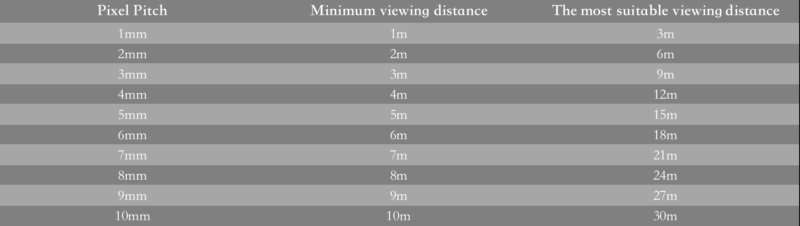
Pixel pitch refers to the distance between LEDs, which dictates the density and number of diodes on modules and the quality of the visuals displayed on the devices.
P2 LED screens have 2 mm of distance between their diodes, which means that they can carry 250,000 LEDs per square meter or module. On the other hand, P3 LED screens have diodes with a 3 mm distance between them, which means they use fewer LEDs on the same-sized module, amounting to 111,111 LEDs per square meter.
One thing you need to remember when assessing P2 vs P3 LED screens is that the difference in density translates to differences in the devices’ performances. Screens with more diodes on the grid tend to produce more detailed images and smoother slide transitions. In this case, a P2 LED display has more than twice the number of LEDs used in a P3 LED display, which means that the former can show more stunning visuals than the latter.
P2 Vs P3 LED Display Resolution
To assess the P2 vs P3 LED display’s resolution is simple. With more than twice as many LEDs, P2 LED screens feature more detailed images and higher resolution than P3 LED screens. While they may have lower resolution than P2 LED screens, P3 LED displays offer a resolution many prefer.
P2 Vs P3 LED Display Quality

Comparing the screen quality of P2 vs P3 LED displays means taking into account all the other factors that contribute to high-quality visuals. This includes the following specifications:
- Sharpness
- Brightness
- Total visual experience
P2 LED screens feature outstanding image and video quality. It’s made possible through the number of pixels used in them. The visuals are significantly clearer and better in quality compared to the P3 LED screen’s visuals. This is the reason why many high-end projects use P2 LED displays for their operations.
The P3 LED display offers similar visuals but with lower quality, because it uses fewer LEDs. Its visuals do not carry the same sharpness as the ones shown on a P2 LED display. However, it’s not noticeable when seen from a distance, and when you go nearer the device, you’ll notice more of the individual pixels that make up the visuals.
Suffice it to say, both P2 and P3 LED screens offer high-quality visuals. The only consideration you need to take into account is how high the quality of the visuals you want to get and how much you’re willing to pay for it, since P2 LED screens are more expensive than their P3 counterparts.
P2 Vs P3 LED Display Viewing Distance

Another clear difference between P2 and P3 LED screens is the ideal viewing distance. While P2 LED displays are great for close-range viewing, P3 LED screens operate best when seen from medium to long-range distances.
P2 LED screens need to be viewed at a minimum distance of 6.5 feet or 2 meters for the visuals to be in perfect quality. For P3 LED screens, however, viewers need to be standing 10 feet or 3 feet away for the visuals to remain cohesive and together. Following these ideal viewing distances is important to guarantee that the audience enjoys a seamless visual experience.
With the difference in ideal viewing distance, there is also a clear difference in locations and venues where they can be used. P2 LED displays are great for indoor venues with closer and more intimate viewing. However, P3 LED screens make a great amenity for medium to large venues, making them great for conferences and concerts.
P2 Vs P3 LED Display Brightness Levels

Assessing P2 vs P3 LED screens for their brightness levels, it’s noticeable that the former operates at a lower frequency than the latter. P2 LED displays have brightness levels that range from 600 to 800 nits. On the other hand, P3 LED displays have brightness levels between 800 and 1,000 nits (indoors) and 5,500 to 6,500 nits (outdoors). This means that while you can use both P2 and P3 LED screens indoors, only P3 LED displays are utilized outdoors, making it more versatile in its application.
While these are the general brightness levels you can see from these LED screens, they can change depending on the following components:
- Brand
- LED screen model
- The LED packaging method employed
- Adjustment capabilities
P2 Vs P3 LED Display Applications
 Both P2 and P3 LED displays have specific applications perfect for these devices. To maximize your device investment, look into the ways you can use these screens before choosing one.
 P2 LED screens are often utilized indoors because of the closer viewing distance. Some of its popular small-space applications include the following:
- Small studios
- Common indoor spots
- Video meetings for institutions (government and private)
- Corporate boardrooms
- Small control rooms
- High-end digital gallery and museum displays
- Luxury architectural and retail integrations
While P2 LED displays are uncompromising in high-quality visuals, P3 LED screens offer more leeway in terms of flexibility and budget constraints. This means you can use P3 LED screens for more applications than P2 LED screens. Some of which are the following:
- Large entertainment venues
- Vast lecture halls
- Large conference halls
- Convention centers
- Concert and performance stages
- Night clubs
- Large shopping malls and retail venues
P2 vs P3 LED Display Costs
 LED screens use advanced technology that comes at a high cost. One thing you need to remember about investing in high-end devices like LED screens is that they don’t just come with a one-time cost. Besides the upfront price of the device, you’ll be subjected to transport and installation fees. You also need to look into the operational and maintenance costs that will come after your purchase.
 Pitting P2 vs P3 LED screens, with each means considering all the costs you need to spend on them. Since the P2 LED display is uncompromising, you don’t have much flexibility compared to what’s offered in the market. With impressive resolution and image quality, P2 LED screens are significantly more expensive than P3 LED screens. You have to pay for the extra LEDs that come with the device.
In the case of P3 LED displays, they are more flexible in resolution and application. You can have more flexibility in the specifications of the screens. While P2 LED screens are technically more expensive, P3 LED screens can be pricey too, especially for massive outdoor LED walls with this pixel pitch. The type of LED display and installation complexity will also be taken into account, which can increase the cost you need to pay.
How To Know What To Use Between P2 Vs P3 LED Screens
 Image Credit: Pexels.
What are the elements you need to prioritize when choosing between P2 and P3 LED screens? If you want to get the best out of this purchase, it is best to follow these tips and apply them to your decision.
- Prioritize matching goals, specifications, and operational consistency – Every decision you make in this purchase should be in line with your goals.
- Pay close attention to the viewing distance – How close is your audience to the LED screen, and get the device closest to its ideal viewing distance. Choose the P2 LED screen if the viewing distance is under 3 meters.
- Take into account the size of the venue – Larger venues would most often benefit from the P3 LED display than the P2 LED screen.
- Consider the venue’s ambient lighting conditions – Outdoor locations with extreme lighting conditions may require LED screens with high brightness levels.
- Look at the details of the content – Whether you will show basic images or complex 3d video effects, take into account the content you will often display when choosing between P2 vs P3 LED screens.
- Plan for all the expenses – Consider all the expenses you need to spend on this investment, from the upfront device cost to the operating and maintenance costs.
P2 Vs P3 LED Display: Summary of the Differences

To make it easier for you, here is a summary of their similarities and differences. This table can hopefully lead you to a more informed decision.
| Elements for Comparison | P2 LED Displays | P3 LED Displays |
| Number of Diodes | More | Fewer |
| Resolution | Higher | Lower |
| Brightness Levels | Depends on Specifications | Can be higher for outdoor LED screens |
| Ideal Viewing Distance | Nearer | Farther |
| Image Quality | Greater quality | Great |
| Device Price | More expensive | Less expensive |
| Color Contrast | Boosted contrast and diminished dark mode | Uniform color |
| Physical Advantage | Lightweight and makes less noise | Best power supply options |
Knowing all of these details about both P2 and P3 LED screens, do you think you’re now ready to make a decision on which device to invest in?
Conclusion
Assessing P2 vs P3 LED screens requires a closer look at the components and specifications of each device. The main difference between the two lies in their pixel pitch, which pretty much points to the difference in ideal viewing distance and resolution. Both P2 and P3 LED screens have their corresponding strengths and weaknesses you need to know about before deciding which one between the two is the ideal device for you.
P2 LED screens deliver undeniably high-quality visuals. If you don’t want to compromise on image quality, it is the device you can consider. P3 LED screens, on the other hand, offer more flexibility. While they offer lower resolution on visuals, these screens can be used for bigger venues. They are also more affordable than P2 LED displays, if you’re considering the same size and specifications (except for the pixel pitch).
At the end of the day, go back to your goal and see if the specifications of the device fit the requirements you’re looking for. Investing in one of these devices can guarantee stunning visuals and an unforgettable viewing experience. Maximize this investment by exploring all the applications you can use the screen for.

