


What does LED stand for? While it seems a simple three-letter word, it means so much and offers even more. If you’re interested in joining the LED display industry, you must know about the basics. And nothing’s as basic as the LED.
LED has become a prominent term in the world today. You’ll probably read it anywhere, from furniture stores to light bulb descriptions. Its first appearance, however, comes from the lighting industry, as it dominates efficiency and functionality like no other. In fact, it is considered the most efficient light source today.
LED products have become incredibly popular primarily because of their energy efficiency. What does LED stand for when considering every product with its name? Today, it signifies high-quality and efficiency, which many advanced devices use.
What Does LED Stand For?
 Image Credit: Gemini AI.
LED means “light-emitting diode,” which refers to the unit that makes it possible for LED displays to do the magic they create today. This semiconductor is responsible for producing light and powering many of the LED products in the market today. When electric current comes in, light is produced through the LEDs.
Light-emitting diodes are advanced components in many high-tech devices today. From simpler handheld calculators in the 60s to the current amazing smartphones, LEDs are major contributors to their operations and development. It started from being an expensive component to a more affordable one.
Currently, LEDs can be used in various ways, including me lighting sources in residential and commercial spaces. They are also used in many applications, depending on how they are integrated into a device (lighting or display). What’s clear, though, is the benefits that they offer.
What does LED stand for? In terms of benefits, they stand for energy efficiency, durability, safety, and long lifespan.
How Does LED Function?
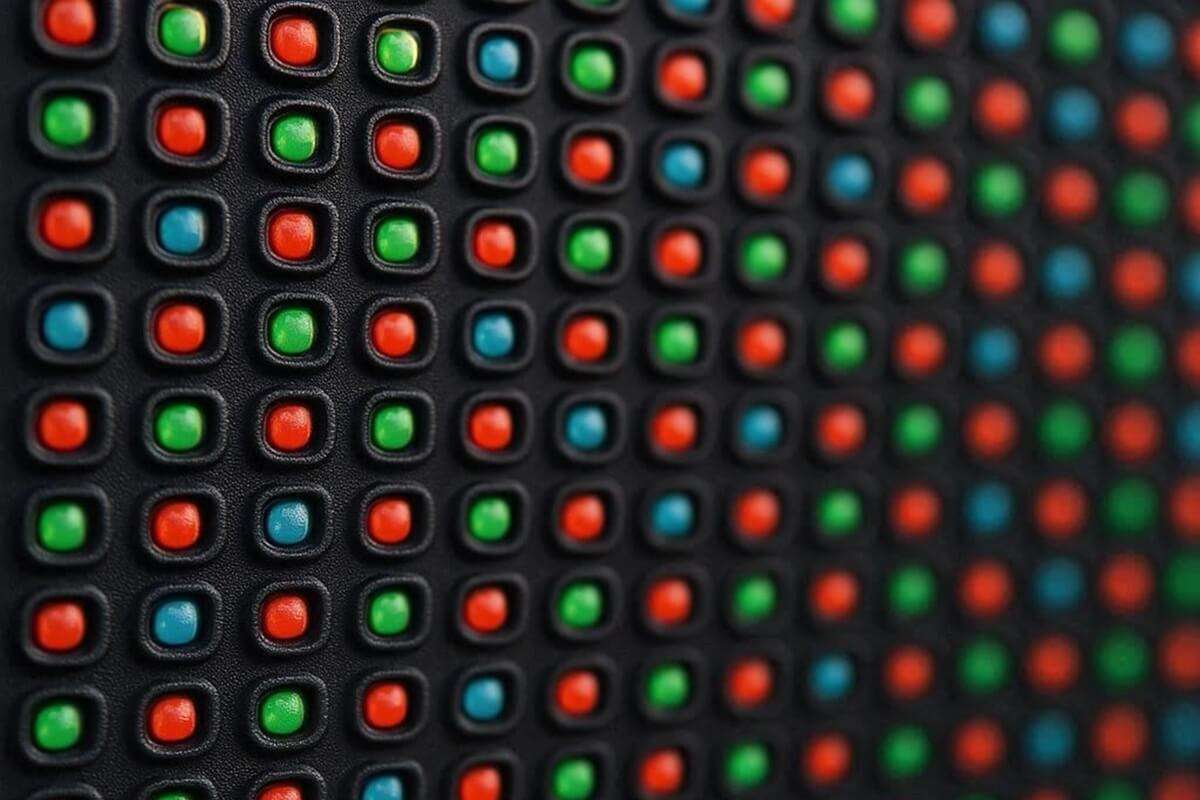 Image Credit: Bing AI.
How do LEDs function? In discussing what does LED stand for, is its function a major consideration? Yes, you need to learn how LEDs work, too.
It operates when the electron particles combine with the current. The device has electron holes, through which the electricity goes through and photons are formed. This is when light is produced and emitted from the device, turning into the images they are programmed to show. It’s the simple process that makes it possible for LEDs to function.
Knowing the History of LED
LEDs are not new, considering it’s been decades since they were developed and invented. What does LED stand for when you look at its history and how it was developed in the first place?
While LED technology seems to be a modern and advanced technology that’s only been recently developed, it’s actually something that started way earlier than the 20th century. LED’s history can be traced back to 1907, when a Marconi Lab English researcher first discovered electroluminescence. From there, it took 20 years for a Russian inventor to actually create the first LED.
Oleg Losev is the Russian inventor responsible for its creation, but the discovery of its practical use took more than 50 years since its invention. A patent was filed in the 1960s, which is considered one of the very first LED products. From there, multiple laboratories followed research after research since Texas Instruments to produce visible light using LEDs.
In the early history of LEDs, it was dominated by red LEDs, which were then only used as indicator bulbs. It was quite a struggle to create new colors, considering the illuminance was not bright enough for other colors. However, in 1972, a new colored LED was produced (yellow). And that started the creation of several LEDs in various colors.
Types of LEDs
In answering the question, What does LED stand for, you also need to dig deeper into the different types that have been developed through the years.
RGB LEDs

This refers to the type that comes with clear colors, pointing to red, green, and blue LEDs (which is how it was named in the first place). The LED product uses three types of LEDs in these three colors. And while the LEDs are assigned colors, the actual colors they produce are abundant since the combination of these three gives way to the creation of different hues.
SMD

SMD is another important matter to cover when answering the question “What does LED stand for?” This type points to surface-mount LEDs (SMDs), which are not typically a type of LED but an LED packaging that devices use. In this type of packaging, LEDs are grouped and mounted onto a board. It is the solution to the limited space available for LEDs.
OLED
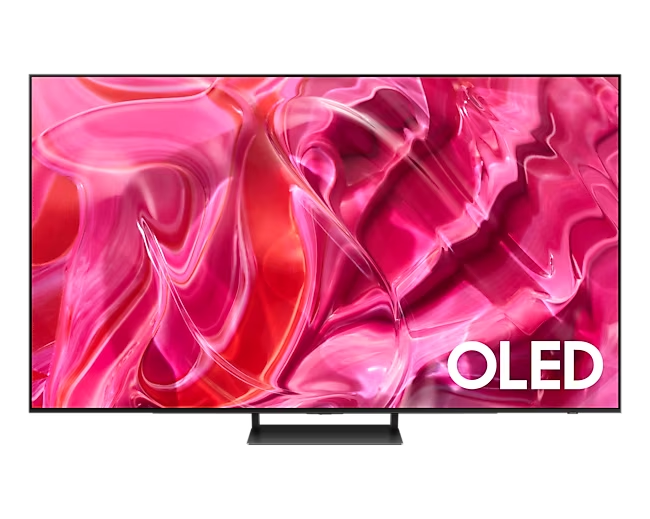
An organic light-emitting diode or OLED is a type of LED that produces lighting using organic materials. In this setup, the device doesn’t use a backlight, which offers the following benefits:
- Thinner and slimmer design
- More efficient operation
- Improve image quality
- More flexible structure (Can be rolled, stretched, and folded)
High-Powered LEDs
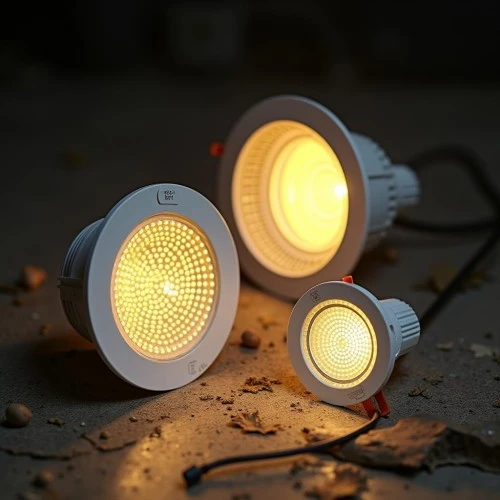
What does LED stand for when considering high-powered diodes? This refers to the type of LEDs that are known for producing high levels of brightness. The LED product using this type of LED can emit at least 1 watt. They are often used in the following devices:
- Flashlights
- Spotlights
- Auto headlights
These devices need a heatsink because of the high power used in their operations. They need to transfer heat waste for the devices to function more efficiently.
MiniLED
Miniature LEDs are quite new in the industry, and as they are named, they are designed in a much smaller form. This enables developers and manufacturers to create incredibly small devices, too, showcasing improvements in the following:
- Brightness
- Contrast ratios
- Energy efficiency
LED Benefits to Explore
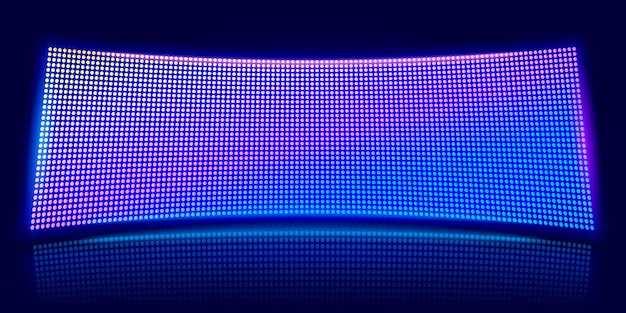
When discussing “What does LED stand for?”, it’s only right to discuss the different benefits that come with this incredible invention. It is a popular technology in various industries because of the following:
Energy Efficiency
LEDs are popular for their energy efficiency. Because of how they emit their own light, they use less energy, requiring less electricity in the process. This also guarantees a lower utility bill due to less electricity consumption.
Safer Usage
More than energy efficiency, LEDs are also safer to use, especially when compared to incandescent lights. This particular lighting option is cooler in operation, as evidenced when you touch the bulb while turned on. Using LED guarantees fewer cases of burns or combustion issues.
Longer Lifespan
LEDs are designed with longevity in mind. This powerful semiconductor can power the device for approximately 50,000 hours.
Highly Durable
LED products are highly durable because LEDs are the same. Compared to glass-made incandescent bulbs, LED bulbs are less likely to break because they are made using epoxy as the raw material.
Environmentally Friendly
Besides energy efficiency, what does LED stand for in its existence? The answer to that is environmental friendliness. LEDs are made from non-toxic materials that are also recyclable. This means that LEDs’ environmental impact is lessened.
LED Functions to Know About
 Image Credit: Gemini AI.
What does LED stand for when considering its application? Throughout the years, LEDs have been used in various industries, making them incredibly flexible and useful. Besides the obvious lighting industry, from traffic and industrial lighting to residential and commercial lighting, LEDs also support the following industries:
Agriculture
In the agricultural industry, LEDs are used when farming and growing plants. LEDs make wonderful grow lights.
Electronic Uses
Another usage of LEDs comes in the form of electronics. In the early part of its invention, LEDs were used as indicators for devices. After improvements, they are now also used for screens, such as televisions and smartphones. In many displays, LED is the preferred choice over LCD because of the following improvements:
- Faster refresh rate
- Better contracts
- Higher brightness levels
Medical Applications
Surprisingly, LEDs also have medical applications. LEDs are also used in light therapy, which can be used to treat the following conditions:
- Acne
- Eczema
- Neonatal jaundice
- Psoriasis
How To Use LEDs
When answering the question “What does LED stand for?” consider how they are used, too. LEDs are used in various ways, and from the time they were developed, they’ve played a role in many devices used today. Its applications can be grouped according to the LED’s brightness or color, depending on what you need.
By Brightness

LEDs are used in industries and applications based on the brightness levels they produce. Here are their differences:
- Low – LEDs can also be used for subtle lighting, which is very unlike what LEDs are known for. Low-brightness LEDs can be used for:
- Backlighting
- Decorative lighting
- Indicators
- Medium – These LEDs are used for general lighting applications because of their energy efficiency and balanced brightness. They are suited for the following:
- Signage
- Automotive lighting.
- High – High-powered LEDs are often used for COB packaging for screen devices. The diodes showcase intense lighting that can be used for the following applications:
- Architectural lighting
- Floodlights
- Stage lighting
- Ultra-High – These LEDs refer to the ones with the most powerful brightness levels, but require careful heat management. They are used in specific cases where extreme brightness is demanded, including the following:
- Industrial lighting
- Stadium lighting
By Colors

In answering “what does LED stand for?”, we can look at the applications of LEDs by color. This refers to how the diodes are used based on their colors. Some examples include the following:
- Yellow LEDs – First-ever produced diode that started the journey of LED technology
- Red LEDs – The color of these LEDs may refer to something urgent or caution, but that’s not the only application of the diodes. They are also used for the following:
- Traffic lights
- Indicator lights
- Bars and clubs
- Food industry (restaurants)
- Blue LEDs – The color offers a calming effect that can be used to anyone’s advantage. Blue LEDs can be used to create a peaceful environment, which is beneficial for nighttime reading situations.
- White LEDs – These LEDs are the most popular type by color. They offer a good contrast between colors, which is why many find this type of LED to good use.
Conclusion
What does LED stand for? Technically, it means light-emitting diode, but its development opened a lot of opportunities in various industries and improved many technologies. When starting towards the path of LED displays or other LED products offered in the market, it is vital to dive into LEDs and what they primarily mean.
Besides the history of how LEDs were developed, don’t forget to dive into the different types of LEDs and their applications, which can help you find the ideal type based on your needs.

