


COB (Chip on Board) LED is the new kid on the block and it’s killing it! Compared to its predecessors, COBs are more durable, brighter, and overall better image quality while consuming less power. That’s why it’s popular for high-definition displays. In this blog we’ll go through the basics of COB LED technology, its pros and cons, and how it compares to other display technologies.
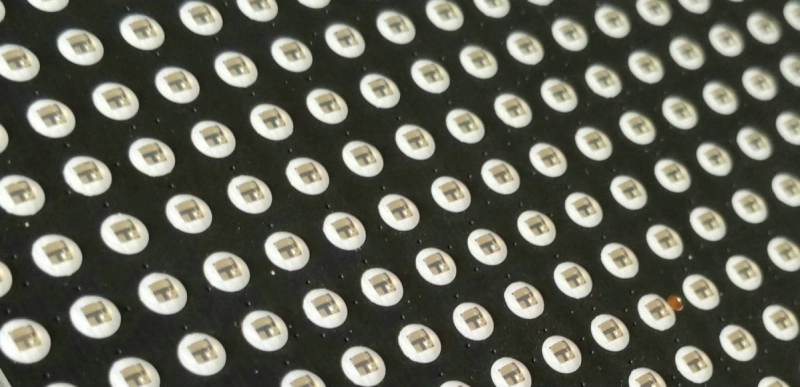
Chips-on-Board or COB is a type of LED arrangement where the chips are attached directly onto a substrate before being encased into one unit. This sets COBs apart from other LED technologies such as SMD (Surface Mount Device). SMDs have individual diodes “planted” on a printed circuit board (PCB). COBs have an additional “capsule” that encases multiple LED chips together. That’s why they are brighter than other LED technologies.
Advantages
- Better Visuals: COBs are able to produce better image quality because of their smaller pixel pitches and more consistent lighting. Closely packed chips eliminate the “pixelated” effect that happens with traditional LED displays.
- Better Thermal Management: The design of COBs allows them to manage heat better than their counterparts. By mounting chips directly on the substrate COB displays prevent overheating, prolong lifespan, and maintain performance.
- High Contrast Ratio: COB LED displays have a high contrast ratio often over 20,000:1. High contrast means vivid colors and sharp details like LCD. Deep contrasts and color depth are perfect for applications where high visual quality is required.
- Wider Viewing Angles: COB LED encapsulation ensures light is evenly distributed so brightness and color are consistent when viewed from different angles. This is very useful for digital billboards and stadium displays where viewers may see the screen from multiple directions.
- Durability and Environmental Resistance: COB LEDs are encapsulated with protective coatings to shield diodes from dust, moisture, and UV. So they are durable for both indoor and outdoor use where environmental factors may affect performance.
- Low Maintenance: COB displays have fewer interconnections than traditional LED modules and fewer points of failure. Less complexity means less maintenance and less downtime, especially for large public installations.
Disadvantages
- Costlier: The manufacturing process of COB LEDs makes them more expensive than others. But it’s worth it in the long run with lower maintenance and higher energy efficiency.
- Limited Color Adjustability: SMD LEDs have more color tuning and color temperature adjustment. COB LEDs are vibrant but may not have the same level of color customization in dynamic color displays which can be a limitation for applications that need a lot of color variation.
- On-Site Repair Inconvenience: COB LEDs are encapsulated so they require special equipment for repair. If one chip fails it’s hard to repair on-site which means longer downtime and potentially higher repair cost.
- Not for Small Displays: COB LED displays are for larger applications. SMD LEDs are more suitable for smaller display applications.
How COB LED Displays Work?

COB LEDs are composed of multiple chips on a substrate (metal/ceramic) enclosed together. No individual packaging of each LED is required hence very compact and efficient. Here’s how they work:
- LED Chips on Substrate: Multiple LED chips are placed side by side on a substrate for high-density light output.
- Encapsulation: A layer of resin or silicone covers the LED chips to protect them from the environment and diffuse the light.
- Uniform Light Distribution: The encapsulation layer spreads the light evenly, and creates a continuous light surface like sunlight.
- Power Supply and Circuitry: COB LED modules are mounted on a bigger PCB with a power management system to control brightness, color, and heat.
This integrated setup increases brightness and light consistency and reduces the number of solder points which increases reliability and less technical issues.
COB Packaging
COB LEDs can be packaged in two ways: front-mounted or flip-chip. While both are efficient and compact light sources, they differ in structure and performance.
Front-Mount COB
Front-mounting is the common way of packaging COBs. This packaging type connects the PN junction to the circuit via wire bonds facing up.
- Wire Bonding: Gold or copper wires are used to connect the chips to the board.
- Thermal Resistance: Higher thermal resistance can prevent heat dissipation and affect lifespan.
- Vulnerability: Wire bonds are prone to breakage, especially under environmental stress, and can cause reduced light quality and lifespan.
Pros and Cons: Front-mount COB is good for brightness and general lighting but less durable and efficient in heat management since it uses wire bonds.
Flip-Chip COB

Flip-chip COB is the more advanced way, an inverted design that eliminates wire bonds. Here, LED chips are directly bonded to the substrate, less points of failure.
- Wire-Free Structure: No wire bonds, more durable, fewer failure points.
- Better Heat Dissipation: Lower thermal resistance allows heat to spread more, better performance, and longer lifespan.
- Compact Design: Flip-chip COB modules are thinner and lighter, good for high-res displays and harsh environments.
Pros and Cons: Flip-chip COB is more durable, and has better heat dissipation and finer pixel pitch but higher initial cost.
Application of COB LED Displays

COB LED displays are good for areas that require high-res, rugged displays with wide visibility. Here are some applications:
- Commercial Advertising and Digital Billboards: COB displays have the brightness and durability for large outdoor advertising. They can withstand the elements so good for highways, city centers, and shopping districts.
- Public Transportation Displays: In airports, train stations, and other transit hubs COB LED displays provide clear and reliable information. Their high brightness and wide viewing angles make it easy to read from a distance, and information flows for passengers.
- Stadiums and Event Venues: COB LEDs are used in stadiums and arenas as they can project images and video content across large areas. Their high resolution and color accuracy are good for live video feeds, replays, and ads to large crowds.
- Retail and Indoor Commercial Spaces: COB displays are used for digital signage in malls, retail stores, and hotels. Their smooth output and sharp visuals are valuable tools for showcasing products, promotions, and branding in high-traffic indoor areas.
- Industrial and Medical: In industrial and medical COB LEDs are used for monitoring, data visualization, and displaying critical information.
COB LED vs SMD LED: Which is Better?

It will come down to your needs. Here’s the comparison:
- Light and Appearance: COB LEDs produce smooth light with fewer hotspots and look more natural and nicer. SMD LEDs show individual light points which can be visible in some applications.
- Color and Customization: SMD LEDs are better for color accuracy and customization, more colors, and more precise color tuning. COB LEDs are single color or limited RGB.
- Brightness and Efficiency: COBs produce more light per watt, more efficient than SMDs. Good for continuous or bright lighting applications like outdoor displays.
- Maintenance and Durability: COB LEDs have fewer solder points and connections, less maintenance, and are more durable. More rugged in harsh environments, SMD LEDs need more maintenance in similar conditions.
- Cost: The design and manufacturing process of COBs are more expensive than SMDs. But the maintenance and energy savings will pay off in the long run.
In summary:
- If you need high-brightness displays that can withstand daily wear and tear, go for COB LEDs.
- Choose SMD LEDs for applications that require color tuning, small displays, or lower initial cost.
Comparison Table
| Feature | COB LED | SMD LED |
| Structure | Multiple LED chips on a substrate with no individual packaging | Individual LED chips on a circuit board |
| Light Output | Smooth light; no “dots” visible | Point light sources; “dots” are visible |
| Brightness (Lumens) | More lumens per watt; energy saving | Good brightness but lower efficiency than COB |
| Color Options | Limited color range; single color only | Wide color range; RGB and multi-color available |
| Heat Dissipation | Good; lower thermal resistance; less overheating | Moderate; higher thermal resistance can be an issue |
| Applications | For high-resolution displays, general lighting, and large outdoor installations | For displays, signage, decorative lighting, and small devices |
| Pixel Density | High pixel density; for fine detail and close-up | Medium pixel density; for applications where individual LEDs are acceptable |
| Durability | Very durable; encapsulated design is better protected | Moderate durability; individual LEDs can be damaged |
| Viewing Angles | Wider; color and brightness are consistent from different angles | Varies; may show color shift at wider angles |
| Maintenance | Low maintenance; fewer points of failure | Moderate; more solder points and components need more maintenance |
| Cost | Higher upfront cost but long-term savings on energy and maintenance | Lower upfront cost; especially for smaller installations |
Conclusion
COB LED displays are changing the way we use and experience digital displays. With their high brightness, smooth light output, and durability, they are perfect for large-scale, high-traffic areas like commercial advertising, transportation hubs, and event venues. Although they have higher upfront costs, the long-term benefits of low maintenance, energy efficiency, and better visual quality are worth it.
COB LEDs will only get better as technology advances. So, for your next digital billboard or indoor commercial display, go for COB LEDs. A robust and high-quality option for great visuals.

