


A screen’s “viewing angle” is how clear an image is from different positions without losing brightness, color accuracy, or overall quality. This is especially important for LED screens when multiple people are watching or the screen is viewed off-center.
Understanding viewing angles is important for both consumers and manufacturers as it allows you to choose the right display products. For example, if you’re watching a movie with friends a display with a wide viewing angle means everyone can enjoy the visuals without distortion or color shift and it’s more inclusive.
LED Viewing Angle Definition
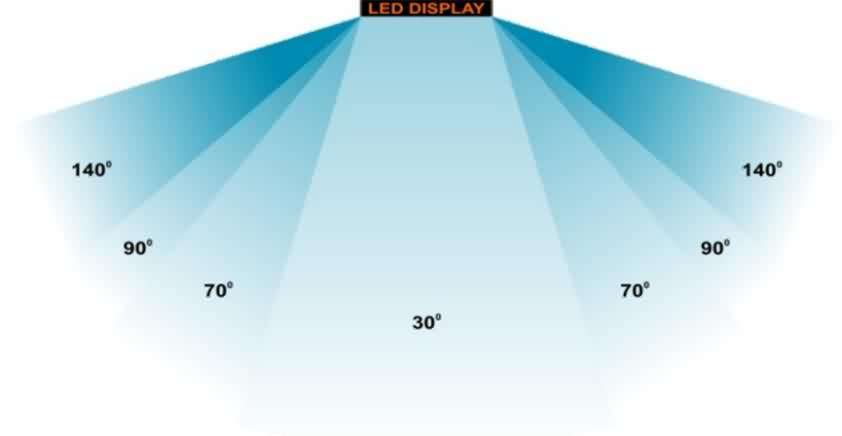
Viewing angle, measured in degrees, refers to how well a screen performs when viewed from different angles, sides, above, or below. A higher viewing angle ensures better visibility, preserving brightness and color accuracy even when viewed off-center. Manufacturers will often provide the horizontal and vertical viewing angles of their screens so you can choose the best one for your needs.
For example, a 120-degree horizontal viewing angle allows movement of 60 degrees left and 60 degrees right from the screen’s center. This ensures minimal loss of image quality. A vertical viewing angle works similarly, indicating how far you can move up or down before the image distorts or dims.
In public displays or large screens for advertising or presentation purposes, they may use the term “full viewing angle”. This means the screen provides a great viewing experience from any angle, perfect for environments where people will be standing around the screen.
Importance of Viewing Angle
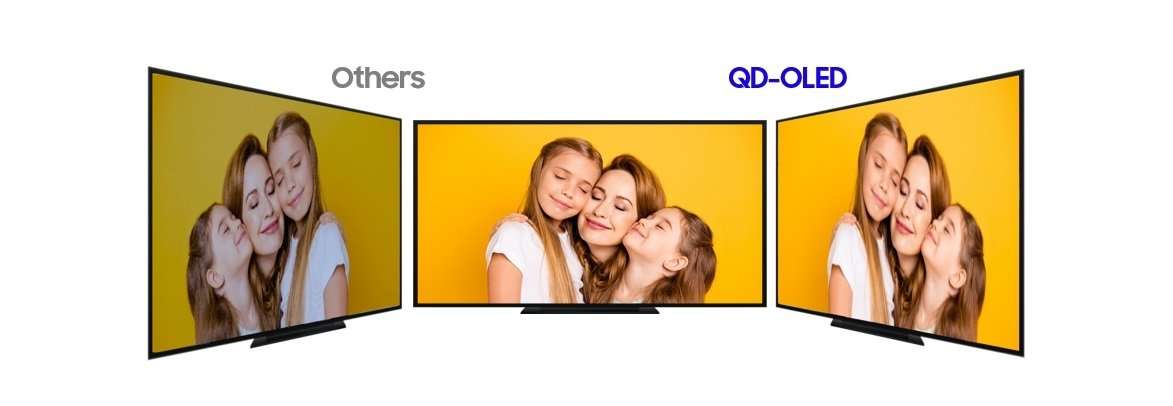
Angles matter. A lot. Especially when you’re not sitting directly in front of the screen. If the viewing angle is too small the picture will distort, and colors will shift or fade as you move away from the dead center. Viewers can’t enjoy the content fully unless they’re sitting directly in front of the screen.
This is especially true in professional settings like conferences, presentations, or classrooms where engagement requires clear visible content for everyone. A wide viewing angle means the image looks the same to everyone from different positions. That means better communication and a better experience.
Horizontal vs. Vertical Viewing Angle
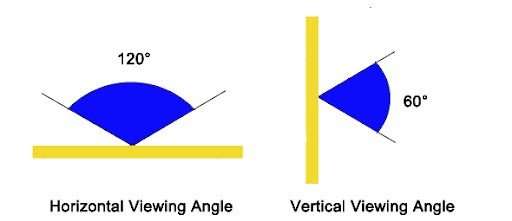
Horizontal Viewing Angle
This refers to how well the image holds up when viewed from the sides of the screen. Imagine a vertical line down the middle of the screen. This shows you how much screen real estate you can take up to either side and still see the information.
- Example: If an LED display has a horizontal viewing angle of 120 degrees, you can see the content 60 degrees to the left and 60 degrees to the right of the center. Beyond that, brightness and color accuracy start to drop.
Wider angles are better for bigger screens since more people in different positions will be able to see them. This is crucial in environments like conference rooms, cinemas, or outdoor billboards, where viewers are positioned at various angles to the screen.
Vertical Viewing Angle
If you’re dead center, vertical angles mean you can view from above or below. In this case, the angle is formed by moving up or down from an imaginary horizontal line through the center of the screen.
- Example: A vertical viewing angle of 60 degrees means you can move 30 degrees up and 30 degrees down from the center before image degradation occurs.
Vertical viewing angles are important for displays installed high or low, like digital billboards on buildings, ceiling-mounted screens, or outdoor displays on poles. Poor vertical viewing angles can cause color distortion or brightness loss so if you’re too high or too low to the screen you can’t see the content.
Types of Viewing Angles
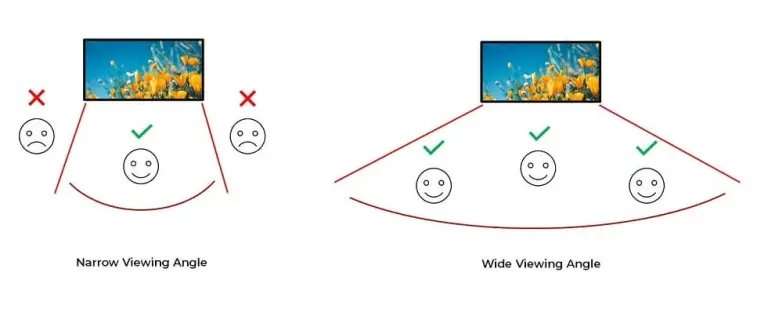
LED viewing angles can be categorized into several types, depending on the range. These types are suited to different applications depending on how the display will be used and where it will be placed.
Narrow Angle LED (10°-30°)
Narrow viewing angles are for special applications where the content is meant to be viewed directly in front with minimal side viewing. This type is used in controlled environments where the audience is fixed.
Use cases:
- Highways and railways: Narrow viewing angles are common in road signage where the message needs to be visible from a distance but is primarily directed at oncoming traffic.
- Security and information signage: Displays in areas like ticket booths or entry points use narrow viewing angles to ensure that only those directly in front of the screen can see the content, to prevent distractions.
Medium Viewing Angle (30°-60°)
Medium viewing angles offer a balance between focused visibility and wider coverage. These angles are used in environments where viewers are in front of the display but may move slightly to the sides.
Use cases:
- Retail displays: In-store displays and ads use medium viewing angles to be clear from multiple positions without spreading the content too wide.
- Corporate lobbies and control rooms: Medium angles are for environments where content needs to be seen from several angles but not extreme side views.
Wide Viewing Angle (60°-120°)
Wide viewing angles are for environments where viewers are spread out. With these angles, the content is clear from multiple positions so it’s suitable for public and shared spaces.
Use cases:
- Theaters and stadiums: These require wide viewing angles to accommodate large crowds who may be seated at different angles to the screen.
- Shopping malls and public spaces: Wide-angle displays ensure the content is visible and clear to people walking by from multiple directions.
Ultra-Wide Viewing Angle (120°-180°)
Ultra-wide viewing angles offer the widest visibility, content is visible from almost any angle. This type of viewing angle is used for very large or immersive displays where the viewers are around the screen.
Use cases:
- Concerts and live events: Large crowds gather in concert halls, stadiums or outdoor events and ultra-wide viewing angles ensure everyone has a clear view of the performance no matter where they are.
- Outdoor ads: Billboards or LED signs in high-traffic areas use ultra-wide viewing angles to ensure pedestrians and motorists can see the content from multiple positions.
Viewing Angle Factors
Several things affect the viewing angle of LED displays and understanding these is key to getting the best out of your display in different situations.
Display Type
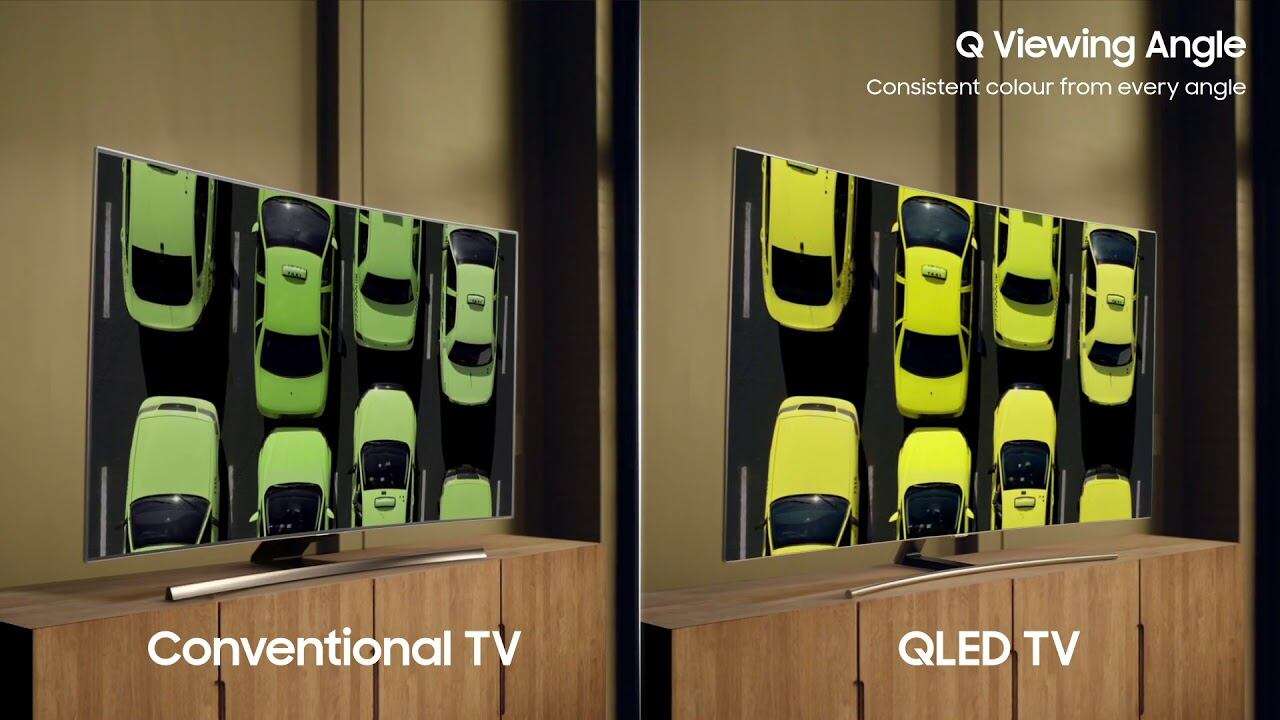
The type of display technology has a big impact on the viewing angle. Traditional LCDs have limited viewing angles because of the polarizing filters which can distort colors at extreme angles. LED has better viewing angle, color accuracy, and brightness from all positions.
New technologies like OLED, QLED, and MicroLED displays take viewing angles to the next level with deeper blacks and more vivid colors even from the sides. This makes it easier to find a display that suits your needs whether for gaming, multimedia, or professional use.
Screen Size and Shape
Screen size and shape also affect viewing angle. Curved screens for example expand the viewing angle by wrapping the content around the audience for a more immersive experience.
- Example: In home theatres, a larger screen with a wider viewing angle can provide a better-shared experience for the whole family, while smaller personal screens can do okay with a narrower viewing angle.
Environmental Factors
Natural elements like lighting can affect a screen’s angle, especially for LED screens. Room lighting, screen placement, and distance from the viewer can affect how well the screen performs.
- Lighting: Bright ambient light or reflections from nearby windows can wash out the image on the screen and reduce the effectiveness of the display. Anti-glare or matte coatings can help reduce reflections and improve viewing angles in such conditions.
- Screen placement: Placing the screen correctly (at eye level or slightly tilted) can maximize the viewing angle. For example, mounting the screen too high can reduce the vertical viewing angle and make it hard for viewers seated below to see the content clearly.
Applications of Viewing Angles
Viewing angles are important in many industries and applications. Whether in consumer electronics, photography, videography, or advertising, understanding how viewing angles affect screen performance will help you set up your display.
In Consumer Electronics
In TVs, monitors, and smartphones, wide viewing angles mean content can be viewed from multiple positions without losing image quality. This is especially important in shared spaces, such as living rooms, where people sit at different angles to the screen.
For personal devices like smartphones and tablets, wide viewing angles improve the user experience. This is particularly beneficial when sharing content during video calls or watching videos with others.
In Photography and Videography
For professionals in photography and videography, a monitor with good viewing angles is critical during post-production. Ensuring accurate color and detail representation from all angles is essential for delivering high-quality results. A poor viewing angle can cause colors or details to appear distorted, leading to client and viewer dissatisfaction.
Having wide viewing angles allows photographers and video editors to view their work from different positions without compromising accuracy. This speeds up the creative workflow and allows for more precise edits.
In Advertising and Public Displays
In the world of advertising, viewing angles are critical to reach a wide audience. Billboards, digital signs, and storefront displays must be visible from different positions to maximize engagement and effectiveness.
- Example: A digital billboard in a busy city must have a wide viewing angle so people walking and driving can see the advertisement from different directions. Similarly, at events or exhibitions, wide viewing angles mean attendees can see the presentation no matter where they are in the room.
How to Increase LED Viewing Angles
Increasing the viewing angles of an LED display will make it perform better and more people can watch without distortion or color loss. Here are a few ways to optimize your display’s viewing angles:
- Use high-quality LED: SMD LED is ideal for indoor displays because it offers better color blending and wider viewing angles. On the other hand, DIP LED is commonly used for outdoor displays due to its durability and brightness.
- Screen Coating: Applying an anti-glare or matte coating can reduce reflections and visibility from wider angles, especially in bright light or window environments. These coatings scatter the light so the screen will be visible even at extreme angles.
- Brightness and Contrast: Increase the brightness of the display and it will be easier to see the content from an off-center position, higher brightness generally has wider viewing angles. But be careful not to over-adjust the contrast so the image will not be washed out at higher brightness.
- Screen Positioning: Screen positioning is key to maximizing viewing angles. In large venues, install the display at eye level or use curved screens to enhance horizontal and vertical viewing angles. Curved screens will wrap the content around the audience.
Choosing the Perfect Viewing Angle
To choose the right viewing angle, consider the display’s purpose, the room size, and the installation environment.
- Understand the Application: Large public spaces, like malls or stadiums, need wide or ultra-wide viewing angles. This ensures people can see clearly from various angles. In smaller spaces, such as home theaters or offices, narrower angles are sufficient.
- Consider the Room Size: In larger rooms, wide viewing angles are essential so everyone can see the content. Smaller rooms don’t need ultra-wide viewing angles as people are usually closer to the screen.
- Choose the Right Technology: For indoor displays, SMD LEDs are best for viewing angles and color performance. For outdoor applications, DIP LEDs may be preferred because of their higher brightness even if they have narrower viewing angles.
Conclusion
LED viewing angles are crucial when using a display in various environments and for different audiences. Understanding horizontal and vertical viewing angles helps you make better decisions when setting up your display. Knowing the types of viewing angles and factors affecting them improves your selection process. Whether in advertising, hosting an event, or setting up a home theater, choose wisely. With the right display and viewing angles, everyone will enjoy the best possible experience.

