


Video aspect ratios may be a standard part of LED screen operation, but they’re not something that beginners easily grasp on their own. When using video content, whether for personal or business use, the aspect ratio will always be considered.
Do you want your audience to enjoy what they’re watching? If you want an effective video marketing stunt, this is highly necessary. Using video aspect ratios that seem out of place and incompatible with the screen will lead to a crushing defeat. The audience will feel uncomfortable, and they will end up not wanting to watch at all. This is why learning more about video aspect ratios is vital.
With this component being a critical factor in the success of your content, take the time to really know what it means and what it entails.
What Are Video Aspect Ratios
 A video aspect ratio is defined as the proportion of the content’s width to its height. It comes with two numbers with a colon between them, where the first one represents the thickness, while the last one represents how tall it is. When you look at the numbers, they are what they are. If you put it in a simpler version, it comes as “W:H.”
 Don’t complicate it by thinking it needs to be something more technical. It simply pertains to the size of the video and image content. Match the aspect ratio you use with the platform and the LED screen you plan to use.
Common Video Aspect Ratios Used Today
In today’s fast-paced technological advancements, different video aspect ratios have been introduced for everyone to use. These ratios come in widely varied forms, with their own respective compatible applications. To choose the ideal one for your video content, you should recognize them. These are the most common ones you will encounter in the market.
16:9 (1.78:1)

Considered the most famous aspect ratio used today, together with 4:3, the 16:9 comes at the top. People have become used to applying this aspect ratio to their content since it started in the 1990s. This standard ratio can be applied to so many devices and use cases, including the following:
- Television
- Computers
- LED Screens
- Streaming Services
This particular aspect ratio has a width and height value that form a rectangular shape. It has become the go-to option among all video aspect ratios because it’s comfortable for the viewers to look at. The orientation has always become the standard viewing orientation, and choosing otherwise can be uncomfortable.
4:3 (1.33:1)
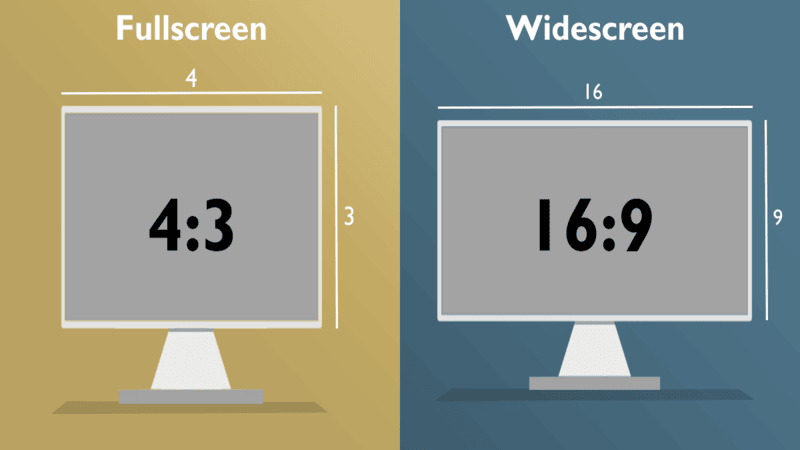
The next most popular aspect ratio, 4:3 or 1.33:1, is a bit similar to 16:9 but not as expansive in its width compared to its height. Before 16:9 ever hit the market, 4:3 reigned supreme.
This aspect ratio was the favorite before widescreen dominated the media world. While this aspect ratio is still popular (with many still using it), the 16:9 is still the top choice for many.
21:9 (2.33:1)
The 21:9 aspect ratio is the ideal choice if you’re in search of something more than just the widescreen option. Also known as the cinema scope, this video aspect ratio is broader and offers more room for your peripheral vision.
Because of its wide view, it is also known as the ultrawide view aspect ratio, increasing the field of view, which is perfect for the following applications:
- High-end home theaters
- Professional monitor setups
1:1
Popularly used by the social media platform Instagram, the equal width and height of this ratio provides the content a square look. Designed for mobile distribution, it is popularly used for the following:
- Films
- Social media content sharing
- Mobile apps
1.85:1
This aspect ratio may seem unique compared to other options. However, it is a good choice if you’re working on cinematic content that would use broad screens.
Compared to other video aspect ratios, it doesn’t have a 2-number label. However, it is considered to be within the range of 2.19:1 to 16:9.
2.39:1
The 2.39:1 video aspect ratio is another “cinematic” option you can use. In a standard screen, it has black bars placed both at the bottom and top of the screen. This is called letterboxing, and this aspect ratio utilizes this technique to be compatible with widescreen and anamorphic content.
4:5
This vertical-oriented aspect ratio is more popularly seen in social media platforms. It is an alternative to content that has square forms or should use the 1:1 ratio. It is also considered for mobile displays.
9:16
This particular aspect ratio is the opposite of the popular 16:9. While the 16:9 leans on the landscape orientation more, the 9:16 aspect ratio is its portrait version. This is often used in the following platforms:
- Facebook Stories
- Snapchat
- TikTok
Aspect Ratio Vs. Resolution
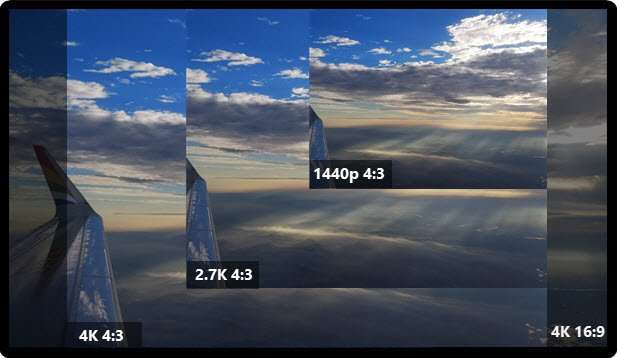
Discussing video change aspect ratio often includes resolution in the mix and a thorough assessment of the differences of each. While they both have numbers, they are two very different components of the content.
Video aspect ratio is the proportion of the content frame’s height and width. It defines how broad or tall your content will look. This will drastically change the shape of your content frame, which can affect how the audience sees the content.
Meanwhile, the resolution points to the number of pixels used on a specific display. Pixels add clarity and colors to the screen, which means that more pixels guarantee clearer and more colorful visuals. They come in two values separated by the multiplication sign. Here are the popular resolutions:
- 1280 x 720 or 720p
- 1920 x 1080 or 1080p
- 2560 x 1440 or 1440p
- 2048 x 1080 or 2K
- 3840 x 2160 or 4K
- 7680 x 4320 or 8K
How Do You Choose the Ideal Video Aspect Ratio?

With so many video aspect ratios to consider, which one should you use every time? The truth is that it depends on a lot of factors, and you can’t just choose a single video aspect ratio for all of your content. To make it easier for you, here are various factors to take into account (and a few pointers along the way):
Platform
On what platform do you plan to upload your content to? Different platforms have their corresponding aspect ratios, and it’s best to follow what the platform supports. Here’s a cheat sheet on the ones different platforms recommend:
- YouTube – 16:9 (Widescreen)
- TikTok/Reels/Shorts – 9:16 (Vertical)
- Instagram/Facebook Feeds – 1:1 (Square)
- Mobile Posts – 4:5 (Tall)
Target Audience
Who is your target audience? Make sure you consider them when choosing your video aspect ratio. Choose the one they are bound to enjoy and take into account their viewing habits. Do they often watch videos on YouTube, or are they fond of scrolling social media feeds? From there, you can make a more thought-out choice.
Content Type
Different video aspect ratios have corresponding content perfect for them. For social media stories and reels, 9:16 or tall is the perfect option. However, it might not be the best one if you’re dealing with movies and cinematic films. These types of content need a broader and more immersive viewing, which only the widescreen (16:9) aspect ratio provides.
Collaborative Work
If you’re working with other teams and content creators, include the video aspect ratio in your discussion. This is a necessary discussion at the start of your collaborative work to avoid wasting time. Not doing so can lead to you not using the same video aspect ratio and needing adjustments in a short span of time.
Creativity and Imagination
When creating your video content, consider the ratio that fits your creative piece. If your storytelling matches the 9:16 video aspect ratio that offers a more intimate POV, then it’s better to choose that format for your content. Always consider your creativity and what matches your vision and masterpiece.
Options
Don’t be limited by the aspect ratio recommended to you. While it’s still worth considering, try other video aspect ratios as they may actually give your content a different point of view.
Conclusion
Video aspect ratios are easy enough to understand, provided you give them time to learn about them. While they seem technical because there are numbers involved, they are actually very direct and simple. They refer to the width and height of the video content, which is something you need to learn about when creating your own content.
Video aspect ratios are often confused with resolution. While they are related, they refer to very different things. However, they both affect the visuals of the content and the LED display.

