


Massive digital display screens called jumbotrons are utilized for presentations at arenas, stadiums, and music venues. The introduction of high-definition video screens transformed live event viewing because they provided close-up picture quality to spectators in everything from the first row to the last. Viewers can create an immersive visual encounter through jumbotron screens which feature game-winning touchdowns at stadiums as well as jumbotron basketball screens that capture slam dunks.
This article explores jumbotron technology including history and operation principles, use cases, global industry giants and price structures and selection strategies for purchasing jumbotrons.
Introduction to Jumbotron Screens
A stadium jumbotron is a kind of large-format, high-definition display that is often seen by the general public at stadiums, public squares, music halls, and advertising places. Jumbotrons function as enormous digital advertising spaces that display live content and advertisement material in addition to event data and additional outreach products for viewers spread over extensive distances.
History and Evolution
The history of Jumbotron technology started in the early 1980s when Sony first used the word and registered it as a trademark. For the first time jumbotrons were observed at the Cotton Bowl Stadium in Texas to transform fan experiences during live sports events. Modern LED technology has replaced the original cathode-ray tube (CRT) displays because it provides improved brightness along with superior clarity and lower energy requirements.

Key milestones in jumbotron development include:
- 1980s: Sony became the first company to use CRT technology to make jumbotron screens.
- 1990s: LED technology became prevalent during the 90s and replaced CRT displays because of its improved brightness levels and increased durability.
- 2000s: Big professional sports venues across the world introduced massive 4K and HD resolution LED screen displays
- 2020s and beyond: Use of 8K resolution, seamless modular panels, and energy-efficient LEDs.
Jumbotron vs. LED Video Walls
Jumbotron represents both a generic and specific term that needs differentiation from LED video walls.
- Jumbotron screens maintain their position as expansive fixed-viewing display systems which serve stadiums and entertainment facilities, together with public spaces.
- LED video walls function as modular displays that customers use for conference rooms, retail operations, and small advertising purposes.
Key Features of Jumbotron Screens
- Massive Screen Sizes – These screens may be larger than 100 feet in both dimensions, thus allowing observers situated at distant points to view the display.
- High Resolution & Clarity – The modern screen technology delivers 4K, 8K, and HDR features for improved image quality and picture definition.
- Brightness & Weather Resistance – Outdoor suitability allows these screens to operate effectively when brightness levels rise and they weather all types of destructive environmental conditions.
- Live Video & Multimedia Integration – The system links to various media platforms that incorporate live sports feeds as well as camera systems and advertisements.
How Does a Jumbotron Screen Work?

LED technology in jumbotron screens allows viewers to see high-definition visuals at all times which creates exciting visual experiences for big audiences. Large screens comprise different integrated elements that join together to create immediate high-quality vibrant visuals at runtime.
Key Components:
Display Panel:
- The display system contains several million LED clusters that generate RGB color hues.
- The screens achieve clean distinct images irrespective of viewer distance because of their high pixel count.
- The modular design structure lets operators scale their screens without difficulty because it offers easy expansion options.
Control System:
- Controls jumbotron functions through video signal processing while receiving and processing data input from its control system.
- The system utilizes processors for video processing that applies formatting techniques to achieve optimal display quality.
- The system maintains capability to merge various input formats from live camera systems to advertisements and both pre-recorded and real-time video streams.
- With remote operation users can achieve real-time content updates as they concurrently switch between multiple video feeds without interruption.
Power Supply:
- The system operates without interruption because of its high-capacity electrical framework.
- The screen’s energy efficiency depends on its dimensions as well as brightness settings and the applied LED technology framework.
- Power management systems help present-day jumbotrons to save power while upholding their brightness levels.
Refresh Rate & Resolution:
- The prevention of motion blur together with smooth video performance relies on refresh rates that span between 120Hz to 240Hz because they are crucial for sports broadcasts.
- The resolution levels starting from basic 1080p HD standard extend all the way up to ultra-high-definition (4K and 8K) which produces outstanding image clarity.
- Advanced HDR technology improves both image depth and contrast so viewers experience heightened immersion.
Weatherproofing & Durability:
- Jumbotrons built for use outdoors possess engineering features which enable them to endure all manner of severe weather from rain and snow and temperatures found in extreme conditions.
- Outdoor jumbotrons achieve extended life expectancy along with unobstructed visibility under bright sunlight because they include protective enclosures, glare-reducing coatings, and reinforced frames.
Connectivity & Integration:
- Advanced modern jumbotrons enable high-speed data transmission through their built-in Wi-Fi as well as Ethernet and fiber optic connectivity.
- Music systems, audio with stadium lighting, can be controlled by the jumbotron to deliver better audience engagement.
- The real-time capability of mobile app and social media integration enables displaying tweets and receiving fan-submitted videos on screen in real time.
Applications of Jumbotron Screens
Jumbotron screens throughout multiple business industries use their capabilities to enhance visual displays while creating improved audience viewing experiences for their mass audiences. The screens feature technology to draw viewers into events, display current information, and provide total event engagement.
1. Stadium Jumbotrons

Stadiums represent one of the primary locations which utilize jumbotron screens. The massive screens improve viewing by showcasing detailed moments as well as replays, live statistics and audience participation events. Stadium screens named Jumbotrons create a superior event environment because they allow spectators from any section to witness detailed views of the activities.
Jumbotron Basketball & Football Screens
- Jumbotron Basketball: Jumbotron screens at NBA facilities including the Madison Square Garden and the Staples Center present basketball games in crystal clear high-definition format. Besides game data Jumbotrons present player statistics and conduct player interviews with segments meant to engage fans.
- Jumbotron Football: Operates in both AT&T Stadium and SoFi Stadium to broadcast instant replays along with game updates, commercials and halftime entertainment.
- Current stadium design features augmented reality (AR) components through interactive graphical elements as well as participatory features in the audience experience.
2. Concerts & Music Festivals
- During large music events jumbotron screens deliver distant audiences a clear view of concerts by showing performances to people beyond stage attendance.
- These displays present both live performer videos together with lyrics and visual effects alongside crowd participation elements.
- Jumbotrons at festival venues often have synchronized light shows and AR visual elements that upgrade the festival atmosphere.
3. Outdoor Advertising & Digital Billboards
- Jumbotrons have become a common sight for outdoor advertising at prominent urban areas that include Times Square New York City and Shibuya Tokyo and Las Vegas Strip.
- High-resolution advertisements along with promotional videos and branded content attract multiple thousands of people who pass by the screens.
- Billboards utilize motion sensors together with AI-based content delivery to create individualized engagement for users through movement tracking and demographic targeting.
4. Corporate & Public Events
- Trade Shows & Conferences: Jumbotron screens function in business exhibitions and industry conferences and corporate events for presentation demonstration as well as keynote speech display.
- Public Announcements & Government Use: The area’s public safety depends on jumbotrons activating emergency alerts because these smart screens also serve the city through broadcasting announcements and providing real-time alerts about weather conditions, traffic and safety reports.
- Educational & Non-Profit Events: Broad-based events including TED Talks and charity fundraisings alongside university graduation ceremonies use jumbotrons to enhance audience viewability and engagement.
5. Sports Bars & Entertainment Venues
- Sports bars together with entertainment venues make use of jumbotron screens to show live sports broadcasts, esports competitions, and entertainment productions.
- Mutual gamers can now experience virtual reality along with augmented reality environments through jumbotron screens at gaming arenas.
6. Outdoor & Drive-In Cinemas
- Drive-in and open-air theaters make the jumbotron screen an ideal solution for delivering visual performance levels that rival movie theaters.
- Different venues allow their audience to watch a film through multiple screens at the same time by providing alternative camera perspectives.
7. Religious Gatherings & Community Events
- Large religious congregations with multiple followers utilize jumbotrons to send prayer services along with sermons as well as worship content to worshipers during services.
- Events and rallies including parades make use of big LED screens for enhanced audience reach and better participation levels.
The World’s Biggest Jumbotron Screens
1. AT&T Stadium Jumbotron (Dallas Cowboys, Texas, USA)

One of the largest indoor stadium displays in the world is the jumbotron screen at AT&T Stadium, which is well-known across the globe. No one sitting in the stadium should experience distance from the field because this enormous screen stretches 160 feet wide by 72 feet tall across the midfield. The installation of this stadium screen as the largest screen in history occurred in 2009. The stadium screen provides viewers with clear visibility of all game activities irrespective of their seating position throughout the venue. After football games, the stadium screen functions as a display for performances, box matches, and other major events presented at the venue.
2. Mercedes-Benz Stadium Halo Board (Atlanta Falcons, Georgia, USA)

The retractable roof at Mercedes-Benz Stadium features the 1,075-foot-long and 58-foot-tall curved LED Halo Board which provides 360-degree screen coverage of the entire stadium circle. With its perimeter reaching 62,000 square feet the 360-degree display provides fans a special view by showing live action together with instant replays and statistics everywhere around them. The Halo Board allows fans to view all stadium events from any seating area because its expansive design reaches every spot within the stadium boundaries.
3. SoFi Stadium Jumbotron (Los Angeles Rams & Chargers, California, USA)

The Infinity Screen located at SoFi Stadium stands as the largest and most advanced jumbotron in existence. The SoFi Stadium Jumbotron occupies 70,000 square feet of 4K HDR screen space that hangs under the roof enabling spectators to observe all actions from their seating spots in the stadium. This display sets itself apart through its distinctive oval shape that forms immersive circular content delivery throughout a sporting event. Since SoFi Stadium opened its doors in 2020 its jumbotron became the central attraction for Rams and Chargers fans to enjoy incredibly clear and interactive experiences within games and live events.
4. Big Hoss TV (Texas Motor Speedway, USA)
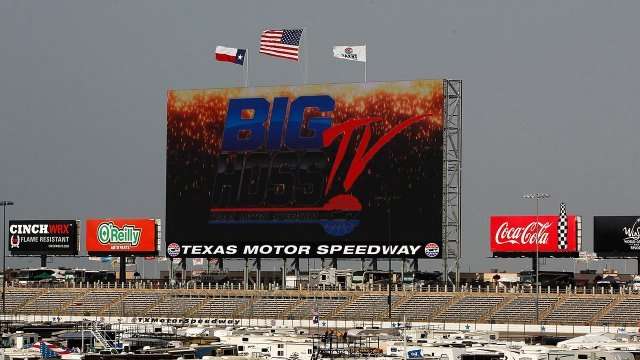
Big Hoss TV at Texas Motor Speedway claims the world record for largest outdoor jumbotron because of its spectacular dimensions which reach 218 feet in width and 94.6 feet in vertical height. The enormous 20,633 square-foot display gives spectators at the track ideal visibility to all track segments during racing events. Big Hoss TV delivers exceptional durability and top-level brightness that maintains clear visibility during all sunlight conditions. Customers use Big Hoss TV to broadcast races, along with providing real-time leaderboards, displaying promotional items, and conducting interactive fan experiences.
5. Tokyo Racecourse Jumbotron (Tokyo, Japan)

The Tokyo Racecourse features a jumbotron screen amounting to 218 feet wide by 37 feet tall that shows race footage and betting odds as well as instant replays to spectators at the world-famous horse racing venue. The installation of this screen in 1999 made it the biggest high-definition video display worldwide. Fans depend heavily on this important screen when following quick-paced horse racing races at the 200,000-person capacity arena.
6. Charlotte Motor Speedway (Concord, North Carolina, USA)

A grade-winning jumbotron located at Charlotte Motor Speedway stretches 200 feet wide by 80 feet tall throughout NASCAR races to boost fan delight. Inside its 16,000 square feet surface, this display presents live competition data and driver performance information together with fast re-runs for fans in their seating area. High-definition replay footage remains clear because this screen operates with a fast refresh rate.
7. Khalifa International Stadium (Doha, Qatar)
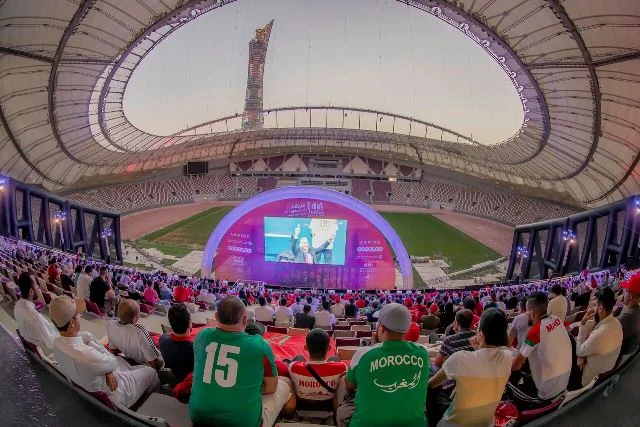
A jumbotron installed at the 2022 FIFA World Cup at Khalifa International Stadium extends across 125 feet of width and 26 feet of height. The LED screen engineered at high resolution allows spectators to view soccer matches together with player highlights and statistical data in clear detail. Under Qatar’s harsh climate conditions the screen has heat-resistant LED panels to maintain bright, clear display even when exposed to direct sunlight.
8. Fremont Street Experience (Las Vegas, Nevada, USA)
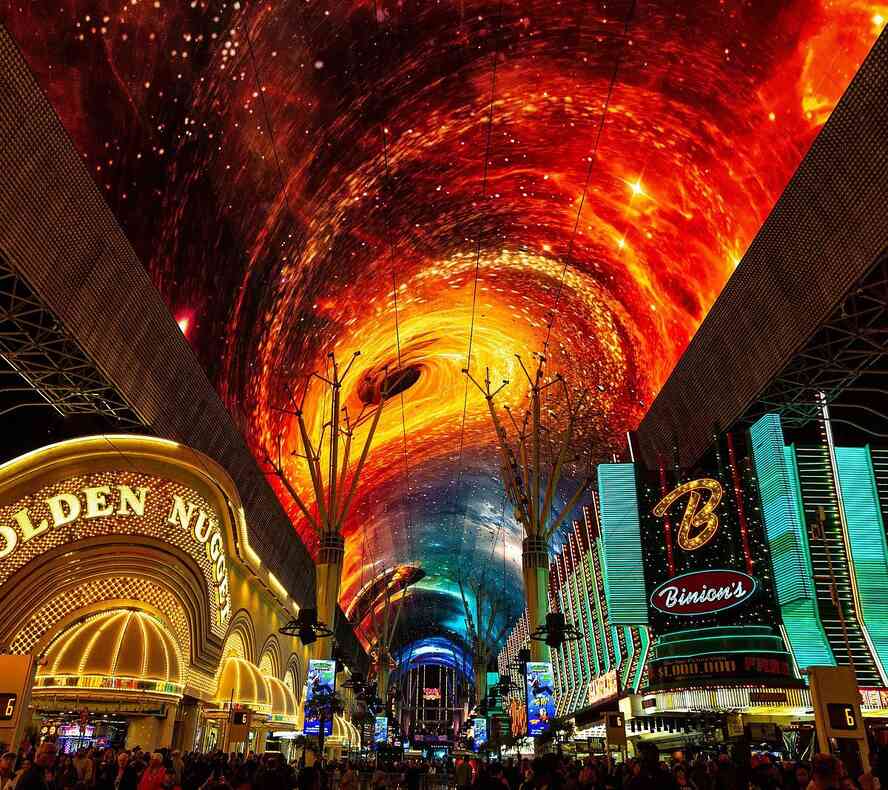
The Fremont Street Experience shines above downtown Las Vegas through its world-class LED canopy screen which extends across 1,500 feet of length and 90 feet wide while spanning five entire city blocks. This display spans across 135,000 square feet while delivering synchronized musical features as well as live broadcasts and changing art visualization presentations. The nightly Viva Vision Light Show performs a unique combination of sound and visual productions which annually attracts millions of tourists to the venue.
9. The Sphere at The Venetian (Las Vegas, Nevada, USA)
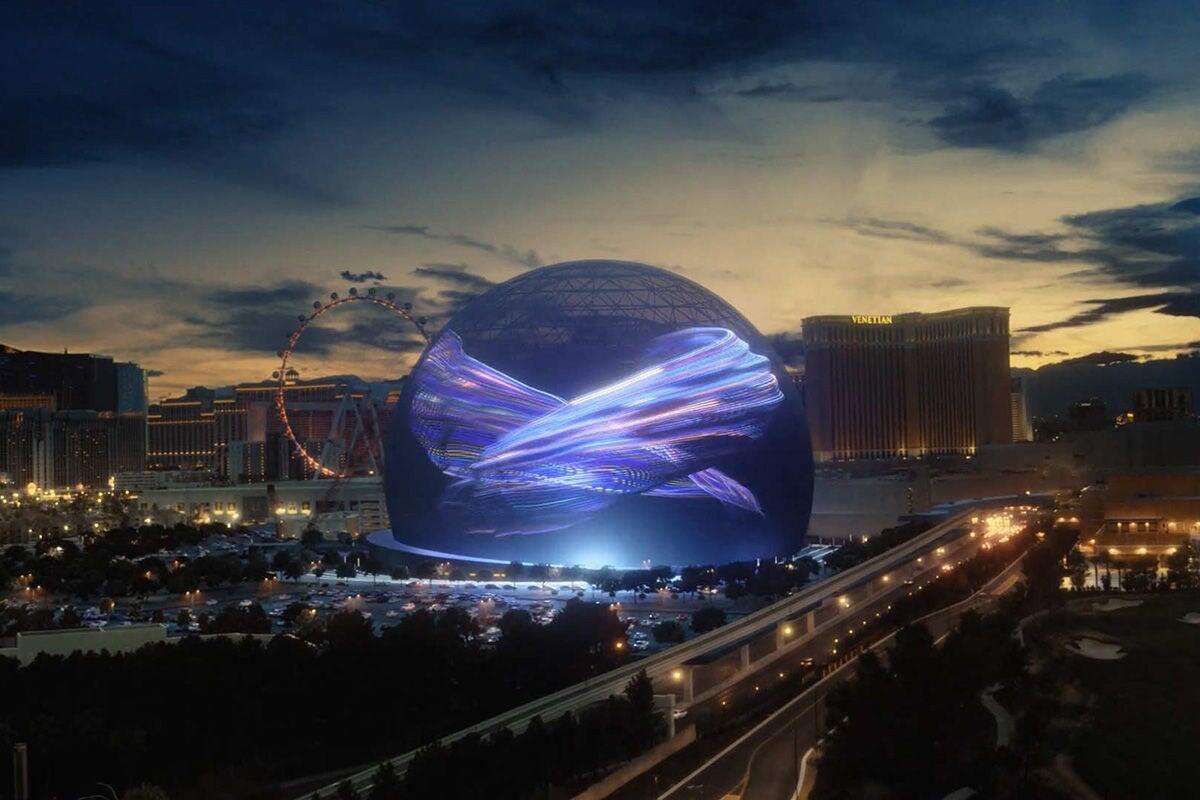
The Sphere at The Venetian showcases two huge LED displays: a large exterior surface extending to 580,000 square feet and an interior expanse reaching 160,000 square feet. It stands as a revolutionary music venue that delivers cutting-edge visual depth through high resolution displays which positions it among the world’s most futuristic LED displays.
Jumbotron Screen Price: How Much Does It Cost?
Multiple factors determine the expense of installing a jumbotron screen because the price depends on the size and resolution combination, along with technology selection, installation specifications, and any added features. LED display panels with small dimensions have affordable price points, whereas stadium jumbotrons with large scales need significant financial investments since they require complex engineering along with extensive display surface areas.
Factors That Influence Jumbotron Costs
- The size of jumbotrons determines their total cost because larger dimensions require higher prices. More LED modules require sophisticated wiring systems and processor upgrades to enable a stadium to power its jumbotrons across different sizes.
- Producing high-resolution screens that combine 4K and 8K with HDR content through multiple LED clusters drives up product costs.
- The price of display technologies surpasses conventional market LED sets when high-end display technologies such as MicroLED, QLED and OLED become involved.
- The complete installation process of stadium-mounted jumbotrons becomes more expensive because it involves wiring electrical components, calibrating the system and strengthening the stadium infrastructure.
- Manufacturers increase outdoor jumbotrons’ prices by adding weatherproofing components and durability factors required for protecting heat resistance and anti-glare features and waterproofing frames.
- More costs arise from special customized additions such as interactive elements and augmented reality enhancements and dynamic content administration features. Quite apart from other features the curved display technology remains key among them.
- When owning a jumbotron requires sustained software support maintenance costs and prolonged component maintenance extend the total expenses.
Estimated Cost Ranges by Size
| Screen Size | Price Range |
| Small (10-30 ft) | $50,000 – $100,000 |
| Medium (30-60 ft) | $100,000 – $500,000 |
| Large (60+ ft, stadiums) | $500,000 – several million dollars |
Buying vs. Renting a Jumbotron
- For permanent stadiums the purchase of Jumbotrons represents the optimal approach over any other available alternatives.
- Renting provides the best solution for single-time events together with concerts business presentations since it allows users to access screens while not requiring ownership.
- The rental expenses for Jumbotron screens span between $5,000 to $50,000 based on their size as well as their chosen installation area. Caring for Jumbotrons while installing them requires additional financial costs.
Choosing the Right Jumbotron for Your Needs
When selecting a screen jumbotron the speaker size together with resolution and brightness level and position along with financial limitations determine the decision. The best equipment choice for sports stadiums involves big displays equipped with advanced brightness tech but high-density LED panels work most efficiently when mounted inside due to their quick refresh rates.
Key Considerations:
- Sports facilities need quick refresh rates in their digital displays for basketball to achieve excellent motion clarity whereas football facilities require extensive viewing displays.
- Outdoor displays which have IP65 certification and anti-glare treatments function aptly in sunny environments with heavy rainfall.
- Building permanent stadium jumbotrons remains costlier than renting temporary displays for jumbotron needs.
- Audience engagement includes touch screen elements, augmented reality components and social media functions as part of the new additions.
Conclusion
Jumbortrons have become synonymous with sports events. While they play a big role in making sports more exciting from the audience and marketing standpoints, they also find uses in other applications, such as churches and concerts. If you’re thinking of investing in one for your venue, be sure to do your research as it is a big investment–literally and figuratively

