


The current marketplace remains greatly dependent on outdoor advertising techniques known as out-of-home OOH advertising within business operations. The advertising sector utilizes traditional highway billboards alongside modern digital displays in urban locations for attracting viewer notice, alongside deep audience impressions. OOH advertising persists as a core marketing element for brands because it transforms through digital changes to keep its essential role in branding strategies.
Understanding Outdoor Advertising
Current consumer behavior together with changing preferences has forced outdoor advertising to transform significantly throughout time. Public areas receive continuous outdoor advertising exposure because these advertisements remain permanently in place for reliable branding visibility.
The main goal of outdoor advertising consists of capturing customer focus while digital tools cause minimal disruption to the audience. The most effective placement locations for OOH media marketing objectives can be found across urban areas, highways, and transportation networks to maximize audience reach. Your marketing message gains maximum effectiveness from outdoor advertising when introducing new products and promoting brand recognition or passing useful information about market events because it reaches everyone without causing any disruption.
Outdoor advertising success relies solely on three critical components, which include superior design standards for appropriate placements of strong messages. High-quality visuals paired with limited meaningful text in appealing advertisements leave powerful mental marks on viewers which persist even after they keep walking. Insertion of outdoor marketing initiatives into business strategies leads companies to achieve better customer reactions coupled with better brand retention that yields superior sales performance.
What is Outdoor Advertising?
Public areas function as display spaces for all advertisements intended to reach various audiences through outdoor advertising methods. Viewers do not have the same ease of blocking or skipping OOH advertising as they do digital ads, so they perceive it as a strong promotional tool for building brand awareness. Outdoor advertisement functions as a main tactic to interest people who pass through public spaces.
Standard OOH advertising follows billboard design principles, while the format of OOH advertising includes multiple options from street furniture items to projection mapping and experiential spaces. Outdoor advertising enables modifications and an unlimited number of design choices to help brands launch purposeful marketing campaigns.
Key Benefits of Outdoor Advertising
Every essential advantage that outdoor advertising delivers helps explain why it represents an essential marketing tool. Public advertising delivers unique features which seize attention in public areas to make brands available across wide audiences. These main advantages emerge from outdoor advertising for customers:
- High Visibility: Outdoor advertisements effectively broadcast their content to hundreds, up to multiple millions of accessible individuals who encounter them in high traffic areas. The reliability of public exposure through OOH advertising stems from its positioning in major digital displays at Times Square paired with subway station advertisements.
- Cost-Effectiveness: The cost-effectiveness factor operates differently in outdoor advertising due to sustained advertising effects delivered with single investments instead of needing perpetual digital marketing expenses. Because no continuous budget is necessary, they persist for weeks to months and operate as cost-efficient brand ambassadors.
- Creative Freedom: Through OOH advertising brands produce large advertising materials which grab immediate attention due to their creative freedom. Businesses create remarkable brand experiences with their 3D displays and interactive digital techniques and projection mapping to activate customer engagement effectively.
- Localized Targeting: Every billboard advertisement needs a precise location for maximum returns from its target demographic. The exact delivery of target audience groups such as urban commuters and shopping customers is possible with OOH advertising since this format has precise location-based capabilities.
- 24/7 Exposure: Users have no way to avoid exposure to outdoor advertisements because these displays operate continuously 24/7.
Challenges in Outdoor Advertising
There are many advantages that OOH advertising offers to advertisers, although they need to evaluate possible limitations during the planning process of their initiatives. The performance of campaigns together with their expense levels and operational sustainability faces unique barriers during their lifecycle.
- Weather: The physical components of traditional billboards and posters face significant damage risks due to the extreme combination of extreme rainfall and wind storms alongside exposure to excessive ultraviolet rays. The reduced replacement interval because of weather damage leads to increased operational expenses.
- Regulatory Restrictions: Various municipalities enforce strict restrictions through their legislation to control where advertisers can place signage as well as its dimensions and displayed content. The obstacle of obtaining desirable public ad spaces arises from zoning laws in addition to environmental policies and mandatory permits. Local authorities prohibit all outdoor advertising activities in some areas with the goal of safeguarding the city’s appearance.
- High Cost for Prime Locations: The cost of advertising in prime locations maintains expensive rates, particularly because of premium advertising spots found in Times Square and major highways. Large business brands require substantial financial resources for acquiring prime placement spots, therefore high-traffic areas become beyond reach for both small businesses and startup companies.
- Measurement of Effectiveness: Computing the direct results of outdoor advertising proves difficult because digital advertising provides exact measurement tools but OOH lacks clear data points. The effectiveness of OOH campaigns proves difficult to determine through tools such as geo-tracking and QR code measurement, although they provide engagement metrics.
Types of Outdoor Advertising
Various types of outdoor advertising exist with specific features that target audience interaction differently. Brands can target audiences at their workplaces and transportation stops while they engage in social activities because static and digital displays comprise OOH advertising. The following section delves into standard advertising formats which use outdoor surfaces with their corresponding advantages.
Billboard Advertising

Billboards continue to be recognized as highly effective outdoor advertisement tools among every other form of public display. Out of Home advertisements exist in diverse formats which present separate opportunities to earn public interest:
- Traditional Billboards: Among the billboards that have survived for many years are those consisting of painted or vinyl displays. High-traffic zones serving as their placement locations allow billboards to be seen by numerous viewers.
- Digital Out-of-Home Billboards: Deliver multiple ad content to customers through high-definition LED displays, which advertisers can update instantly. The digital platform allows the integration of three key elements, which include live feeds along with weather-based content and interactive user involvement.
- 3D and Interactive Billboards: Advertising progress enabled the development of advanced 3D billboards that take their design elements above the flat surface while providing interactive visual displays to users. Some digital billboards add motion features as well as augmented reality elements and interactive functionalities that allow audience interaction.
Transit Advertising

Within transit advertising, businesses use bus posts and metro hubs since these vehicles link numerous passengers and riders who stop to wait. The advertising mechanism shows optimal outcomes when used in urban geographic areas.
- Metro passengers together with bus riders routinely see indoor and outdoor ads that decorate public vehicles. Vehicle wraps, which fully cover vehicles with added interior components, enable brands to reappear repeatedly in front of audiences.
- Through the combination of vehicle wraps and rooftop LED displays along with interior advertising assets, taxi and auto-rickshaw operators can promote to their customers and passersby at locations where these vehicles stop. Advertising strategy produces exceptional outcomes when deployed at congestion points where several people converge.
- The advertising approach that reaches audiences at the airport and train station facilities effectively targets travelers alongside professionals who use these facilities as their gateway to high-value audiences.
- Company delivery and fleet vehicles represent an opportunity to create mobile branding opportunities through appropriate branding. Meals and ice cream trucks operate under discretion by using sound to attract customers without causing problems with official regulations.
Street Furniture Advertising

Street furniture advertising in modern times utilizes public facilities because these infrastructure points receive frequent human interactions to provide strong branding visibility.
- Passengers can view interesting visuals along with interactive QR codes at bus stop shelters because these platforms double as advertisements during transit wait periods.
- Street furniture advertisements displayed on kiosks and seating areas show information to pedestrians, combined with shoppers in the area.
- The targeted public sector can engage with brand messages through the ATM and phone booth equipment while conducting their transactions and making phone calls.
- The messaging running on waste receptacles promotes social consciousness through the advertising platform with recycling units.
Non-Traditional & Experiential Advertising

Brands that wish to market themselves come up with unique advertising approaches to shock their target audience into paying attention. The contemporary advertising techniques outperform traditional OOH practice through their implementation of complete brand interaction systems.
- Special occasions see companies deploying short-term digital structural projections to generate big-format interactive advertising screens for new product launches.
- Balloons, together with blimp advertising, deliver brand messages to large spectator audiences throughout sports competitions and festivals while city-wide assemblies because their message can be seen from extensive distances.
- The unpredictable nature of guerrilla marketing projects its buzz-making effects onto socially popular sites.
- Through mobile phone ads that use augmented reality technology, companies allow customers to engage directly with their content to achieve deeper advertising experiences.
- Outdoor artworks that use hand-painting techniques force people to connect because they trigger valuable social media uploads.
Iconic Outdoor Advertising Campaigns
Outdoor advertising has developed enduring marketing moments which continue to be familiar to people across the world. A successful OOH advertising launch requires brands to integrate massive billboards with interactive displays for achieving remarkable marketing outcomes. The analysis explores popular outdoor advertising efforts to identify their essential components, which resulted in their success.
Standout Billboard Campaigns
Reliable branding began utilizing outdoor advertising billboards from the time they appeared in history until now. These types of advertisements achieve their defined results through imaginative execution methods.
Nike’s NYC Marathon Billboard

Through emotional messaging Nike established its brand identity during the NYC Marathon event. The motivational rally of Nike became visible through “You’ve come hundreds of miles to get here. Only 26.2 to go.” while they ran their NYC Marathon billboard campaign. A direct heartfelt message in this advertising effectively touched viewers who both took part in the event and people watching from the stands.
Coca-Cola’s “Recycle Me” Billboard

Coca-Cola made the “Recycle Me” Billboard, which functioned as an advertisement to encourage consumers to recycle their cans and bottles. Coca-Cola used its “Recycle Me” billboard to showcase sustainability initiatives of the brand alongside a compressed Coke can under the “Recycle Me” title.
Apple’s “Made on iPad” Campaign

The “Made on iPad” Campaign represented Apple’s artistic presentation of completely iPad-generated street advertising content. Apple used this marketing approach to announce its status as an innovative technology firm that emphasizes design during the Olympic period, which served as their launch moment.
McDonald’s Sundial Billboard

McDonald’s Sundial Billboard used an outdoor campaign featuring meal shadow progression through automatic sun shadow modifications for breakfast and dinner services during day hours. The main success of this remarkable campaign emerged from its ability to unite functional design components with practical functions
BMW’s “Don’t Blink” 3D Billboard
Using the “Don’t Blink” 3D Billboard BMW performed an actual vehicle escape simulation from its advertising zone through genuine three-dimensional visual effect technology. People viewing the impressive display became totally captivated and later shared the projection on their social media networks.
Formula 1’s “Feel the Speed” Billboard
The Formula 1 “Feel the Speed” Billboard provides the motive experience of racing by displaying a speed-blurred car representation which expresses high-speed velocity along with intense thrill.
Digital and Interactive OOH Campaigns
Brands started generating real-time modern advertisements by using interactive outdoor displays, which brought new changes to advertising through digital billboards.
Babybel’s Peelable 3D Billboard

The Babybel company employed Peelable 3D billboards that presented huge realistic cheese models with glass-like coatings so viewers could reproduce peeling off the advertisement. The interactive nature of the promotion led consumers to enjoy it while memorizing its content easily.
LiveOnNY’s “Missing Heart” Campaign
The LiveOnNY “Missing Heart” marketing campaign utilized basic public service announcements through heart-shaped advertisement frames to raise organ donation visibility by modeling incomplete hearts as living units that need organ donations. Through the designed promotional campaign, the essential information regarding organ donation reached audiences by restricting their view in a creative emotional approach.
Specsavers’ “Wrong City” Airport Billboard

Specsavers deployed “Wrong City” Airport Billboards in transportation zones to guide travelers toward visiting their main headquarters over destinations such as Paris. During such events, individuals who reach the wrong destination can access the Specsavers headquarters. The advertisement used normal airport travel confusion to create content that quickly circulated throughout the online audience.
British Airways Interactive Billboard
British Airways Interactive Billboard marked a new industry standard by developing an intelligent billboard that detected actual aircraft closest to it. OOH advertisement tactics combined with digital technology created the perfect interactive billboard that showed live flight information to viewers at that time.
Spotify’s Personalized Digital Billboards

The listening habits of Spotify users became entertaining personalized digital outdoor advertisements through which the platform addressed individuals who listened to songs excessively. You okay?”
Netflix’s Stranger Things DOOH Campaign
Stranger Things received promotional backing from Netflix through its Upside Down DOOH digital simulations of displays to create engagement during the campaign.
Transit and Mobile Advertising Successes
An extensive number of potential customers experience transit advertising because of its mobile nature within transit vehicles.
Cadbury’s “Fuse” Metro Wrap Campaign
The Cadbury Fuse Metro Wrap Campaign employed train station wrapping with new branded chocolate advertisements that produced strong transit-based brand recognition among passengers. Colorful rectangular packaging led to an extensive growth in customer awareness.
KFC’s Tower Burger OOH Ads

KFC used enormous outdoor displays to present an unnatural visual of its enormous Tower Burger. The advertisement displayed special selling characteristics of the product through impactful imagery.
Taylor Swift x Vegemite Billboard
Vegemite drew customers through its innovative approach of translating Australian concert lyrics from Taylor Swift into giant outdoor posters installed across Australia. The promotional technique managed to engage both Taylor Swift’s supporters along with Australian customers.
Spotify Wrapped Transit Takeover
The Spotify Wrapped Transit Takeover made it possible for subway station commuters to see colorful displays showcasing statistical music data about most popular artists and songs chosen by users. Between October and November 2019, Vending content delivered personalized suggestions to users as Spotify strengthened its brand image when its campaign spread across social networks organically.
Tesla’s Electric Bus Branding

The electric bus wraps attached by Tesla to their vehicles served to promote sustainable products while advancing marketing communication on various transportation paths.
Amazon Prime’s Jack Ryan Metro Campaign
Amazon Prime used Jack Ryan Metro Campaign to activate public transit stations and deliver real-time movie segments of Jack Ryan that directly led commuters into show episodes.
Guerilla and Experimental OOH Campaigns
The ability of successful advertising today exceeds basic traditional classification because it employs exciting techniques to grab viewer attention.
The Economist’s Lightbulb Billboard

The Economist implemented a billboard with lightbulbs that turned on once customers approached it, as reading the magazine provides intellectual expansion to subscribers.
Burger King’s “Burn That Ad” Campaign
Through their “Burn That Ad” marketing campaign, Burger King allowed mobile phone users to destroy competitive advertisements appearing on their smartphone displays using augmented reality technology. A free Whopper coupon became available to users who destroyed a mobile advertisement through the interface. Customers reacted exceptionally well toward this marketing approach due to its combination of exceptional interaction and entertaining elements, which led to massive social media engagement.
Pepsi Max’s Augmented Reality Bus Shelter
The Pepsi Max Augmented Reality Bus Shelter provided London consumers the experience of seeing virtual tigers and augmented reality meteors while they waited at typical bus stops. Through camera-based augmented reality, brand marketing allows companies to deliver their customers exceptional, engaging advertising that consumers actively enjoy.
IKEA’s “Sleepover in a Store” Stunt
IKEA delivered “Sleepover in a Store” as a stunt which enabled customers to stay overnight in their store premises while garnering international media attention and displaying their bedding products.
Tinder’s “Swipe Night” Billboards
Tinder utilized “Swipe Night” billboards to demonstrate an advertising solution which modified its content using user engagement for creating a digital-OOH advertising relationship.
Domino’s Paving for Pizza Campaign
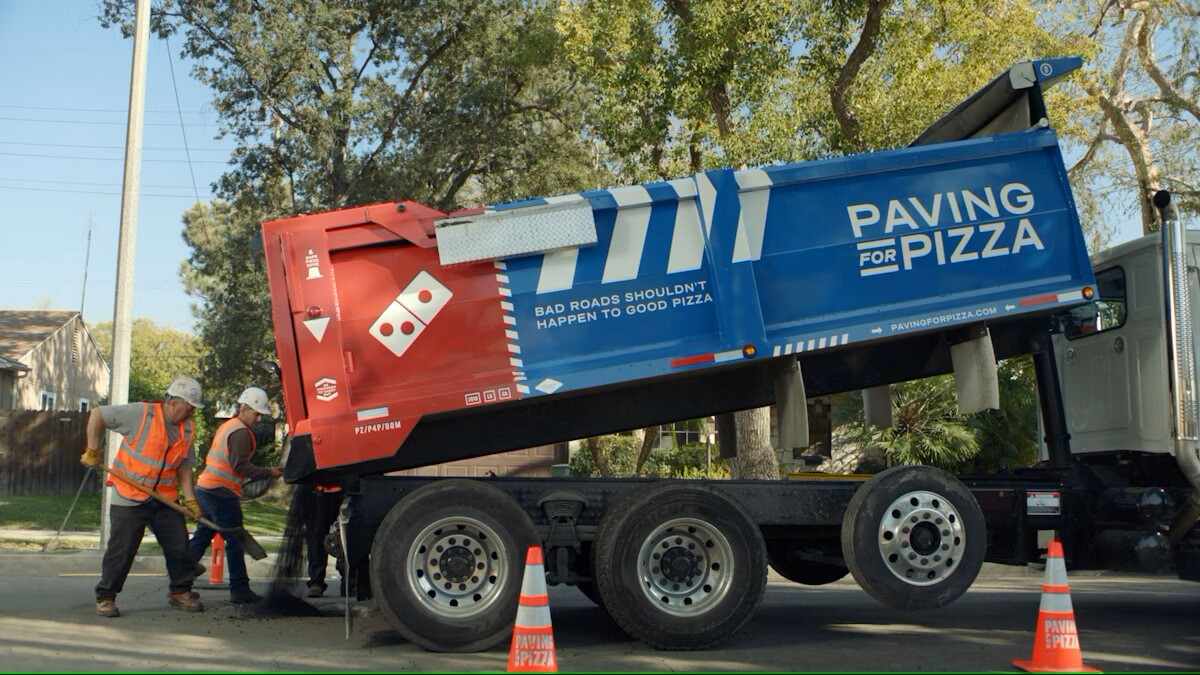
Through their Paving for Pizza Campaign, Domino’s executed guerilla marketing initiatives to fix road potholes before placing their brand logos on them as evidence of why roads should remain intact to transport pizza safely.
Emerging Trends in Outdoor Advertising
Outdoor advertising shows ongoing innovation because sustainable and data-based program requirements from brands meet changes in consumer patterns and technological progress. Brand-audience messaging will transform into collaborative metrics-based advertisement methods under upcoming market patterns, which retain environmental sustainability. Future OOH advertising strategies will result from these market developments.
The Rise of Digital Out-of-Home (DOOH) Advertising
DOOH advertising changed outdoor marketing by emerging as its most important development and brought digital signage to traditional out-of-home advertisements. Through digital visual displays, DOOH achieves better consumer interactions than static signs can produce.
- The automation system of Programmatic DOOH allows brands to schedule real-time acquisitions for content updates through targeting audience characteristics and time-based parameters and environmental situations.
- The digital billboard data collection system presently operates automatically through real-time data input that contains weather reports with attendee statistics and real-time weather information. The brand displays “Cool Off with Iced Coffee” as its promotional message whenever weather temperatures rise above cold conditions.
- Real-time engagement and interactivity at certain digital billboards happen through touchscreen interfaces combined with QR code scanning to permit users to share interactive content on the internet.
3D and Holographic Billboards
Modern outdoor advertising received its most significant transformation from holographic and three-dimensional billboards because they displayed realistic marketing materials.
- Using hyper-realistic digital technology at 3D billboards in Times Square and Piccadilly Circus enables Nike and other companies to display their advertisements beyond their visible frames and reach more viewers.
- Billboard advertisers use Augmented Reality (AR) features to activate special device functions by scanning mobile phones as a way to share virtual advertisements and product exhibitions with users.
- Testing of holographic displays within companies allows organizations to create floating ads that result in sci-fi screen projections, which viewers find visually appealing.
Sustainable & Eco-Friendly OOH Advertising
The reality of environmental sustainability has turned business operations into green outdoor promotional implementations throughout their operations.
- Solar-powered billboards were born from the unification between renewable power technologies and high-end public display venues.
- The advertising field has adopted recyclable alternatives along with biodegradable materials to serve as substitute billboards that reduce waste accumulation.
- Brands combine product advertising with urban cleaning goals by installing living walls, which also function as air purifiers in their promotional activities.
Location-Based and Augmented Reality (AR) Ads
With technological advancements in geolocation, brands can create targeted exterior promotional campaigns for their potential customers.
- The technology of GPS and Bluetooth allows economic advertisers to modify content streaming for smartphone users who stand near targeted billboards and targeted shops.
- Brand engagement is enabled through AR billboards as mobile users access digital content during their gameplay of virtual activities and interactive testing.
- The current OOH advertising strategy maintains compatibility with wireless mobile devices along with social media tools used for marketing needs. The duration of outdoor advertising increased because the use of QR codes together with NFC (Near Field Communication) and social media hashtags directs customers to extended digital interactions.
AI and Machine Learning in Outdoor Advertising
Managers benefit from AI technology which enables better algorithms to enhance advertising campaign speed in the outdoor advertising business transformation.
- The advanced AI system uses observed population data and collected population samples to assist businesses with refining their advertising site selection process.
- The automated systems operate under artificial intelligence control to monitor billboards through quick customer inputs together with weather information and advertising metric analysis that assures content safety.
- Advertising machines use historical data to determine where successful advertising occurs, thus enabling better allocation of budget in advertising campaigns.
The Growth of Experiential and Immersive OOH Campaigns
The target market experiences strong memorable impacts through outdoor experiences developed by brands.
- High-traffic locations serve both as marketing places for businesses to achieve audience contact through interactive activities while linking them to temporary exhibit structures and spaces that showcase branded features for audience engagement.
- The contemporary mobile ad marketing strategy uses various sensory elements through its combination of auditory effects, machine-induced movements, and scent delivery systems. Backed by the aromatic smell of hot French potato chips, McDonald’s utilizes it as a billboard component to guide customers through their scent receptors.
- Brands utilize AI technology through interactive platforms to generate social media challenges from their external displays to protect audience participation and content sharing.
Best Practices for Effective Outdoor Advertising
Outdoor advertising programs achieve success when marketing activities receive complete support and when the strategy has excellent design work. Effective OOH advertising methods allow handlers to gain maximum public viewing and establish strong audience bonds to generate substantial marketing impact. The achievement of outdoor advertising success needs several important operational practices.
Choosing the Right Location for Maximum Impact
The choice of perfect placement defines how successful an outdoor advertising campaign can be. Factors to consider include:
- High-traffic areas serve best for advertising purposes since many people inhabit these locations, especially within downtown areas and along highway roads and transportation stations.
- Defining target clients in advertising programs requires understanding both pedestrians in specific locations and the commuters who frequently visit those areas.
- Clear viewing experiences of advertisements become possible when positioning them properly to manage any potential obstacles affecting viewers from different distances.
- Advertising success becomes stronger when promotional content is strategically connected to local business locations together with prominent event sites or important geographical destinations. For example, fitness brand billboards must be strategically positioned where they link fitness facilities to natural public areas such as parks.
Designing Eye-Catching and Easily Digestible Visuals
Improving the visual dominance alongside meaningful content delivery comprise the two main design functions that outdoor adverts need to achieve viewer interest. Key design principles include:
- A unique visual domination happens when designers merge clear color expressions with strong contrast, which allows ads to grab viewers in crowded areas.
- Every essential message should consist of a compact text that expresses its main point by using selected words.
- Customers remember advertisements better when eyes are drawn to images and brands stand out strongly due to higher engagement rates.
- An evaluation of easily readable fonts coupled with proper text distance spacing allows viewers to experience normal reading conditions.
Timing Campaigns for Maximum Effectiveness
Outdoor advertisement success depends entirely on how the public receives released campaigns at their precise moments. Considerations include:
- The seasons which align with current activities and approaching major observances produce the most optimal outcomes for outdoor advertising. For example, summer beverage ads during hot weather.
- DOOH technology enables digital billboard content scheduling which allows businesses to promote coffee products in the morning and cocktail products in the evening.
- Marketers need to implement event-based marketing by placing promotions at concert sites and sports grounds, and festival venues to maximize audience participation.
Integrating OOH with Digital and Social Media Strategies
The combination of outdoor advertisement with other marketing systems leads to substantial brand experience expansion.
- Marketers can boost user engagement through two strategies: they should provide social media content sharing functionality using hashtags, and they should include interactive or QR code capabilities in their content creation procedures.
- Using mobile geofencing technology, companies successfully deliver promotional messages that reach people standing near billboards during OOH advertising campaigns.
- Better memory retention occurs when advertising utilizes a marketing strategy that combines digital and both print and out-of-home channels to create stronger memorability for viewers.
- Through active advertisements that use NFC-enabled posters and augmented reality technology, consumers can produce high interactive responses by linking to digital billboards.
Conclusion
Every marketing campaign that aims to enhance visibility needs outdoor advertising as the foundation to connect with customers. Digital innovation enables OOH advertising to evolve digitally because it implements sustainable practices that create interactive promotional formats. Any outdoor advertising plan built with proper design achieves maximal audience interactions and exceptional marketing results via creative marketing messages.

