


In the display world, aspect ratio is king. While your screen’s orientation still dictates how comfortable you’ll be, its aspect ratio ensures the display isn’t too wide or too tall so the images get distorted. This post will look at what 16:9 is, its history and why it’s used on film, TV and online content.
What is 16:9?

Like what you learned in Math, ratio is the relationship between two numbers. In this case, it’s the relationship between the screen width (first number) and height (second number). For screens with a 16 by 9 ratio, it means they’re 16 units long and 9 units wide.
Aspect ratio determines how visual content is framed and seen. Different aspect ratios evoke different emotions and experiences, so it’s important for filmmakers, video producers and content creators.
History of 16:9
16:9 has a long history dating back to the 1980s when it was introduced as a compromise between the multiple aspect ratios used in different media. Here’s a quick rundown:
- 1980s: 16:9 was born as a middle ground between 4:3 and 21:9 aspect ratios used in film and TV.
- 1984: Japan was the first to adopt 16:9 with the introduction of Hi-Vision, an early analog high-definition TV system.
- 1990s: 16:9 went global with the rise of digital TV and DVD formats that supported widescreen viewing.
- 2007-2009: The switch from analog to digital broadcasting hastened the adoption of 16:9 worldwide.
- 2009: 16:9 was the norm for TVs and monitors.
- Today: It’s the standard for digital TV including HDTV and online video.
It’s popular because of its flexibility and compatibility with both film and TV.
The Basics

16:9 is also known as the widescreen aspect ratio. It’s used for HD and UHD content and gives you a wider field of view. Technically 16:9 can be expressed as 1.78:1 meaning the width is approximately 1.78 times the height. It’s a middle ground between the immersive qualities of widescreen formats and the practicality of screen dimensions so it’s the best for many applications.
16:9 Features
16:9 has these features that made it popular:
Wider View: 16:9 has a wider frame than 4:3. Perfect for panoramic film scenes and more detail in video games and other visual content.
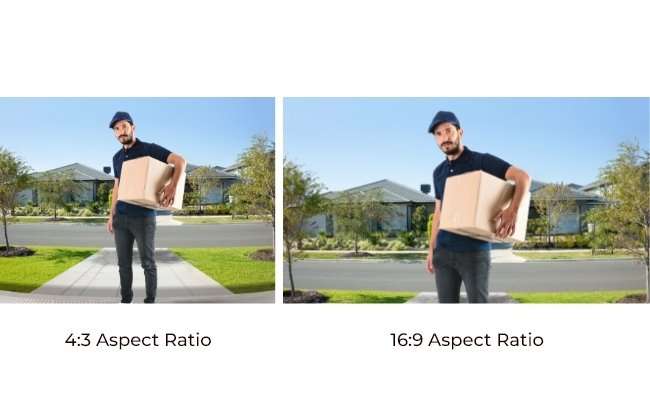
Industry Standard: Today 16:9 is the industry standard for most video content, from broadcast TV to online platforms like YouTube. It allows content creators to produce content that will work on most devices.
More Immersive: With its widescreen format 16:9 makes content more immersive and draws the viewer into the scene. This is especially important for cinematic content where the visual storytelling relies on depth and involvement.
HD Resolutions: 16 by 9 is associated with HD resolutions like 1920×1080 (Full HD) and 3840×2160 (4K UHD). It allows content to be displayed in high definition with sharp details.
Online Content: 16:9 is the format of choice for online video content. Platforms like YouTube and Vimeo have optimized their interfaces for 16:9 videos so content creators can share their work with the world.
16:9 Technicalities
Understanding the technical side of 16:9 is important to know its place in modern media. Here’s the details:
Mathematical Expression
16:9 can be expressed as 1.78:1 meaning the width is approximately 1.78 times the height. This ratio gives you a wider field of view while keeping a practical screen size.
Screen Resolutions

16:9 is part of various widescreen aspect ratios. Some of the common resolutions that use the 16:9 ratio include Full HD (1920 x 1080), HD (1280 x 720), and 4K UHD (3840 x 2160). This standardization means content can be displayed on any device without issues.
Broadcasting Standard
16:9 is the standard for TV broadcasting so content is uniform. This is good for broadcasters as content will display correctly on all 16:9 screens.
Device Support
16:9 is supported by all devices, from small to big. Good for content creators as their content will be accessible and viewable to more people.
Resizing
16:9 is easy to resize and adapt to different screen sizes without losing much quality or content. It’s useful for content creators who need to adapt their content to multiple platforms and devices.
Why 16:9 is popular
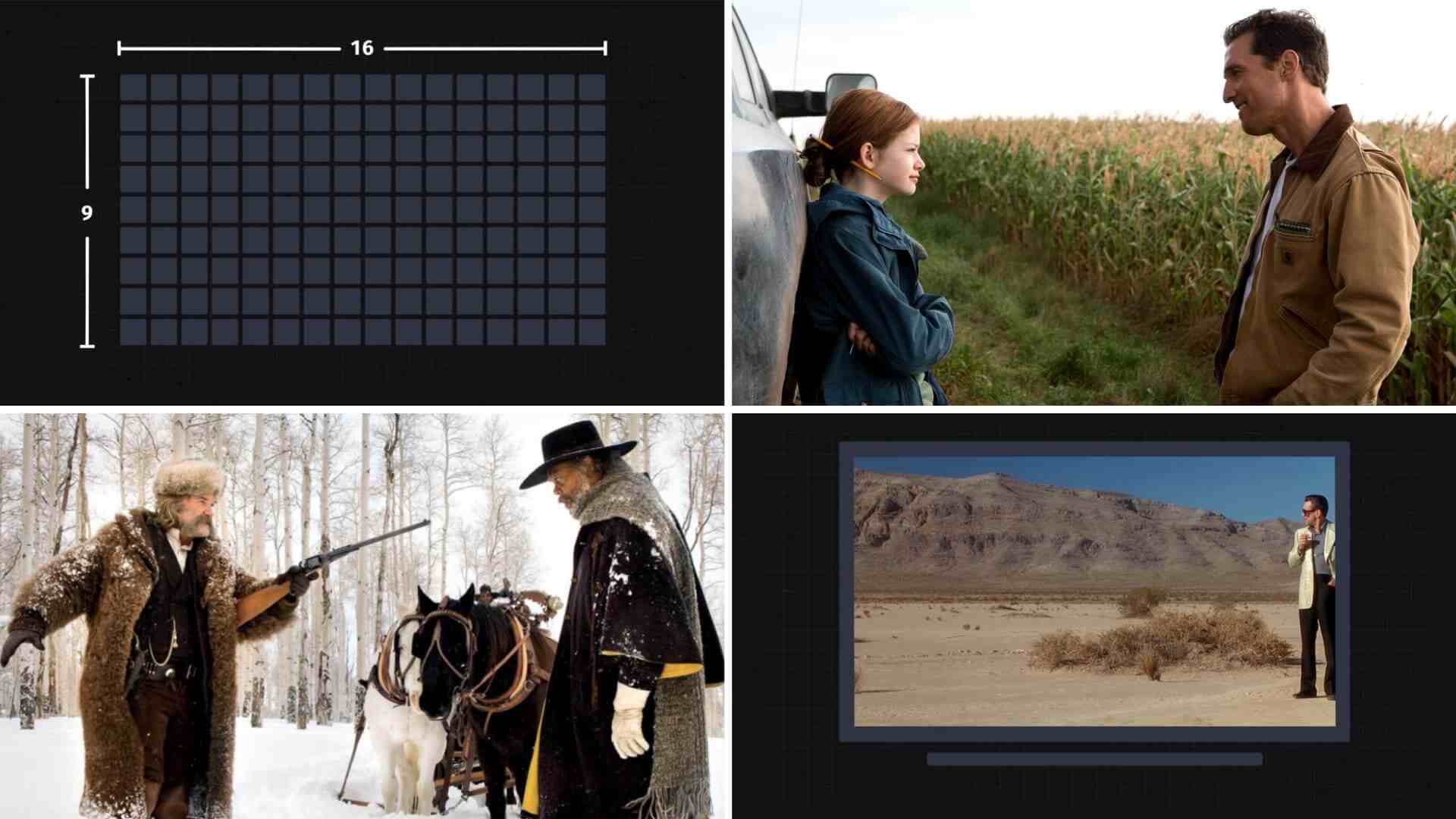
16:9 is popular for:
- Cinematic: 16:9 is like the widescreen format used in cinemas, so you can have a cinematic experience at home. That’s why it’s used in consumer electronics and home entertainment systems.
- HD Content: The rise of HD and UHD content has driven 16:9 adoption as these resolutions are optimized for widescreen. As viewers want better visuals 16:9 is the go-to format for content creators.
- Device Agnostic: 16:9 is device agnostic and works on TVs, smartphones, and computer monitors. That’s why it’s the format of choice for many media applications.
- Creative Expression: The wider frame of 16:9 gives content creators more room to tell a story by framing shots in a way that enhances the narrative. That’s why it’s loved by filmmakers and video producers.
16:9 in Action
Most Digital Video Cameras are 16:9
Most digital video cameras are 16:9, so it’s the default setting for video content that follows modern viewing standards. 16:9 is preferred because it’s more cinematic and visually pleasing and allows better framing of scenes and subjects. Most digital video cameras are 16:9 so the content captured is already compatible with most display devices without needing any post-production adjustments.
In Modern Screens
Modern screens like TVs and computers use 16:9. It allows content to be displayed in a widescreen format that’s visually pleasing and immersive. 16:9 is popular for modern screens because it maximizes screen real estate and gives the viewer a broader and more encompassing view of the content. It’s the standard for home entertainment, workstations, and even portable devices so it’s a versatile and user-friendly choice for content creators and consumers.

Modern screens like TVs and computers use the 16:9 format. It allows content to be displayed in a widescreen format that’s visually pleasing and immersive. 16:9 is popular for modern displays because it maximizes screen real estate and gives the viewer a broader and more encompassing view of the content. It’s the standard for home entertainment, workstations, and even portable devices, so it’s a versatile and user-friendly choice for content creators and consumers.
In Broadcasting
High-definition displays all over the world are 16:9. As the global standard, this means content creators can reach a wider audience without worrying about aspect ratio compatibility. TV networks, streaming platforms, and other video distributors can deliver uniformly formatted content, ensuring viewers receive a consistent experience across devices and regions. It standardizes the production process and quality regardless of where and how people view the content.
Across Media

16:9 is used in various media formats, film and television production, streaming services, and mobile devices. Its use across different platforms shows its ubiquity. In film 16:9 allows for wide cinematic shots that enhance the story so it looks seamless on different devices. On mobile, it’s optimized for both portrait and landscape so it’s the go-to format for creators who want to reach audiences across multiple channels. This versatility of use proves that 16:9 is the standard for modern media consumption.
Aspect Ratio Conversion
Aspect ratio conversion is needed to keep content intact and looking good across different display formats. This is when the original aspect ratio doesn’t match the display device’s native aspect ratio and the image gets cropped or stretched. By converting aspect ratios content creators can preserve the composition and get a consistent experience across platforms.
To Other Ratios
16:9 can be converted to other common ratios like 4:3 or 1:1 depending on the project requirements or the platform specs. For example, 16:9 is good for widescreen displays but 4:3 might be needed for older TV sets or certain mobile apps. So content can be repurposed for different viewing environments without losing the core visual elements.
With Other Ratios
When reconciling 16:9 with other formats black bands (often seen as letterboxing or pillarboxing) are used. The black bands on the screen allow images to be displayed on the screen without altering their original appearance. So the content’s composition remains true to the creator’s vision even when displayed on different sized screens.
Compared to Old Ratios
The evolution of aspect ratios is clear when you compare the modern 16:9 widescreen to the old 4:3 aspect ratio which was the standard for TV and film. 4:3 was the norm in the early days of TV and is still used in some specific cases but the shift to 16:9 is the industry’s move towards a more cinematic and immersive experience. This transition shows the change in media consumption and the industry’s response to new technology and audience expectations.
Which One to Choose
Choosing the correct ratio is crucial in ensuring your audiences can view your content the way you intend them to. Different aspect ratios can make you feel different, frame your subject matter in different ways, and influence how the audience engages with your work. Knowing this allows content creators to choose an aspect ratio that matches the narrative and visual goals of their project.
Consider your project:
- If your project is character-driven, where close-ups and facial expressions are important, 4:3 might be the way to go.
- If the setting is a key part of the story, creating a sense of space or scale 16:9 might be the way to go for wide landscapes or action sequences.
Most Common Ratios
- 16:9: The format for videos, TV screens, and computer monitors.
- 4:3: Used for close-ups and portraits and older media formats.
- 1:1: Popular on social media platforms like Instagram, for centered and visually appealing content.
Other Aspect Ratios
The popularity of social media content creation signaled the arrival of vertical aspect ratios that fit the average smartphone screen. These vertical aspect ratios match how we hold our phones, creating a more seamless and engaging experience for mobile viewers.
Common Vertical Ratios
- 1:1: Instagram’s default ratio, good for square images and content.
- 18:9, 19:9, 20:9, 21:9: These ratios on modern smartphones give you a bigger screen and a cinematic feel.
Screen Dimensions and Area
Specifications
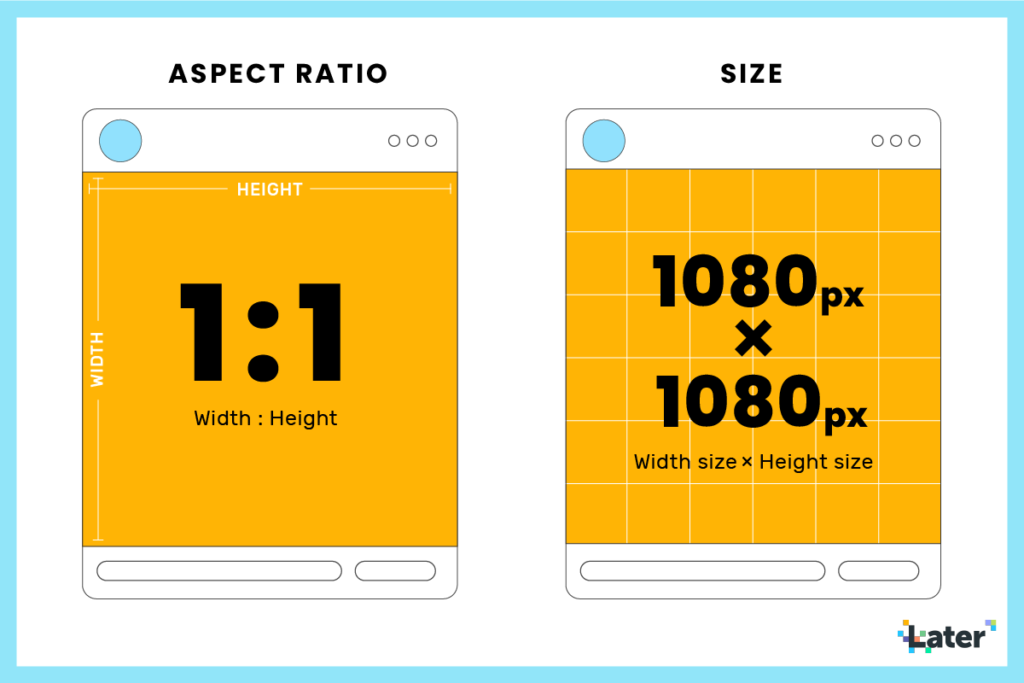
Screen dimensions are usually given by the diagonal, but to work with different aspect ratios, you need to know the height (h), width (w), and area (A) of the screen. Knowing how to calculate these dimensions will ensure your content fits the screen without distortion.
The Formula
To maintain a 16:9 ratio, the quotient of the screen’s width and height must be 1.778 (16/9).
The aspect ratio is 16:9 (also 1.78:1) if W/H is roughly 1.778.
Calculating Height from Width:
Simply divide the width by 1.778
Sample Problem:
Vince wants to put up an LED wall that’s 32-panel-wide. How many panels high should the screen be for it to follow the 16:9 ratio?
- Step 1: Use the aspect ratio formula:
- W/H=1.778
- Step 2: Substitute the width (W = 32) into the equation:
- 32/H=1.778
- Step 3: Solve for the height (H):
- H=32/1.778
- Step 4: Calculate:
- H≈18
Vince’s video wall should be 18 panels high to keep a 16:9 aspect ratio.
Calculating Width from Known Height
With the height given, you can find out the unknown width by multiplying it by 1.778.
Sample Problem:
Harvey is designing a social media post that is 720 pixels tall. What is the perfect width for the design to be 16:9-compliant?
- Step 1: Use the aspect ratio formula:
- W/H=1.778
- Step 2: Substitute the height (H = 720) into the equation:
- W/720=1.778
- Step 3: Solve for the width (W):
- W=720×1.778
- Step 4: Calculate:
- W≈1,280
To keep the 16:9 aspect ratio, Harvey’s image needs to be 1,280 pixels wide.
Number of Panels Required
When designing a video wall, especially with the common 16:9 aspect ratio, it’s important to configure the panel layout correctly. Displays with a 16:9 aspect ratio guarantee a seamless visual experience.
Panel Configuration for 16:9
Creating a 16:9 video wall with square (1:1) LED panels is tricky. Ideally, the grid should be 16 wide and 9 high or be a multiple of these dimensions. However, the 16:9 safe zone offers some flexibility, allowing for slight variations without compromising visual quality.
To check if your video wall is within this safe zone you can use the following formula:
Panel Count Formula for 16:9 Ratio:
Panel Width/Panel Height≈1.65-1.85
If the width divided by the height of your panel grid falls within this range your video wall will be 16:9 and any deviation will be imperceptible to the viewer. For example:
- 16 panels wide by 9 panels high: This is a perfect 16:9 ratio.
- 14 panels wide by 8 panels high or 18 panels wide by 10 panels high: These also work within the acceptable range.
Video Walls with Different Panel Types
If you have panels that are already 16:9 like some LCD video panels the overall aspect ratio of the wall remains the same regardless of the panel count. For example:
- 2×2, 5×5, or 10×10 with 16:9 panels: These are 16:9 because the panels scale up without changing the overall display ratio.
16:9 Content on Non-16:9 Screens

Sometimes you may need to display 16:9 content on a video wall that’s not 16:9. This can be due to last-minute content changes or if your video wall has a custom aspect ratio. In this case, there are three ways to adapt the content:
- Stretch to Fill: This option stretches the content to fill the screen ratio, which can cause distortion, especially with shapes like circles. Stretching is okay if the distortion is low, usually below 10%.
- Letterbox: This method keeps the content’s original ratio by fitting it proportionally within the screen and adding black bars on either side of the screen and content ratios are different. This preserves the content without distortion.
- Crop to Fill: This option fills the screen by cropping the image, which can cause a loss of important details near the edges. This works for visual content only, not for content with critical information near the margins.
Which one to choose depends on the content and the visual outcome you want for your video wall. These options help you maintain display quality and have your content look as intended.
Video Standards and 16:9 Ratio
International Broadcast Standard
16:9 is the global standard for UHD, HDTV, Full HD, and SD digital TV. This means content creators can reach a global audience across different regions and platforms without worrying about compatibility.
The 16:9 aspect ratio is the industry standard across many sectors, from TV broadcasts to smartphone designs. Its ubiquity makes it the default choice for content creators who want to produce content that’s universally compatible and visually good.
Recording Capabilities
Many digital video cameras record in 16:9, so it’s the default setting for recording video content that fits modern viewing standards. Filmmakers and videographers can produce content that meets current broadcast and streaming requirements.
16:9 Industry Applications
Film and TV and Streaming
Film and TV production use the 16:9 aspect ratio to create a cinematic widescreen experience and enhance storytelling. It’s also the standard for streaming services for a consistent experience across devices.
Widescreen TVs, Monitors and Devices
This ratio appears in widescreen TVs and computer screens to ensure content looks good and immersive. Its widespread use across these devices highlights its importance in modern media consumption.
Global Digital TV Standard
16:9 is the international standard for UHD, HDTV, Full HD, and SD digital TV so it’s a fundamental ratio in the broadcast world. It’s global so content creators can reach a global audience without worrying about ratio differences.
Across Industries
From film production to streaming services and mobile devices, the 16:9 aspect ratio spans various media and platforms. This is why it’s the default choice for content creators across many industries.
16:9 Tips
- Improve Picture Quality: Knowing 16:9 is key to optimizing picture quality in video production. By matching your content to this widescreen format you’ll get high resolution and no distortion. This ratio gives you a wider field of view and overall better clarity and immersion in your video.
- Fit Many Industries: Many industries use the 16:9 aspect ratio, from TV broadcasts to computer monitors and smartphone screens. By matching your content to this video format you’ll be compatible with many devices and platforms and your content will be more accessible and engaging to a wider audience.
- Leverage Industry Standard: The industry standard 16:9 gives a consistent viewing experience. By following this standard you’re aligning your content with global expectations and industry norms and making it more professional and appealing. This standardization keeps your content looking the same across all media.
- Use Recording Capabilities: Many digital video cameras record in 16:9 so it’s important in video production. By using cameras that can record in 16:9 you can capture content that fits the widescreen format minimize post-production adjustments and keep the original composition.

