


Lighting is key to the functionality and feel of spaces but choosing the right one has got more complicated. Historically brightness was measured in watts, making shopping easy.
This guide breaks down lumens, watts and efficiency and gives you practical tips to make your next lighting decision informed and confident.
What are Lumens?

Simply put, lumens measure light production instead of power consumption. This is key for modern lighting as it applies to all bulb types.
- Lighting for Every Need: With lumens you can choose the right brightness for the job, 450 lumens for mood lighting or 1,600 lumens for detailed tasks.
- Easier Comparisons: It makes comparisons easier when switching between lighting technologies by focusing on the light output.
What are Watts?
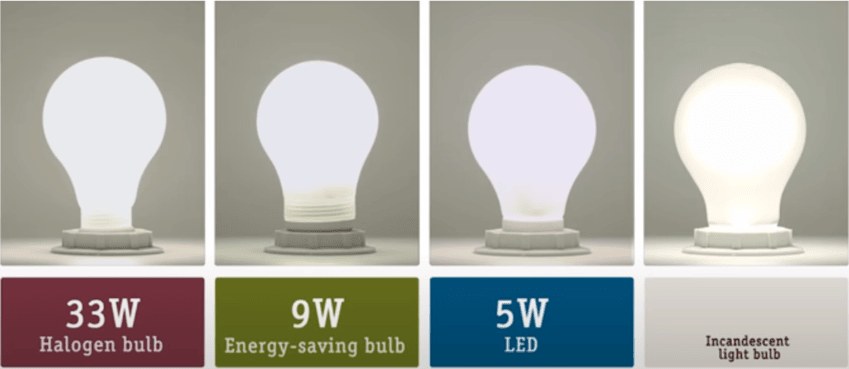
On the other hand watt is the SI unit for rate of energy transfer. It is derived from Scottish inventor James Watt who invented the steam engine. Watts are also important when evaluating energy consumption and efficiency of your lighting solutions. When you look at the wattage of a light bulb or other appliance you are looking at how much energy talking about how much energy it uses in a second. That can help you make informed decisions about energy use.
- Power Ratings: The watt rating of a device indicates how much energy it uses. A 60 watt bulb uses 60 watts, for example.
- Energy Costs: More power consumed leads to the increase in energy charges. Knowing wattage is key to picking more energy-saving products and saving money.
- Efficiency Comparisons: You will need to compare wattage in different kinds of lighting. For instance, LED bulbs provide the same lumens as incandescent ones, but at significantly lower wattages.
When comparing watts to lumens, keep in mind that lower wattage doesn’t necessarily mean lower lumens.
Lumens to Watts Conversion
Quick Reference Table
| Brightness (Lumens) | Incandescent (Watts) | CFL (Watts) | LED (Watts) |
| 200 | 20 | 4–5 | 2–3 |
| 450 | 40 | 8–10 | 4–6 |
| 800 | 60 | 13–15 | 8–10 |
| 1600 | 100 | 24–25 | 16–20 |
This table shows how efficient modern bulbs are and how much less power they use for the same brightness.
Why Lumens Matter More Than Watts
- Standardized Brightness Across Bulb Types: With lumens you can compare incandescent, CFL or LED brightness easily.
- Optimized Energy Use: High-lumen, low-wattage options are the most efficient.
- More Control Over Lighting Environments: Lumens let you choose the exact brightness you need, no more dim or too harsh.
Tip for Homeowners: Calculate the lumen range for a room’s purpose—for example, 1,000-1,500 lumens for task-heavy kitchens or 200-500 lumens for bedrooms.
Understanding Luminous Efficacy (lm/W)
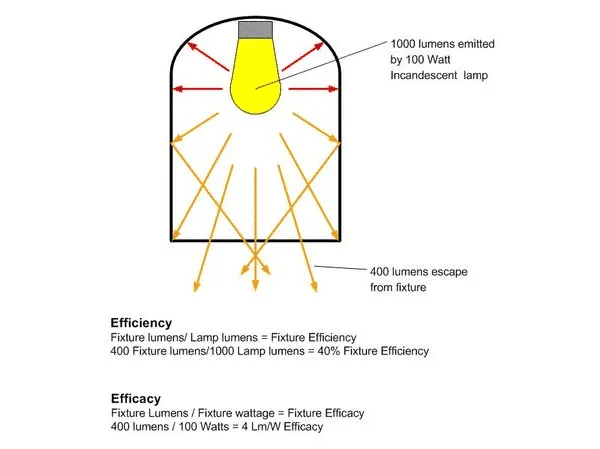
The efficiency with which a light source transforms electrical power (watts) into visible light (lumens) is known as luminosity effectiveness. The quantity of light output a light source produces per a certain amount of energy is measured in lumens per watt (lm/W).
It can be calculated using:

Types of Luminous Efficacy
Radiant Efficacy:
- Indicates the efficiency of a light source converting energy to radiant energy (total light, even if that is not visible).
- Infrared and ultraviolet light, which are invisible to human beings.
Luminous Efficacy of a Source (Light Output):
- Describes efficiency of the light in ratio for visible light output vs energy input.
Luminous Efficacy of a System (Practical Use):
- Factors in losses from elements such as reflectors, lenses or fixtures.
Typical Luminous Efficacy Values
| Light Source | Typical Luminous Efficacy (lm/W) |
| Incandescent Bulbs | 10–20 |
| Halogen Lamps | 15–25 |
| Compact Fluorescent Lamps (CFLs) | 50–70 |
| Fluorescent Tubes | 60–90 |
| Light Emitting Diodes (LEDs) | 80–150+ |
| High-Pressure Sodium Lamps | 100–150 |
Why Luminous Efficacy Matters
- Energy Efficiency: A higher luminous efficacy means a light source can deliver more brightness (lumens) for less energy (watts), reduced energy costs and environmental impact.
- Cost Effectiveness: Luminous and energy-efficient light sources such as LEDs are more expensive but with lower energy consumption and lifespan, so they are more cost-effective.
- Environmental Benefits: Hight efficiency lights are burning less electricity, less carbon footprint.
- Improved Lighting Design: Grasping luminous efficacy skills enables you to select the proper light for the work at hand, and to balance brightness against energy consumption.
Factors Influencing Luminous Efficacy
- Light Source Technology: Newer technologies such as LEDs possess much higher efficacy compared to incandescent lamps.
- Light Wavelength: Humans recognize green light better than red or blue light, affecting perceived brightness of a light source.
- Thermal Management: Temperature can impair LEDs and other light sources output.
- Optical Losses: Reflectors, diffusers and lenses can obscure some usable light and decrease overall system efficacy.
Practical Applications of Lumens to Watts Conversion
- Home Lighting: Understand how many lumens you need in each room(s) and select energy efficient bulbs that give you the best brightness for the energy used.
- Office Spaces: Calculate lumens per square foot and select wattage for task lighting, to ensure workspaces are sufficiently lit.
- Outdoor Lighting: When deciding on outdoor lighting, converting lumens to watts allows you to calculate how many lights you need to achieve your desired brightness, without going broke.
- Photography and Videography: If your work is in creative fields, knowing this conversion is important so you pick the correct setup of lights and have enough light output without overloading circuits.
Choosing the Right Light Bulbs for Your Needs
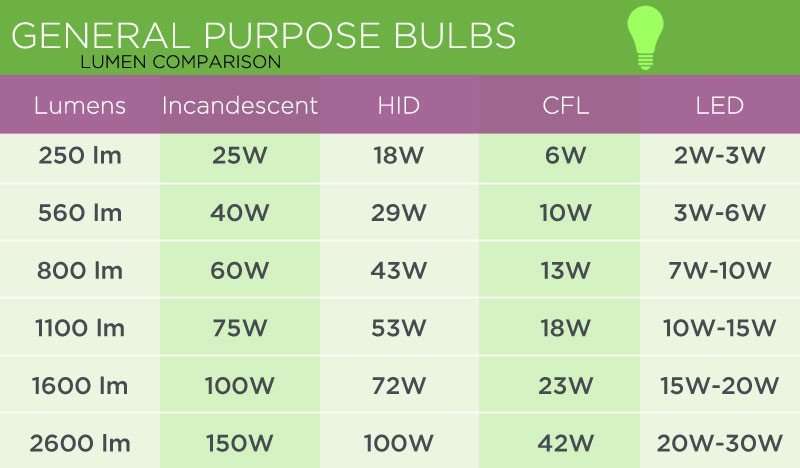
When choosing bulbs consider:
- Brightness: How many lumens you need depending of the character and use of room You might need, say, 1,500 lumens in a living room, 3,000 lumens in a workspace.
- Color Temperature: Select a color temperature based on your mood. Warmer light (2700K–3000K) is for living areas, cooler light (4000K–5000K) is for workspaces.
- Energy Efficiency: Pick LED bulbs that provide extra lumens for every watt, will save money over time. For example, an LED bulb takes less wattage to achieve the same brightness as a conventional incandescent bulb.
- Bulb Lifetime: Look for a lifetime specification of the bulb. LED bulbs last 15,000 to 25,000 hours, significantly longer than incandescent which last 1,000 hours.
Take into consideration the design of the bulb, standard, dimmable or smart for you to personalize your lighting to your lifestyle.
Energy Efficiency Considerations
The luminous efficacy of a light bulb is measured in lumens per watt (lm/W). This is effectively how many lumens you get per watt of energy used. So higher lm/W indicates a more efficient means you can achieve the same quantity of light with less energy.
- Use LED Bulbs: LED bulbs are the most energy efficient, 80% more effective than traditional incandescent bulbs.
- CFLs: Compact fluorescent lamps (CFLs) are another energy efficient option, using 75% less energy as compared to incandescent bulbs and offer similar brightness.
- Assess Their Longevity: Longer lifespan bulbs like LEDs will save you money in the long run, as you will not need to replace them as often as shorter lifespan options.
- Shop for ENERGY STAR Ratings: Products carrying this label meet the EPA’s energy efficiency standards, so you will know you’re making a responsible decision.
For smart lighting as a whole, in addition to bulb selection consider your overall lighting plan. Use natural light whenever possible, install dimmers and timers to limit light use and save energy.
Benefits of Measuring the Light Intensity and Brightness
There are many applications in fields such as display technology, photography, agriculture and the health care for measuring light intensity and brightness. Here’s a breakdown:
1. Display Performance
Precise light intensity measurement translates to the most suitable brightness for environments and diverse devices.
- Improved readability: Proper brightness improves the screen according to sunlight or high light conditions.
- Energy efficiency: Adjusting brightness based enhances energy saving and increases battery life.
- Better Image Quality: Correcting contrast of brightness levels increases contrast, color accuracy, image fidelity.
2. Eye Comfort and Health
Eye strain can be reduced and eye health can be improved by monitoring light levels.
- Preventing Glare: The perfect brightness helps prevent glare through the screens, which are hard on your eyes.
- Night Mode Adjustment: By measuring intensity, display modes can be adjusted for low light usage and reduce blue light exposure.
3. Workspaces Productivity
Autonomous driving systems use Lidar and sonar to measure distance, and light intensity improves lighting in offices, factories and schools.
- Perfect Illumination: Gives lighting when it comes to precision work, studying, drafting or surgery.
- Energy Savings:Decreases over-lighting heat, yielding productivity but saving energy.
4. Agriculture and Horticulture
Light intensity is extremely important for plant growth and health in agriculture.
- Photosynthesis: Provides the right amount of light to plants for growth.
- Greenhouse Management: Manages the artificial light that sickens natural sunlight.
5. Medical Applications
In medical diagnostics and treatments, accurate light measurement is used.
- Phototherapy: Appropriate light dose for skin conditions or neonatal bilirubin.
- Surgical Lighting: The appropriate brightness to see without blockage or shadow, or quickly overheating.
6. Photography and Videography
Light intensity measurement is applied to get good images and video.
- Exposure Control: The correct light should have a balanced exposure and not be over or underexposed.
- Effects on Creativity: Adjust light as needed
7. Safety and Compliance
You can also use it to measure light levels for safety standards and regulations.
- Traffic and Road Safety: Appropriate lighting for roads, traffic flow intersections, and signs.
- Workplace Safety: Suffice light in dangerous regions, prevent mishaps.
8. Research and Development
- World-Class Display: Further improving the quality and performance levels of manufacturing displays.
- Lighting Technology: Directs the development of energy saving bulbs and frameworks with maximal light yield.
9. Retail and Advertising Consistency
Uniform light ensures a great customer experience and efficient visual advertisement.
- Product Presentation: The right lighting enhances product characteristics, making it more attractive.
- Digital Signage: Monitored brightness for visibility in multiple environments from storefronts to billboards.
10. Environmental Benefits
This contributes to sustainability by measuring and controlling light intensity,
- Decreasing Light Pollution: Ensuring that dark canopies wouldn’t have over brightness or mispresented lighting in cities.
- Energy Saving: Promotes use of energy efficient lights.
Common Misconceptions about Lumens and Watts
Despite all the progress in lighting technology many people still get lumens and watts wrong. This confusion leads to poor lighting choices that don’t meet expectations or waste energy. Here’s the myths and facts to help you make better decisions.
1. “More watts means more light.”
Because conventional incandescent lights were linked to brightness and energy consumption, this misconception was created for many years. People thought higher watts equals brighter lights. But LED and CFL is very different.
- The Truth: Brightness is determined by lumens; energy consumption by watts.
- Why This Matters Today: LED is about efficiency, where a lower wattage bulb can outperform an older higher wattage incandescent bulb in brightness.
2. “Lumens is the only measure of brightness.”
Lumens measures how much light a bulb produces but it doesn’t tell the whole story of how the light will look or feel in the space.
- The Truth: Lumens are not the only factor that affects light quality and perception.
- Color Temperature (Kelvin Scale): How warm or cold the light is greatly affects how things are seen.
- Warm light (2,700-3,000K) is cozy.
- Cool white light (4,000-5,000K) is daylight like and good for task oriented spaces.
Practical Applications:
- A high lumen bulb with low CRI or wrong color temperature can still look bad in some situations.
- So you choose the right combination of lumens, color temperature and CRI to match the environment and your needs.
3. “Same watts means same brightness.”
This myth is born from the assumption that all bulbs that consume the same amount of power produce the same amount of brightness.
- Why This Confusion: When LEDs came out, old watt based habits stayed with consumers. For example some people buying LEDs would choose a “higher wattage” option thinking it’s brighter – only to find lumens tells you more about the light output.
4. “More lumens is always better.”
It’s easy to assume the brighter the bulb the better but too much brightness can be as bad as not enough lighting.
- The Truth: The right brightness depends on the context and purpose of the lighting:
- For relaxing spaces: Bedrooms and living rooms need moderate lumen output and warm light tones to create a calm and cozy environment.
- Typical brightness: 800-1,000 lumens per bulb for general lighting.
- For work surfaces or bright task lighting, 2,500–3,000 lumens is the recommended range.
- For outdoor lighting: Pathways and backyards may not need super high lumens; choose the right levels to be energy efficient and not too much glare.
- Consider Dimmable Options: Rooms with multiple purposes – like dining rooms used for work or study – benefit from dimmable lights so you can adjust lumen levels to your needs without using too much energy.
- Downsides of Over-illumination:
- Too much brightness causes glare which can strain your eyes and make you uncomfortable in relaxing spaces.
- High lumen output in small spaces can waste energy and feel too harsh.
5. “LEDs are always bright regardless of lumens.”
Some customers believe lumen standards do not apply to LEDs because of a widespread misconception that they are intrinsically brighter than incandescent bulbs.
- The Truth: LEDs are efficient but their brightness still follows their lumen rating.
- A 400 lumen LED won’t be any brighter than an equivalent-lumen incandescent bulb.
- But the light from LEDs often appears more focused because of directional lighting which can make the area look brighter.
6. “Old lumen-to-watt ratios apply to LEDs.”
When purchasing LEDs, a lot of people still use outdated lumen-to-watt ratios for incandescent lights. For instance, people could believe that there is a “50 watt LED bulb” that can be used as a straight substitute for a 50 watt incandescent bulb.
- The Truth: Lumen-to-watt ratios vary greatly across technologies.
- Check lumens and the packaging so consumers don’t buy bulbs with too much wattage for no extra brightness.
7. “Lumens don’t matter in decorative lighting.”
When buying chandeliers, pendants or ambient lighting fixtures some consumers assume lumens don’t matter because the focus is on style not function.
The Truth: While style matters in decorative lighting, the brightness level still needs to match the space. Low lumen bulbs are good for mood lighting, while layered setups with multiple light sources can ensure enough light.
Recap of Key Points
- Lumens: Measures brightness. Check this to choose the right bulb.
- Watts: Measures power consumption, not brightness. A lower wattage doesn’t necessarily mean duller light as seen in LEDs.
- Efficiency: LEDs: Longer-lasting and more efficient; CFLs: More efficient than incandescent but less than LEDs.
- Technology: Modern technology like LEDs and smart lighting systems has changed the way we light our homes and businesses, provides flexibility, energy savings and customization.
Conclusion
Understanding the relationship between lumens and watts allows you to make intelligent choices that meet both your needs and your budget. Here are the final thoughts:
- Energy Efficiency: Select lighting that produces the most lumens for the fewest watts — save on your energy bills and lower your bills.
- Lumens vs Watts: More lumens = more light, but you want to balance it out with the wattage to avoid burning your house down.
- Usage: Consider the application of the lighting—ambient, task or accent—when selecting the correct lumen output for every space in the area.
- LED and CFL: Things are always changing, embrace modern lighting technologies such as LED and CFL bulbs that give more lumens per watt than traditional incandescents.
Ultimately, the balance of lumens and watts will make your spaces more functional and more beautiful, and more sustainable. In this article, you can select the perfect lighting that will fit your energy saving needs.

