


Have you ever wondered how licensing movies for public use works? If you’re planning to screen movies as part of your business operations, you must learn all about the laws and regulations regarding the public usage of movies.
There are ownership laws and copyrights you need to know about. And while they seem too technical, they’re not as complex as they seem. Simply put, they refer to regulations you need to follow when using films that are governed by intellectual property rights. What should you do and how to do that? This is a simplified guide on the things you need to do and elements you need to consider when licensing movies for public use.
Defining Movie Licensing
 Image Credit: Gemini AI.
Movie licensing refers to the process of ensuring one’s legality and qualification to screen a specific movie. Movies are protected by intellectual property rights, which means that their owners have the right to dictate how they are used. Intellectual property rights help owners with the following:
- Property rights protection
- Get fair compensation
- Good quality control
- Control illegal replication
Is it possible to license movies for public showing? Yes, you can do something to guarantee that you’re not breaking any type of law or regulation. This is through the use of a movie license.
Licensing movies for public use is possible as long as you get proper permission. The third-party agreement is legally binding and can be used as a form of pass from punishment for using other people’s films.
In the USA, the law surrounding this issue is a bit strict and follows a very specific protection system. And one of the ways to legally use films for screening is by getting a movie license.
What is a Public Performance License or PPL?
 Image Credit: Gemini AI.
When licensing movies for public viewing, you need to get permission from the owner to use them. This is because of the copyright law that governs it, which involves many elements and complexities. And most of the time, people find it too technical to tackle and simply have someone take care of licensing movies for public use for them. However, you can actually do it.
A kind of movie license, the Public Performance License or PPL, refers to a sort of legal authorization that allows someone to use the films temporarily. If you plan to use this type of movie license, make you you understand all the elements included in this provision.
Elements of the Public Performance License
When dealing with a Public Performance License, here are the components of the agreement you must be familiar with:
Definition
The public performance license is defined with conditions entailed by the owner of the movie. You need to keep in mind the terms and the bounds that come with public use.
Scope
The scope of this provision includes what’s allowed and not allowed based on the terms of the agreement prepared.
Enforcement Clauses
To comply with the PPL’s agreement terms, take into account the clauses that are outlined for its enforcement. This part of the agreement also includes the possible consequences in the event you fail to comply with the terms.
Limitations
Although the license permits you to use the movies for public use, it has limitations. The owner can’t transfer full ownership of the movie rights unless you actually buy them from the owner.
License Cost
Licensing movies for public use comes at a cost, and it varies depending on several factors, including these two things:
- Intended use
- Requirements
Several elements will be added to the stipulation so that the PPL will be more holistic and complete. There will also be a legal section in the agreement, where all the legal acts and illegal acts will be laid out for everyone to fully know and understand.
US Code Title 17: The Federal Copyright Act
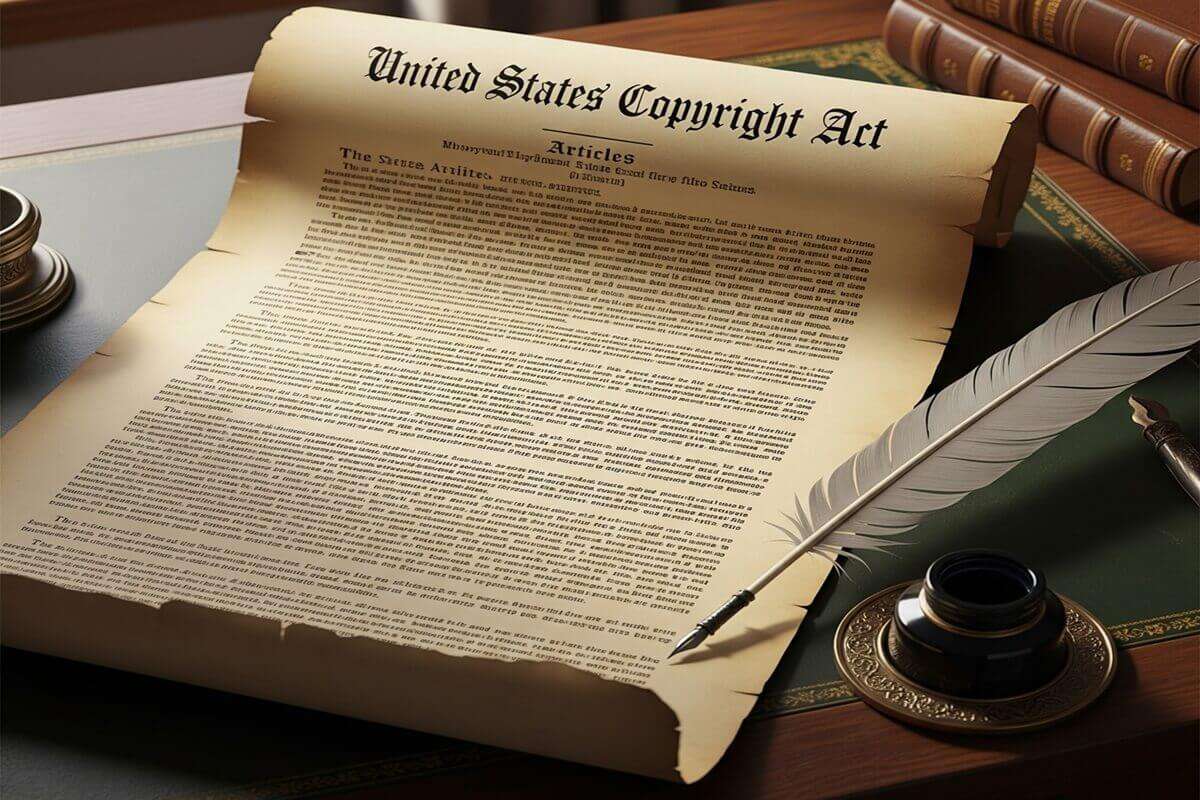 Image Credits: Gemini AI.
When discussing licensing movies for public use, it’s necessary to discuss the country’s Federal Copyright Act. Title 17 of the US Code covers the framework lawyers can use to draft agreements and provisions in licensing movies for public use between two parties.
Truthfully, many make mistakes when it comes to showing movies to the public. Even if you bought a material to watch it (in case of movie CDs and DVDs), the Federal Copyright Act makes sure that you can only use the content privately. Any public showing without a license can put you in trouble. Here are excerpts in the US Code that clarify this:
“Neither the rental nor the purchase of a copy of a copyrighted work carries with it the right to publicly exhibit the work.”
While the Code shows your limitations as a consumer, it also reveals some exceptions. This statement is an example of that:
“No additional license is required to privately view a movie or other copyrighted work with a few friends and family or in certain narrowly defined face-to-face teaching activities.”
Different Types of Public Performance Licenses
When licensing for movies, you’ll encounter Public Performance Licenses or PPL. These licenses have two major categories with different terms and conditions, including their fees and duration of usage.
Umbrella License
This refers to the type of licensing movies for public use that allows you to show movies without worrying about copyright laws. It is named as such because of the license’s reach, which is actually wider compared to the other type of license.
An umbrella license is what many mainstream media companies use for their operations. It’s because of the reach despite its limitations, including the following:
- You cannot sell tickets or charge for the screening
- Limited to the United States, and conditions may vary in other regions
Single Event License
This refers to the license you can use only one time and is limited to the single event that was named. If you will be holding a new event, you will need to get a new license for that, since this license is specific to its use.
Licensing movies for public use using a single-event license is beneficial because of the following advantages:
- Cheaper option
- Permission to charge for screening
- Open to negotiations of the agreement
- Available in many regions worldwide
Decide between these two types of PPL that match your needs. Take time to get to know each and evaluate them well.
Factors You Need to Consider for PPL
 Image Credits: Gemini AI.
When licensing movies for public use and considering PPLs, how do you know you actually need one? To further understand the implications of securing a license and what a public screening entails, here are some factors to consider and learn about.
Content Ownership Rights
When planning a public screening, the owner of the movie is a vital consideration. Content ownership rights help with the regulation of the use of the content, especially when dealing with unlawful practices, such as infringement and piracy.
With ownership, you either own the content or you’ve bought the copyright from a producer. If it’s the former, you won’t need any license and can do whatever you want with your content. However, if it’s the latter, you can either get a license to conduct public screening or buy the rights from the original owner.
Exclusive Rights
In the United States Copyright Law, owners of the content can do whatever they want with their material. This is particularly beneficial in the economic sense.
Under this law, content owners have the exclusive rights to control every aspect of their property, including the following:
- Publication
- Reproduction
- Adaptation
- Performance
- Screening of the material
In case you want to process licensing movies for public use, pay attention to these exclusive rights and which ones are provided to third parties who signed off on the agreement. Many licenses are limited only to the screening, while some can accommodate adaptation. This all depends on the specifics of the agreement.
Exemptions
The United States Copyright Act also has exemptions where certain circumstances do not require you to get a Public Performance License. Just as it’s named, PPL is only applicable to public screening, so using the material in a private environment is an exception. However, in this case, these are not allowed:
- Contextual limitations
- Recording and sharing
- Sound distance
Besides screening in private environments, another exemption is when you don’t consider a gathering as public. Some may not require you to get a license, while some may require it but may cost less than the conventional PPL.
Fair Use
When licensing movies for public use, the Copyright Act also has a fair use policy. This policy ensures license-free use of content for the following transformative cases:
- News
- Commentary
- Education
- Criticism and Analysis
These use cases don’t require a license because most of them are non-profit at the end of the day.
Licensing Agreement
In the licensing agreement, the two parties (the copyright owner and the third party) agree on some terms that they both signed off on. The agreement clearly states all the conditions and guidelines that must be followed when using the license and content.
When crafting the agreement, it is best to consult a lawyer who can help you with it. A straightforward agreement is the best way to go about it.
What Do You Need When Licensing Movies for Public Use?
 Image Credits: Gemini AI.
When licensing movies for public use, what are the requirements you need to prepare for it? Movies in Hollywood have royalties, which are the money investors get when the films make a profit. This is the reason why using this kind of material for profit will also require payment. It’s also the reason why PPL is required from people who want to use such material.
PPL will guide you when you go through licensing movies for public use. Here are some of the aspects of that guide for your easier processing:
Date and Time
Be specific when you set the date and time of your public screening. Make sure that you’re considering the final schedule and that it won’t be moved or rescheduled. Otherwise, the license you’ve acquired will be invalid, and you won’t be able to use it. In the end, you might have to reschedule your public screening with a license that bears the right date and time.
Purpose or Use
Why are you hosting this public screening? Make sure you have a clear goal for why you’re doing this event. It is vital to consider your purpose because it will also dictate what type of license you’ll get– commercial or noncommercial. Each type differs in terms of conditions and costs, so make sure to be clear about your intention.
Audience Size
When licensing movies for public use, you’ll be asked how many people will attend your screening. This is a relevant consideration because that number will be considered when calculating the license cost, and so will also be considered in the agreement.
Restrictions and Limitations
When licensing movies for public use, there are some limitations and restrictions you need to know about and consider. They are primarily due to the Copyright Act. However, the owner of the material is also an influential factor in these elements, especially because of the exclusive rights they have towards the content.
The copyright owner’s exclusive rights can carry out these restrictions, and everything under it needs to be taken into account in the license. The owner can provide a price for the material or other conditions that need to be met in order to get the license.
Another possible restriction comes with the location. Some movies may be restricted in some regions around the world.
How Much Does Licensing Movies for Public Use Cost?
The Public Performance License comes with fees you need to take care of. However, it’s not a fixed price. Various factors can affect the value of such a cost, and if you want a more accurate estimate, you need to take them into account, including the following:
Location
This factor is one of the major considerations, especially when you look into the type of venue where to hold the public screening. The venue for the public screening affects the cost of your license, along with its actual geographical location.
A community venue, like a town square or a city plaza, costs less when considering the license, compared to commercial venues, such as stadiums and theatres. In terms of geographical location, regions known for being less economically developed will also require a cheaper license than a flourishing metropolis.
Crowd Size
The crowd size is also a major factor that influences the cost when licensing movies for public use. In fact, it is a major consideration for many of the movie licenses when talking about the cost. A public gathering where a ticket is required to join the event will make it easy enough to know the crowd size. However, it may be quite difficult to pinpoint a specific number or estimate, especially when you’re conducting a public screening where everyone is welcome.
Because of this, some licenses just ignore that crowd size when considering the cost. However, the general rule for most licenses is that the bigger the crowd, the higher the cost of the license. Of course, when you draft the agreement with the copyright owner, negotiate the fees.
Displayed Film
What’s the film you’re planning to use in the public screening? The movie involved in your public screening is also a major consideration for the cost of the license. Admittedly, some movies are blockbusters and so popular that they are deemed more valuable compared to others.
In addition to that, they can also be influenced by the ownership and the production budget used to create the material. This is how the actual film affects the cost of the license. They will cost more if they are popular and have a high production budget. Just to be sure, talk directly with the copyright owners and know the film you’re getting the license for better.
License Provider
When licensing movies for public use, you will need to talk with a license provider. Oftentimes, you don’t get to talk to the actual copyright owner and simply negotiate with a representative. It would be cheaper if you talked to the owner, but they may be difficult to hunt down.
Look for a credible license provider that also has the license to operate. The government entrusts these people to process this type of license and can influence the final cost of your PPL. In fact, they can raise the cost of the license to get a commission out of it.
Special Cases
There are special situations where the cost of the movie license is waived. Here are some examples of these cases:
- The copyright owner waived the fee
- Exempted due to transformative use of the movie
When and When Not To Use the PPL
 Image Credits: Gemini AI.
Do you know when the right time to use the PPL is or when it’s not needed? It’s important to know about these situations so that you don’t have to waste time getting a license when not needed or not getting a license when the screening is just right around the corner.
When To Use PPL
“Public” screening is subjective, and defining the term can be complex. To make it easier, the United States Federal Copyright Act lists venues that are considered public, including but not limited to the following:
- Bus companies
- Camps
- Churches
- Educational establishments (Elementary schools, colleges, and universities)
- Hospitals
- Libraries
- Parks and recreation centers
- Prisons
- Resorts
These public spaces are only some of the venues that the Copyright Act considers as “public.” If you’re not sure about the venue you’re using for the public screening, ask your license provider to assess the place just to be sure.
When Not To Use PPL
If you plan to watch the movie in a private space in your home, you won’t need any license to make that possible. The Copyright Act requires licensing movies for public use only and not for private usage. However, just as previously recommended, ask a license provider if you want to be sure.
Are you planning a small gathering with family and friends and watching a movie on the couch? That definitely doesn’t need a license.
Licensing Movies for Public Use: Popular Movie Screening PPL Providers
If you’re set on your public screening, you need to contact a reliable license provider. In the world of PPL, two organizations are popular and credible. General Public Performance Licenses are provided by the following organizations:
- ASCAP (American Society of Composers, Authors, and Publishers)
- BMI (Broadcast Music, Inc.)
- SESAC (Society of European Stage Authors and Composers)
On the other hand, movie screening licenses are offered by the following license providers:
The Criterion Collection
This license provider company is a popular organization with a nice approach to clients. Known as Criterion, the organization focuses on emotion-invoking content (such as classic films and TV shows) that brings nostalgia to another level. It also accomplishes the following tasks:
- Content distribution
- Letterboxing
- Restoration
Swank Motion Pictures
Established in 1937, this company has a long history of providing movie licenses to those who need them. They are known for teaming up with major production studios, which is how they can easily provide licenses for Western movies.
Swan Motion Pictures also delivers movie licenses for the following venues:
- Campgrounds
- Major public markets
- Museums
- Public libraries
- Restaurants
- Schools
Devices To Use for Your Public Movie Screening
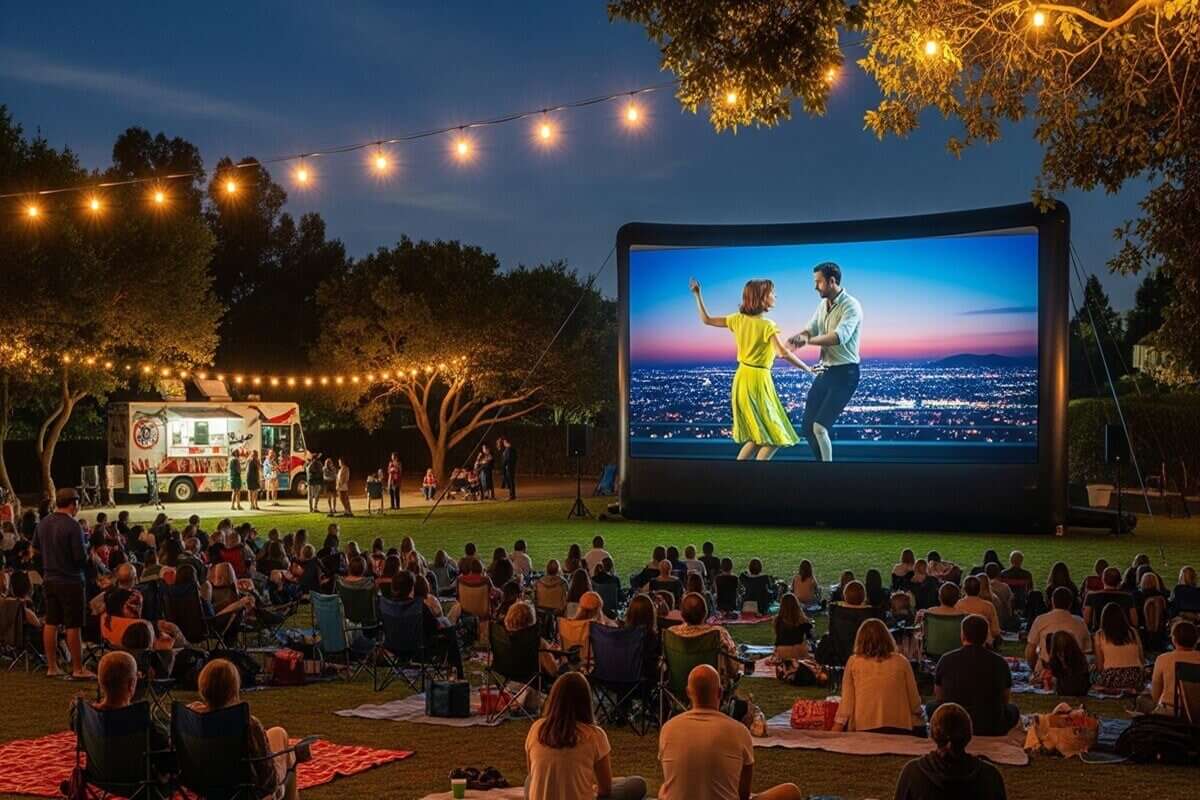 Image Credits: Gemini AI.
After licensing movies for public use, one of the aspects to think about is the device you’ll use for the screening. When hosting a public screening of the movie you want to watch, you need a large display that can be seen by your expected crowd.
Large screens can come in various forms, but these are the important specifications you need to look for when choosing a device:
- High brightness
- High resolution
- Wide viewing angle
- Long viewing distance
- Better color accuracy
Large LED Screens
If you don’t have a massive screen at home, large LED displays can be rented from screen providers, and they have several selections to choose from.
LED displays have all of the specifications previously mentioned, which is what makes them ideal for public screening. However, you need to make sure that they are high-quality. They also have a modular design, so you can get the biggest LED screen you can afford. The deal with these devices, though, is that they can be expensive. Get a rental if you can’t purchase one.
Mobile LED Screens
These types of display devices can also be used for public screening. After licensing movies for public use, you can contact a qualified LED screen provider to inquire about mobile LED displays.
Just as they are named, mobile LED screens offer the mobility that fixed installations have. The mobility of the device means that the screen can be used in any location you want, since you can take the device anywhere. These mobile LED displays are also structured to be durable and capable of operating outdoors, where many public movie screenings occur.
FAQs: When Processing Licensing Movies for Public Use
To make it clearer for you and avoid any confusion, here are some FAQs with their simple and short answers regarding licensing movies for public use.
Is the movie license transferable?
No, the movie license you acquire to hold your public screening is not transferable to anyone. It is also not transferable to another event. Whatever date, time, location, and purpose that were written on the license should remain as is, and anything different than what was written won’t apply to the license.
When licensing movies for public use, the specifics were clearly stated in the agreement, and so should be followed. Anything done out of the ordinary will lead to copyright abuse. If there were changes, get a new license.
What will happen if I fail to get a license?
If you don’t have a license, just cancel or reschedule your public screening until you get one. If you continued your event despite not having a movie license, it would be a federal crime. The United States Federal Act will demand a penalty of the following for repercussions:
- 5 years in jail and/or
- $250,000 in fines
Where can I get the license?
Get a movie license from someone credible. While it would be great to go directly to the copyright owner for discounts and faster processing, this rarely works. The next best thing is to contact one of the two popular license providers previously recommended. Visit the websites of either The Criterion Collection or Swank Motion Pictures.
Do I need to get a license even when the screening is free?
Yes, you do. Licensing movies for public use is necessary even if you’re not charging for the event. It all goes back to the Copyright Act, which states that as long as the screening is “public,” even if it’s free or not, you will need a license.
Conclusion
Licensing movies for public use is vital to comply with the copyright laws. The United States Copyright Act clearly states the conditions when screening movies, privately or publicly. It states the cases when you need a movie license and when you don’t.
If you’re interested in screening movies in public, this is something you need to learn about. Dive deeper into all the conditions, limitations, and provisions that come with using other people’s content.

