


With the fast-paced world filled with advanced technologies and systems, it’s not surprising to see devices like curved LED screens that seem to come from futuristic films. The unlimited potential offered by these new screens provides users with limitless creativity, too.
Curved LED screens are one of the innovations that captured people’s attention because of the unique visual experience they offer. The new form and shape admittedly intrigued the market when it first came out. It was something that had been thought of as a gimmick and trend. However, it’s more than just its form. It’s the idea that screens can be bent and all the possibilities that go with that idea.
If you’re interested in a curved LED display for personal or business use, it’s worth diving into the device’s details. This may come across as a long-winded discussion, but it’s still better to understand what you’re investing in on a deeper level.
Defining Curved LED Screens
After the introduction of LED screens, manufacturers have competed with each other to make thinner panels. This opened up the doors for manufacturers to boldly design new screens that are not limited to the current LED device restrictions. This revolution brought forth all types of LED screens, including curved LED screens and flexible ones.
Curved LED displays are technologically advanced screens that have a unique curvy form. They have been in the market for years now. While their popularity may have skyrocketed when they were first introduced (bear in mind giant tech brands like LG and Samsung), their high prices kept them away from people’s reach. Fortunately, it’s an entirely different situation now.
Curved LED screens use the same lamp beads as other types of LED displays do. The curve at the corner of the screen is not just for show or to create something different. The design guarantees a wider viewing angle and area, ensuring a larger audience reach. Because of this, the device is incredibly appealing to viewers.
Advantages of Curved LED Screens to Benefit From

When you invest in a curved LED screen panel, you benefit from all the advantages that the device offers. Some of these advantages are the following:
Improved Visual Immersion
Curved LED displays offer a more immersive viewing experience to users. The curved edges of the device made the visuals seen on screen more realistic and authentic. The curves mimic the actual form of the human eye, which guarantees that users see the visuals on the screen just like in real life.
The human eye’s sight primarily functions in front; however, it also has peripheral vision. Building on this very idea, curved LED screens are designed with better depth perception. The curves on the corners also reduce the distortion often seen in flat displays. Similarly, curved LED displays seem to have adopted peripheral vision that adjusts accordingly. In the end, the visuals are more immersive, making the device a good option for gaming and entertainment applications.
Effortless 3D Looks
Using curved LED screens, you can create the 3D visuals you’ve set your mind to. Unlike other LED screens, it creates that 3D effect without needing complex technology and tools. While it doesn’t come close compared to authentic 3D content with 3D glasses as tools, it is still way better than flat screens. The curves along the edges that offer a somewhat peripheral vision provide this depth of view, similar to 3D.
Visual Consistency
Because of its curved corners, a curved LED screen has better visual consistency compared to flat displays. This is due to the edge distortions being lessened through the unique form. With reduced edge distortions, high visual quality is maintained in the entire ensemble. And it is applicable even when viewed from different angles.
Aesthetic Feels
When you look at a curved LED screen wall, the first thing you’d notice is its authentic and real-life feel. On top of that, the screen has this aesthetic appearance that many can describe as pleasing to the eyes. Its attractive look comes from the fact that these curved displays appear more forward compared to flat screens.
Wide Viewing Angle
Curved LED screens are guaranteed to have a wider viewing angle than other LED displays. From the perspective of the audience, this curved device often looks bigger and wider than its flat display counterpart. And this is because of the curvy corners of the LED display.
This LED display is designed in a way that the image on the screen can be seen from every angle you view it from. A perfect example of this design is when you look at your smartphone. You will see the same image on your smartphone from every angle you try. Curved LED screens resolve the issue of inconsistent color saturation and contrast, which may be experienced when using LCD displays and other flat screens.
Free From Glares & Reflections
Curved LED displays also guarantee fewer glares and reflections, which other flat screens often have. In doing so, the audience gets to enjoy a better viewing experience. This is often seen when the device is used in bright environments.
Flat Screens Vs. Curved LED Screens: Which is Better?
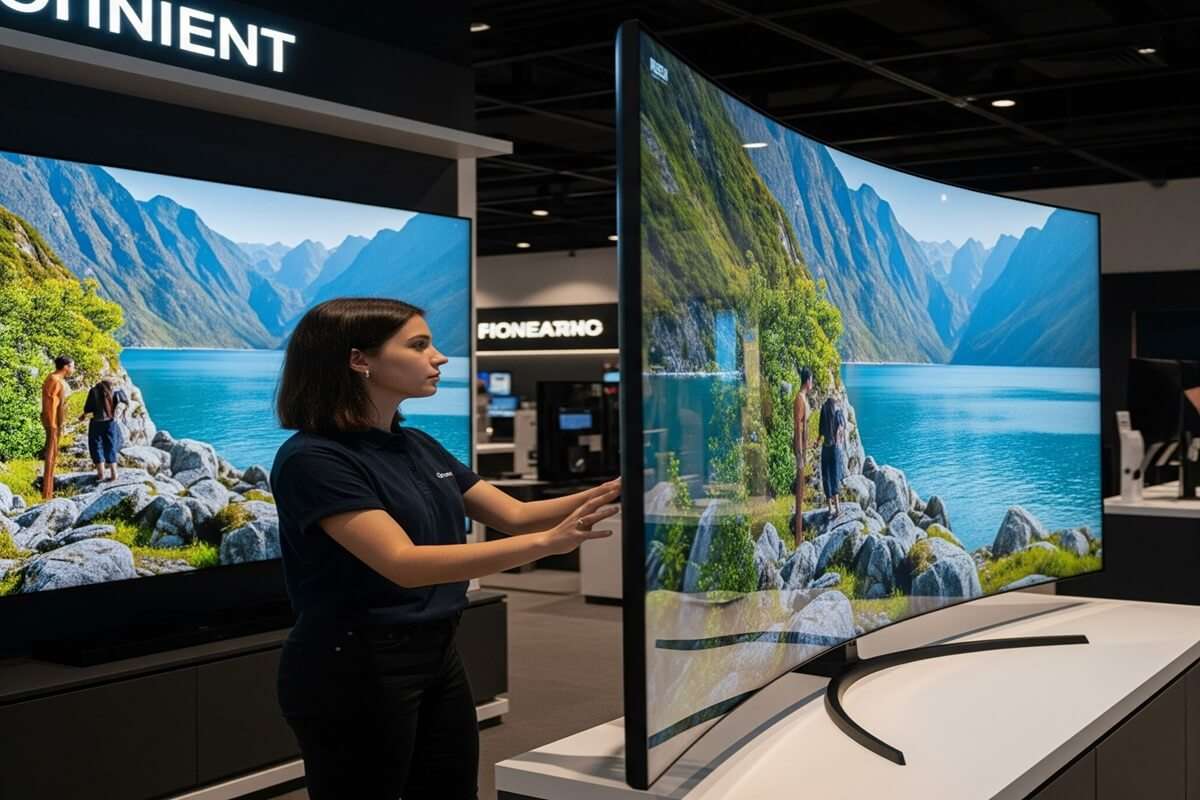 Image Credit: Gemini AI.
When discussing curved LED screens, it’s difficult not to compare them with their predecessor, the flat screens. If you’re asked, which is better, curved LED screens or their flat counterparts?
Truthfully, it’s easy to point at either one of these two amazing devices and call it a day. However, if you want a thorough, realistic, and legitimate assessment, you can go through the following aspects and compare them with each other:
Purpose
What is the purpose of your investment, and how do you plan to use the device? If you’re looking for a device to use for work, flat screens are often preferred. Traditional flat LED displays showcase this modern and minimalist look that fits perfectly well in professional setups.
With a wide viewing angle, the screens make a perfect device for the following tasks:
- Image processing
- Drawing and designing
- Team collaboration
- Multi-person viewing
However, if you’re searching for a device to use for entertainment purposes, such as viewing and gaming, a curved LED screen is the best choice. The device’s curved corners create a more realistic and immersive viewing experience, which is perfect for watching films and playing video games. The use of curved displays also offers the following advantages beneficial for entertainment purposes:
- Realistic and natural image edges
- Reduced eye strain
- Reduced visual distortion
Price
One of the major differences between flat and curved LED displays is price. Curved screens are considerably more expensive, especially since the technology is newer. The entire manufacturing process for curved LED screens is more complex and requires experts of high caliber compared to flat screens. In addition to that, maintenance and repairs for curved displays are also costlier because of their complexity.
With this in mind, if you really want to invest in a curved LED screen, make sure to prepare a sufficient budget for it. Take into account more than just its upfront costs and try to consider other expenses that come with the purchase, such as operational costs and maintenance, and repairs.
Availability
In terms of availability, LED curved screens are a bit limited in the market, primarily because of the complexity of technology. Flat screens are much more abundant in the market since their basic parts can be found everywhere. This is not the case with the components of curved displays, especially since some parts are hard to find and assemble.
Curved LED Screens Vs. Flexible LED Screens

Have you heard of flexible LED screens before? Is there any difference between a curved LED screen and a flexible one? In your journey to getting to know curved LED displays, these are some of the questions you need the answers to.
LED curved screens tend to make visuals more natural-looking and realistic. With the little curves on the corners, they function similarly to a slightly convex mirror. The curves take out dead angles that could interrupt the visual magic of the screen. These devices can make you feel like you’re seeing the images in real life. The visuals feel like you can actually touch them.
Flexible LED screens are designed to be much more freeing. Compared to curved LED screens with simple curved corners, flexible LED screens act more like a cloth that can be folded and rolled up. This flexibility opened up the possibility to craft magical screens in varied forms, providing users with unlimited potential that can only be restricted by your creativity and the installation environments. Some of the most popular shapes and forms include the following:
- Round/circular LED screen
- Wavy LED wall
- Stairs LED screen
- Swirling LED display
Similarities and Differences
With basic details about curved and flexible LED screens, it’s time to assess their similarities and differences. These are the notable ones worth distinction:
| For Comparison | Curved LED Screens | Flexible LED Screens |
| Form | Both are considered deformities and something special | |
| Limitations | Cannot become a flexible LED screen | Can become a curved LED screen |
| Ideal Applications | Often for fixed installations | Ideal for temporary ensembles |
Both curved and flexible LED displays are considered oddities because they have forms different from the usual flat, straight form. What made them possible is the use of small light bulbs that can be arranged however you want.
When you put both types of LED screens in a Venn diagram, flexible LED displays can be turned into a curved LED screen. However, it doesn’t work the other way around. Curved LED screens can’t be turned into flexible displays since they have a rigid structure that won’t accommodate the characteristics of the flexible device.
Because of the differing characteristics of the two types of LED screens, they are also used differently. Curved displays are perfect for permanent installation in entertainment venues, such as cinemas and shopping malls. On the other hand, flexible LED screens are designed to be more convenient and so can accommodate unique and special installations for events like exhibits and stage performances.
Curved LED Screens Applications

Unlike what most people thought, curved LED screens actually have a lot of applications to consider. If you decide to invest in this device, you can use it in many ways. The main feature of curved LED displays is their bent corners, which improve and viewing immersion and experience for users. This special characteristic makes it a great option for the following applications:
Architectural
These curved displays can be used as an added aesthetic in a building’s structure. Outdoor curved LED screens work perfectly in this application and are often integrated with the structure and look of the building. This helps craft a stunning effect that turns heads and stuns people.
This means that if you want to attract more people to your establishment, this is a good way to do it while sprucing up your building at the same time. Here are some specific applications:
- Art Exhibits and Museums – Artistic installations, such as museums and art exhibits, are all about creativity. Using curved LED screens to display specific treasures or exhibits can effectively bring attention to them, whether it’s for educational purposes or just to emphasize a specific collection.
- City Landmarks – Curved displays can also be used as a city landmark. The New York Times Square uses billboards as part of the city’s landmarks. This is just a perfect example of that. You can install curved LED displays in the city and make it a profitable and memorable landmark.
Commercial
Curved LED screens are also used commercially, in various professional and marketing settings. The display can be used to improve your brand’s image through effective communication and advertising. Since the display features realistic and vibrant HD images, it easily delivers an enjoyable viewing experience to the audience. All of these benefits are the reasons why the device can be used for the following applications:
- Billboards – Massive curved LED screens make a great option for giant billboards littering the city skylines. They can be used to capture the attention of passersby in a busy area. Whether to promote a brand or introduce new products and their respective features, curved LED displays can do this job well, especially when positioned in one of the following locations:
- Transportation hubs
- Crowded areas and streets
- Commercial centers
- Brand Stores – This type of screen can also be used to promote specific brands and products. If you have a store, you can use this device to help with your brand recognition and become more well-known in the market. Since curved displays are much more eye-catching, you can guarantee that customers will be able to identify and remember your brand and products.
- Malls and Atriums – Curved LED screens may also be installed in huge business areas like shopping malls. These shopping hubs are important commercial areas for customers, and they need to feel special and invited in these spaces. One way to show that is through adding trendy and aesthetically pleasing curved displays in the establishment. The devices add vibrancy to the shopping mall, and you can display various content, including the following:
- Brand advertisements
- Fashion shows
- Promotional information
Entertainment
Another major application of curved LED displays is entertainment. Because of the realistic and vibrant visuals offered by these advanced screens, you can create the visual experience you want your audience to experience. Whatever performance you’re hosting and preparing for, the stunning screen adds a shocking and amazing factor to the project.
Curved LED screens offer a wider viewing angle and area, compared to standard LED displays. This feature makes the device an incredible tool for viewing and immersion. It’s also the reason why it’s a top option for entertainment applications, including the following:
- Cinemas and Theatres – Curved LED displays make a great prop for these performances, making them more immersive and realistic. Whether you’re creating close-up scenes for characters or a dramatic scene in a play, the curved screens can craft a realistic setting for your masterpiece. The HD visuals also provide high-quality visuals that will make the performances more relatable and impressive.
- Concerts and Live Performances – Stage performances, like concerts, tend to be dramatic and over-the-top. Bringing visuals that can make the audience speechless will improve the chance of your event being successful. In addition to that, you can showcase content in real-time and also improve the engagement with the audience. You can display relevant images connected to the event and help the performers to interact better with the audience.
- Films and TV Sets Shooting – In Hollywood, curved LED screens can play a crucial role in the success of the shooting. From television shows to films, virtual backgrounds as props need to be as realistic as possible. And curved LED displays can do that well.
Are there other applications you can consider for this device? The possibilities are limitless, especially if you’re talking about an advanced screen.
Benefits of Using Curved LED Screens in Events
 Curved Transparent LED Screen project
Can curved LED displays be used in events? They can! Because of the design and structure of this particular LED screen, it offers a more immersive and enjoyable viewing experience to the audience. With this in mind, you can use the device at events that need to capture people’s attention. Here are some of the benefits you can enjoy when you use this type of LED display in your events:
Flexible Applications
Curved LED screens feature high-definition images even in high-brightness environments. This means that they can be installed and used outdoors, where the devices are exposed to the sunlight. The device has a lot of potential when it comes to applications and installation conditions.
Stunning Visual Experience
Because of the curved corners of this type of LED screen, you can be guaranteed to showcase vibrant and stunning images. The curves mimic a human eye’s peripheral vision, making the entire visual experience more realistic and vivid. Adding this small factor into the device completely transforms the entire visual experience to something closer to what’s real.
Potential of 3D Usage
Curved LED screens provide users with the capability to showcase 3D-looking content, without the use of added accessories, like 3D glasses, and more complex 3D content. This saves a lot of money while at the same time giving viewers a taste of a realistic 3D viewing experience. Without actually being 3D, it offers a sense of that very vivid and realistic feeling.
Practical Space Usage
Like other LED displays, curved screens are designed to be space-saving. These devices are structured to adapt well to your needs, and in the process, the installation spaces, whether it’s a small and intimate area or a massive commercial plaza.
You can enjoy all of these advantages when you invest in this specific display. Howev
Curved LED Screen Costs to Explore
 Image Credit: Unsplash.
When curved LED screens were first introduced to the market, the prices were so sky-high that only a few could afford them. The good thing is that after several years, the costs of manufacturing for these curved displays have dropped. They are now more affordable, and individuals and companies alike can make the most of these devices.
To have an idea of what prices you may encounter when planning to buy your own curved LED display, here’s a summary of some of the numbers in the market.
| Types of Curved LED Screen | Size | Prices (USD) |
| TV curved monitor | 27-inch to 34-inch | $150 to $500 |
| Small to mid-sized | $500 to $1,500 | |
| Large/LED wall | Over $3,000 |
All of these numbers may increase or decrease as they are influenced by other factors, including the following:
Pixel Pitch & Resolution
LED screens with smaller pixel pitch and higher resolution often come with higher prices. However, it also means more vivid and vibrant images.
Size & Number of Modules
Just like most things, bigger curved LED screens are more expensive than smaller ones. If you plan to build a giant LED display installation, it means you would need to use more LED modules than other ensembles. This means you would need to buy or rent more modules, making the entire installation more expensive.
Indoor Vs. Outdoor
Outdoor LED curved displays are often designed to be more durable with add-ons, such as weatherproofing and higher brightness levels. They are structured that way to be able to operate effectively outside, where the devices are exposed to external weathering factors, including sunlight, wind, and rain.
Brands
Popular brands in the industry tend to be more expensive in the market compared to lesser-known companies.
Deliveries and Installations
Companies offer post-sales services, such as delivery and installation services. These services are additional expenses you need to consider, too. While some providers may offer them for free as part of their package deals, others provide clear prices for them.
Custom & Tailoring
If you want to add specific features or tailor the form of your curved LED screen, customizing the device will cost extra too.
A practical tip is to set a budget before actually going out and getting one. Since the device doesn’t come cheap, you’d be in trouble if you go to stores and get blindsided by the prices. Set a budget and take into account the different costs that will come with this investment.
DIY Curved LED Screens
 Diy led wall
Is it possible to create your own curved LED display? Definitely! It seems like there’s something complex about recreating the arcs on the corners of the screen. However, it can be an easy task if you know what to do. You just need a simple step-by-step instruction to DIY your device. Here are the steps to follow:
1. Planning and Designing
The first step to DIY your curved LED screen is to make all the preparations before completing any real tasks. Make a decision when it comes to the specifications of your LED display, particularly the following:
- Screen size
- Curvature and shape
- Quantity of modules
- Resolution and pixel pitch
- Brightness
- Visual effects
Put your design into a drawing to visualize what you’re working with. Make sure to include the brackets, connections, and housing of the device.
2. Choose and Collect Materials
Take the time to choose the materials to build your curved LED screen with. Material selection matters because you need to choose a module material flexible enough to create the curvature, but also durable enough to last long.
Flexible base materials offer enough flexibility to create the curvature of your curved display. It’s because of the soft module that it’s become possible for the device to have curved corners, without negatively affecting the quality of the images shown on the screen.
Besides the flexible substrates, make sure to consider all the components you need, including the following:
- Heat dissipation systems
- Electronic driver
- Waterproofing materials (when necessary)
3. Start Manufacturing Your LED Screen
Once all the materials are prepped and within your reach, start with the manufacture proper. Create the actual LED module for your curved LED screen by sourcing the LED chips and all the electronic components to be mounted on the board. Make sure to prepare enough modules to accommodate the ensemble you’ve designed.
Prepare the bracket of your curved LED screen and carefully take into account the curvature of the corners. The bracket maintains the shape of the LED module and guarantees that the curves are set according to what you’ve structured them to be.
4. Assemble Your Curved LED Screen
The next step is to assemble and install the LED display. Look into the design of your LED display ensemble and install your LED modules into the bracket you’ve prepared. Meticulously work on it one by one and make sure that they are properly arranged as designed.
Besides the bracket, you also need to prepare the arc locks to keep them in place. Add the locks once you have installed the LED module into the brackets. When installing the locks, simply bend the modules to the angle you need them to be. The great thing about arc locks is that they can be accurately fine-tuned to the range you want.
Connect each of the LED modules together using whatever fixing method you choose, including buckles and screws. To make the installation more convenient, you can use a magnetic suction to navigate the LED modules to fix them to each other. Connect the LED module wires, both power and data cables, properly.
5. Testing and Debugging
Once you’ve assembled and connected all the LED modules together, conduct a thorough debugging and testing of your DIY curved LED screen. This process makes sure that the specifications of your curved LED screen meet your design requirements. This includes the following:
- Brightness
- Color contrast
- Display effect
Debugging and testing guarantee that your device works well in the environmental conditions where you plan to install it. Once you’ve installed everything, you can start with this process to ensure operational stability.
Creating your own curved LED screens saves you money but can be a bit time-consuming. However, if you have the time to spare, all you need to do is learn the step-by-step process of creating one. Having a simple guide like the one previously presented will help make the task a lot easier, especially for beginners.
Conclusion
Curved LED screens are products of years of research and development, focused on recreating vivid and realistic visuals. The introduction of the device started the wave and trend of developing and manufacturing unique displays, including flexible LED screens. It opened up the possibility to create screens not restricted to one shape.
The curved corners of the displays differentiate the device from other LED screens. This simple difference also provides the stunning visuals that the display is known for. In addition to that, it also expands the device’s applications to more than just television. This includes entertainment, advertising, and even event hosting, and the possibilities of application are unlimited.
If you’re interested in investing in curved LED screens, make sure you know how to optimize and utilize the device well. These displays can be expensive, so you must know what you’re investing in. Reading this article is a good first step in this specific investment journey.

